
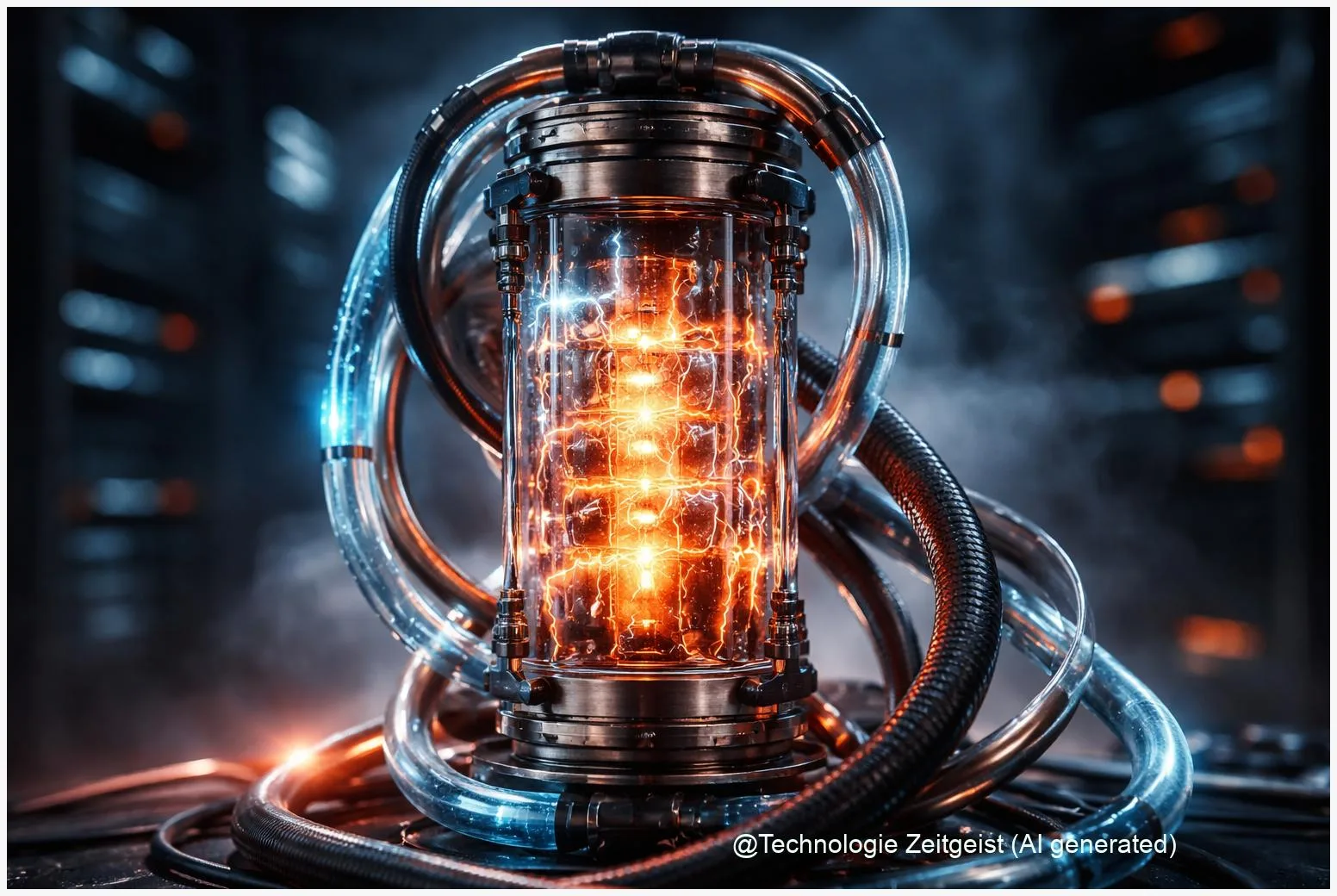
AI data centers push power hardware in new ways, and battery storage often appears as the obvious safety net. This article shows why fast buffers at rack and row level are required alongside conventional batteries, and how a layered approach keeps GPUs running while protecting upstream converters. The main keyword battery storage appears here because its role is central: short, intense power swings from AI workloads need devices that absorb or supply energy within tens of milliseconds.
Introduction
Modern AI jobs—training large language models or running many parallel inference instances—create abrupt, high-power events inside racks. A single GPU can swing from low to near-peak in a few milliseconds; when many GPUs change state together, the facility sees large, short-lived power mismatches. These mismatches are not simply academic: they can trip protection, raise voltages or stress power converters and batteries that are not designed for such fast exchanges.
At one end of the timescale are tiny capacitors on circuit boards that handle microsecond fluctuations. At the other end are generators and large batteries meant to cover minutes to hours. The gap in the middle—tens of milliseconds to a few seconds—is where problems emerge and where targeted buffering makes the difference between a nuisance event and a service interruption. The sections that follow explain the phenomenon, compare buffer technologies, show practical measurement examples, and discuss realistic trade-offs for operators and architects.
Why fast buffers matter
Power systems react on different timescales. Voltage regulators on motherboards react within microseconds to keep a GPU stable; rack PSUs and AC/DC converters have more stored energy but respond over milliseconds to tens of milliseconds. Grid-side systems, UPS and BESS are effective for seconds and minutes. When many GPUs change state simultaneously, the shortfall or surplus of energy during the transitional window can be large despite the event lasting only a few tens of milliseconds.
Short-duration energy mismatch ≈ power step × event duration (E ≈ ΔP × Δt).
That simple formula helps to see the scale. For a 73 kW rack that momentarily drops 50 % for 50 ms, the energy mismatch is roughly 1,800 J—well beyond what small onboard capacitors store. When several racks behave this way in sync, the numbers grow by orders of magnitude.
Different device classes cover different parts of the curve. A short table contrasts typical choices and what they handle best.
| Feature | Description | Typical role |
|---|---|---|
| VRM / PCB decoupling | Tiny capacitors and local regulators close to the load; respond in µs–ms | Absorb very fast micro‑events per GPU |
| Supercapacitors | High power acceptance, low energy density; excellent for repeated ms–s buffering | Smooth rack/row level spikes lasting tens of ms |
| High‑rate battery (BESS) | Higher energy density; some chemistries accept fast charge/discharge but life depends on cycling | Bridge seconds to minutes and sustain larger aggregated energy |
Fast buffers reduce three common issues: transient overvoltage on sudden load drops, supply dips on fast load increases, and unnecessary trips of upstream protection. They do so by locally absorbing or providing energy before slower systems react.
Battery storage and fast buffers
Battery storage is essential for supplying sustained power outages and smoothing longer disturbances. However, not every battery is suitable for millisecond‑level buffering. Two physical limits matter: how quickly a device can accept or release power (charge acceptance, often expressed as a C‑rate) and how much energy it can store for the duration of an event. Batteries optimized for minutes of backup often have limited charge acceptance for short bursts and can degrade quickly under repeated high‑rate cycles.
Supercapacitors accept very high currents and survive many more cycles, but they store far less energy per volume. A practical design uses both: supercaps for the ms–tens‑of‑ms window and a high‑rate battery for the seconds window. This staged architecture reduces stress on the battery while ensuring the immediate mismatch is handled close to the load.
Control is as important as the hardware. A supervisory controller that watches dP/dt or dV/dt and receives scheduler hints (for example, when many training jobs checkpoint simultaneously) can pre-charge absorbers or stagger transitions. Without such coordination, even well‑sized hardware will see unnecessary cycling and accelerated wear.
Sizing ballpark: Emismatch ≈ ΔP × Δt. To translate energy into capacitor size on a DC bus use E = 0.5·C·(V1^2 − V2^2). That arithmetic shows why low‑voltage supercap stacks in the farad range are realistic for rack‑level buffering, while high‑voltage DC buses require much smaller capacitances in farads but larger physical energy components.
Operational examples and measurements
Operators who instrument racks typically record events at sampling rates from 1 kHz up to 10 kHz to capture the relevant edges. Measured runs for common GPU workloads show per‑GPU current steps that can reach full scale in under 200 ms, with sub‑10 ms edges occasionally present. In practice, a single PSU’s internal bulk capacitance may cover a tiny step (example: 180 W over 50 ms ≈ 9 J), but aggregated rack events quickly exceed that.
Consider a short, realistic envelope: a 100 kW spike for 50 ms requires about 5,000 J. On a 400 V DC bus that converts to a capacitor requirement on the order of tens of millifarads; on a 48 V bus the capacitance needed moves into whole farads. Those are practical with either modular supercap banks or mixed supercap + battery designs.
Field pilots show a clear sequence of benefits. A small rack supercap module sized to cover tens of milliseconds eliminated nuisance UPS hand‑offs in one deployment. In another site, pairing a fast buffer with scheduler hooks (so the controller knew when many jobs would checkpoint) reduced peak events by staggering operations. These controlled tests underscore the twin importance of measurement and orchestration.
Instrumentation checklist for a pilot: install high‑sample current and voltage probes at the GPU VRM, DC link of the PSU, and PDU input; run representative workloads repeatedly; build histograms of ΔP and event durations; size the fast buffer to cover a safe percentile (for example, 95 % of observed ms‑scale events).
Opportunities, tensions and risks
There are clear benefits: fewer nuisance trips, more stable DC bus voltages, and reduced stress on upstream equipment. For high‑value cloud and enterprise workloads, avoiding even a single hour of outage can justify meaningful investment in fast buffers. Yet trade‑offs exist. Adding supercaps and bi‑directional power electronics increases complexity, requires retuning protection and fault detection, and introduces thermal and packaging constraints.
Battery life is a real tension. Standard lithium‑ion modules tolerate moderate cycle rates but can age faster under repeated, rapid charge pulses. The remedy is careful procurement (specifying guaranteed high‑rate acceptance) or pairing batteries with supercaps so the battery handles slower energy while supercaps take the fast charge. That combination spreads wear and preserves capacity over time.
Regulatory and safety questions also matter. High surge acceptance changes fault currents and can interact with breakers and ground‑fault detectors; installers need to revalidate protective relays and short‑circuit settings. Negative transients—sudden drops in load—are particularly tricky because many energy systems are optimized for discharge, not rapid absorption. A buffer that can sink energy quickly (either with bi‑directional converters or controlled dump resistors) prevents overvoltage events.
Finally, orchestration and visibility reduce cost. Job schedulers and cluster controllers that share intent allow precharging or staggered transitions, which lowers the required buffer size and extends equipment life. For sites unable to modify schedulers, larger hardware buffers and conservative safety margins are the fallback.
Conclusion
Fast power swings from AI workloads create a gap between tiny onboard capacitors and minute‑scale UPS or generators. Battery storage remains essential for extended outages, but the fastest, shortest events are better served by high‑power, low‑energy devices such as supercapacitors or specially specified high‑rate batteries. The practical path is a layered system: local fast buffers for ms‑scale mismatches, high‑rate batteries for seconds, and larger BESS or generators for minutes. Measurement and supervisory control—ideally integrated with job schedulers—reduce buffer size and cost while protecting equipment life.
Share your experience or questions about fast buffering in AI clusters; constructive discussion helps teams learn from real pilots.

Leave a Reply