
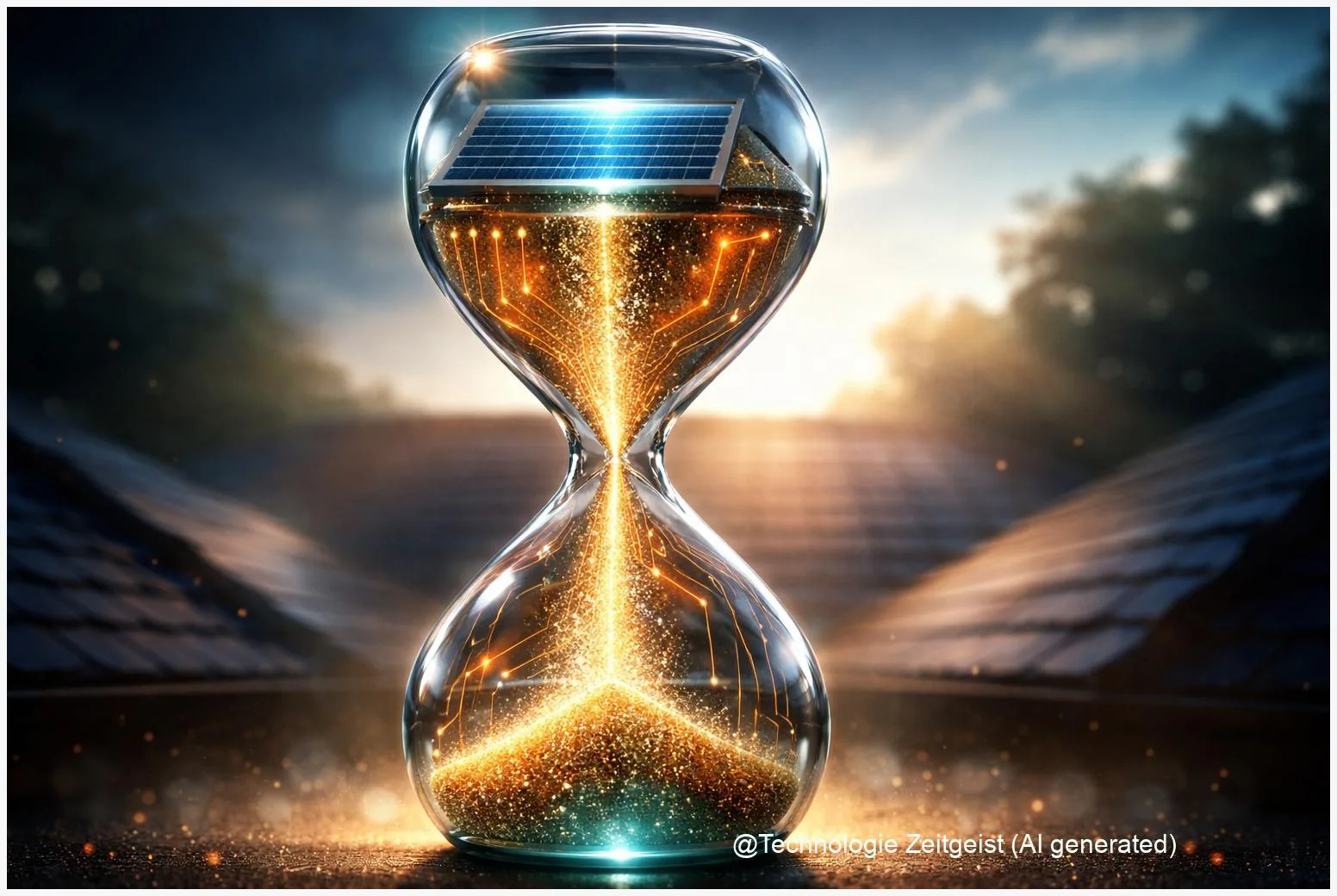
Higher retail electricity prices have made rooftop systems recover their cost faster, and the solar payback period is now shorter for many households. A typical German rooftop system (around 4–6 kWp) produces roughly 900–1,000 kWh per kWp per year; combined with retail prices near €0.38/kWh, that often means a simple payback in the mid single-digit to low double-digit years depending on system cost and how much of the solar power you use directly. This article explains the mechanics and what influences the payback timeline.
Introduction
Rising household electricity prices push a simple question to the front: how fast does solar pay for itself? For many households in Europe, especially in countries with high retail rates, rooftop photovoltaic (PV) systems no longer pay back over decades — they can pay back within a decade or less. The math behind that claim is straightforward: solar avoids buying grid electricity at the retail price when you use your own generation, and that avoidance value is larger when retail prices are high.
To make that concrete, this article uses recent, public data on retail electricity prices and standard PV yield figures to show which factors move the payback window and by how much. The goal is practical clarity: you will learn which numbers matter, how to estimate likely payback for a typical home system, and what to watch if you are thinking about installing panels or adding storage.
How the solar payback period works
“Payback period” here means the simple or nominal payback: the number of years of saved energy bills needed to cover the initial installation cost, without discounting. It is a useful first estimate because the dominant terms are easy to measure: system cost, annual generation, the share you use directly, and the price you would otherwise pay for that electricity.
Key inputs are:
- Installed cost (EUR per watt): the upfront price for panels, inverter, mounting and installation.
- Specific yield (kWh per kWp per year): how much energy a 1 kWp system generates annually. In Germany this commonly ranges around 900–1,000 kWh/kWp; regional variation can push that higher or lower.
- Self-consumption rate: the share of produced solar energy you use in the house instead of exporting it to the grid.
- Retail price and export value: the retail electricity price you avoid when you consume your own solar power, and the lower market/export price you get for any exported surplus.
Using recent European numbers, a 1 kWp system producing about 950 kWh yearly and offsetting electricity priced at around €0.38/kWh yields roughly €360 per year in value if half the generation is self-used.
That calculation is the foundation for payback estimates. The table below shows typical scenario ranges for small rooftop systems in countries with elevated retail prices.
| Scenario | Assumptions | Approximate simple payback |
|---|---|---|
| Conservative | Capex €2.00/W, yield 900 kWh/kWp, self-use 25% | ~16 years |
| Base | Capex €1.50/W, yield 1,000 kWh/kWp, self-use 35% | ~8–9 years |
| Optimistic | Capex €1.20/W, yield 1,100 kWh/kWp, self-use 50% | ~4–5 years |
These numbers are simple payback examples: they do not include financing costs, inverter replacement, or maintenance. Yet they show why rising electricity prices shorten the solar payback period — every euro you avoid buying from the grid reduces those years noticeably.
What it looks like in everyday households
Take a typical household using about 3,500 kWh per year. In Germany and similar European markets, the retail price recently reported by Eurostat is around €0.38/kWh for the medium consumption band. At that price, every kWh of self-generated solar power you use directly prevents buying from the grid at close to that level.
A 4 kWp rooftop system in a moderately sunny location (yield ~950 kWh/kWp) produces roughly 3,800–4,000 kWh per year. If you use 35% of that energy at the time of production, your annual on-site savings are the self-used portion multiplied by the retail price. The rest may be exported at a lower rate or used later with a battery.
Real examples often differ in three practical ways:
- Timing mismatch: households typically use most energy in mornings and evenings, while PV peaks at midday. That reduces immediate self-consumption unless behaviour changes or a battery is installed.
- Installation costs: roof access, structural work, and local labour rates cause significant capex variation between projects.
- Export revenues: small residential export prices or feed-in tariffs are usually much lower than retail prices, so exporting large shares reduces the system’s value to the household.
Two practical responses improve payback: increase self-consumption (shift loads like laundry to sunny hours or add smart controls) or add storage to use midday generation later. Batteries raise upfront costs, but they can extend the share of solar energy you use at retail prices — which is the mechanism behind faster effective payback in many cases.
Opportunities and risks to consider
Higher electricity prices present clear opportunity: they increase the avoided-cost value of each kWh consumed from your own panels. For homeowners paying typical European retail rates, that often means payback windows shrink by several years compared with a low-price environment.
However, there are important risks and tensions:
- Policy changes: export rules, taxes, or subsidy schemes can change the economics quickly. When export compensation falls, systems that rely on selling surplus energy become less attractive.
- Market value erosion: as more distributed PV comes online, midday wholesale prices can decline, reducing export revenue in some markets.
- Technical replacements and hidden costs: inverters typically need attention or replacement after roughly 10–15 years; minor roof repairs or unexpected structural work can raise total project cost.
- Behavioural limits: if a household cannot shift usage or afford storage, self-consumption stays low and payback extends.
Balancing these factors is a practical exercise. For example, a household with flexible daytime loads and access to competitive installation prices will often reach payback in under ten years today. Conversely, households with high installation costs and low self-consumption may still find payback stretches beyond 15 years.
What may change next and what you can track
Several developments will move the math over the next few years. Module and inverter prices have trended downward for decades but now fluctuate with supply-chain and policy factors. At the same time, retail electricity prices respond to energy markets and national levies, which can push household prices up or down by meaningful amounts.
Key indicators to track if you want an up-to-date view:
- Retail electricity price for your consumption band (official statistics such as Eurostat or national regulators).
- Local PV yield estimates: tools like the JRC’s PVGIS offer site-specific kWh/kWp estimates that incorporate tilt and orientation.
- Typical installation costs in your region (three quotes give a quick market check).
- Changes in export or feed-in rules announced by grid regulators or policymakers.
Following those indicators makes it possible to update a simple payback calculation regularly. If retail prices continue to stay high or rise, the avoided-cost value of self-consumption will remain the main driver that shortens the solar payback period for households.
Conclusion
Higher retail electricity prices have made household solar more attractive because each kWh produced and used at home replaces a relatively expensive purchase from the grid. The most important factors for payback are the initial system cost, the site’s annual yield (kWh/kWp), how much of the generation you use directly, and the difference between retail and export prices. For many households in markets with retail prices near €0.38/kWh, a well-priced 4–6 kWp system with moderate self-consumption will commonly reach simple payback within roughly 5–10 years under typical assumptions; less favorable combinations push that window wider. Weighing technical constraints, likely replacements and changing policies is essential for a realistic estimate.
Join the conversation: share your experience with home solar and how you manage self-consumption.

Leave a Reply