
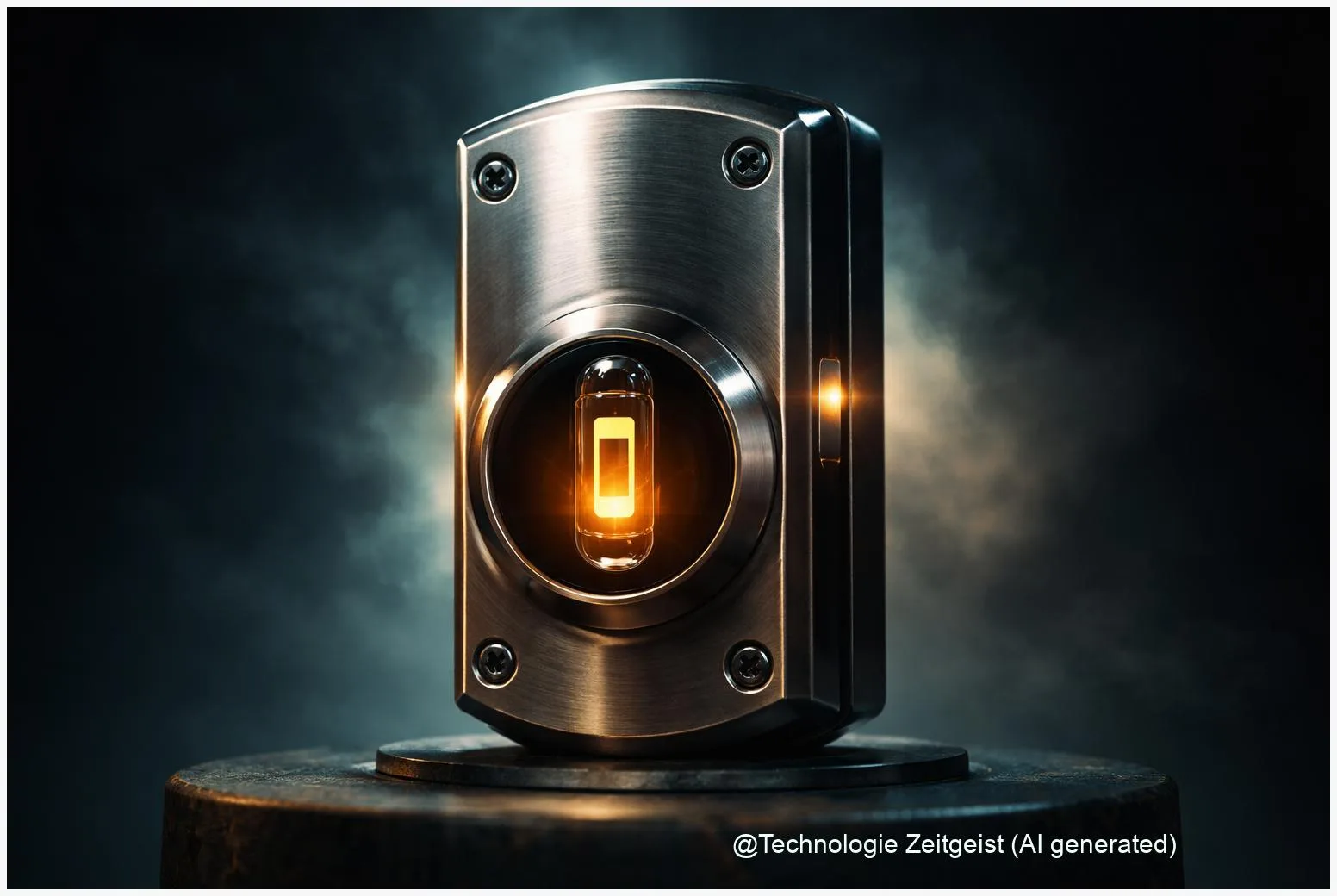
Choosing the right smart locks can feel confusing: you want convenience but not lower security or frequent battery changes. This article focuses on practical, long-lived criteria for smart locks in 2026. It highlights seven features that make a real difference—connectivity and battery behavior, mechanical grade and tamper resistance, audit logs and update policies, and local operation versus cloud dependency—so you can compare models with confidence.
Introduction
You want a lock that opens for guests, stays secure against attackers, and does not demand battery swaps every few months. In 2026 the options include devices using Matter over Thread or Wi‑Fi, older low-frequency meshes like Z‑Wave, or Bluetooth Low Energy (BLE) point-to-point locks. Each approach affects battery life, reliability, and privacy in concrete ways that matter for everyday use.
Technical terms you will see: Matter is an industry standard that makes IP-based smart-home devices speak a common language across brands; Thread is a low-power IPv6 mesh network often used with Matter; Z‑Wave is a mature low-frequency mesh radio known for low power; BLE is a short-range radio commonly used for mobile unlocking. These brief explanations help when comparing data sheets and product pages.
How smart locks work today
At its simplest a smart lock combines a mechanical bolt and an actuator (motor or solenoid) with an electronic control unit and wireless radio. The control unit interprets commands—pin codes, app requests, or automated rules—and triggers the actuator. The radio and firmware determine how the lock connects to the rest of the home: directly to your phone, to a hub, or to the cloud.
Interoperability and low power are separate engineering challenges: a widely compatible radio stack may use more baseline energy than a highly optimized proprietary mesh radio.
That contrast explains one frequent real-world choice: brands aiming for broad platform support use Matter/Thread or Wi‑Fi, while others prefer Z‑Wave or optimized BLE to reach longer battery life and strong local behaviour.
If numbers help, community tests and vendor claims point to wide differences in field battery life; a carefully implemented Z‑Wave LR lock can often last many months to over a year on AA cells under moderate use, while some Matter/Thread designs trade battery for richer connectivity and may need replacements more often under the same conditions (results vary by model and usage). These observations require validation with a product’s datasheet, because current draw for idle, transmit, and motor actuation is the key technical data.
If a compact comparison is useful, the table below summarizes the main trade-offs engineers and testers report.
| Feature | Description | Value |
|---|---|---|
| Connectivity | Matter/Thread or Wi‑Fi offers IP-native interoperability; Z‑Wave/LR and optimized BLE focus on low power and long range. | Matter = broader compatibility; Z‑Wave LR = better battery under many real setups |
| Battery life (practical) | Depends on radio baseline, actuation current and daily use. Datasheet current profiles are decisive. | Example: Z‑Wave LR ~12–18 months (est.); Thread/Matter often under 12 months depending on hub duty |
What to check when buying smart locks
Start by matching features to how you really use the door. Do you need long battery life because the house has many daily comings and goings? Or do you prioritise integration with a whole-home Matter setup for one app and voice assistants? Use the following checklist to compare models on equal terms.
1) Mechanical grade and fit: Look for a BHMA/ANSI grade if you need commercial-level durability. For most homes, Grade 2 is a common balance between robustness and price; Grade 1 is used for heavy commercial doors. Verify the certificate number on the datasheet.
2) Battery specifications and measured drain: A product should publish quiescent (sleep) current, transmit/receive currents, and motor stall current. If a vendor only gives a crude “up to X months” claim, ask for the assumed actuations/day. A realistic expectation in 2026 is anywhere from around 6 months for some cloud‑centric, high-activity setups to over a year for optimized low-power designs; treat single-sample user reports as indicative, not definitive.
3) Local operation and safety: Confirm whether the lock supports local unlocking and scheduled automations if the Internet or hub fails. Locks that allow local rules or direct associations between devices maintain core safety even when cloud services are down.
4) Audit logs and export: If you care who accessed the door and when, check whether the lock keeps a tamper-resistant audit trail and whether logs can be exported. Many consumer locks keep cloud logs with varying retention; few offer cryptographic signing of events. Ask how long entries are retained and whether you can export a CSV or JSON copy.
5) Firmware updates and vendor policy: How are updates delivered and authenticated? Prefer locks with signed OTA updates and a clear update cadence. A stated update policy that promises security patches for multiple years is valuable.
6) Pairing and guest access model: Look for pairing methods that avoid weak default codes and that support short-lived guest credentials. Out-of-band or multi-factor commissioning is better than a single printed PIN stuck to the device.
7) Privacy, cloud dependency and ecosystems: If a device requires a perpetual cloud connection for every lock/unlock action, understand the trade-offs. Cloud-only designs can offer convenient remote features but increase the blast radius when services or credentials are compromised.
Benefits and risks to keep in mind
Smart locks add convenience, clearer guest access control, and useful data such as who entered when. They can also reduce the risk of lost keys and simplify key distribution for caretakers. Yet every extra feature introduces a possible new failure mode: weak pairing, poor update practices, cloud outages, or mechanical wear under heavy duty.
Security researchers and surveys repeatedly emphasise that protocol-level cryptography is necessary but not sufficient. A standard like Matter provides an explicit security layer and a clear device lifecycle, which helps; however, manufacturers still decide implementation details such as secure boot, key storage, and update signing. If those are missing or inconsistent, strong transport security does not protect against a compromised device.
Audit logs are an important safety tool, but consumer products vary. Many rely on cloud aggregation with limited retention; few promise tamper-evident local logs. If event integrity matters (for rentals, caregiving, or shared properties), ask for details on log signing, retention period, and export capabilities.
On batteries: mechanical actuation draws high instantaneous currents. A motor stall or repeated forced unlock attempts can drain batteries far faster than idle radio traffic. Look for devices that document motor stall current and provide guidance for emergency power options (USB charge or backup wiring).
Finally, supply and update practices matter. A device abandoned by its vendor can leave users with unpatched security issues. Prefer products from manufacturers that publish clear update policies and, when possible, choose open or widely adopted standards to retain future integration options.
Where smart locks are headed
Expect a mix of continued standardisation and parallel low-power engineering in the coming years. Matter’s growing ecosystem brings better cross-brand interoperability and clearer security models at the protocol level. At the same time, low-frequency meshes and aggressive BLE optimisations remain relevant where battery life and local reliability are priority design goals.
Two practical trends to watch: first, more locks will combine an IP-capable interface (Matter or Wi‑Fi) with a secondary ultra-low-power radio or hub-assisted mode to preserve battery life. Second, manufacturers will increasingly be asked to publish technical data—current profiles, cycle ratings, and explicit audit-log capabilities—so buyers can validate real-world expectations.
For owners this means a clearer separation between models that prioritise convenience and cloud features, and models designed for long autonomous operation. If you install a smart lock now, consider mounting quality, strike alignment, and an honest assessment of how many actuations per day you expect—those are often stronger predictors of lifetime than any headline feature.
Conclusion
Smart locks in 2026 offer a real choice: favour broad compatibility and cloud features, or favour long battery life and local resilience. The seven features that matter most are mechanical grade, clear battery and current figures, local operation, secure firmware updates, audit-log honesty, pairing and guest‑access models, and an interoperable radio stack if you want cross-brand flexibility. Compare datasheets for current draws and actuation cycles, verify certification numbers for mechanical grades, and prefer devices with signed OTA updates and clear log-export options. Doing so reduces surprises and keeps the door simple to use while keeping security and privacy under control.
Share your experience with a recent smart lock or ask questions below—practical reports from real homes help others choose wisely.

Leave a Reply