
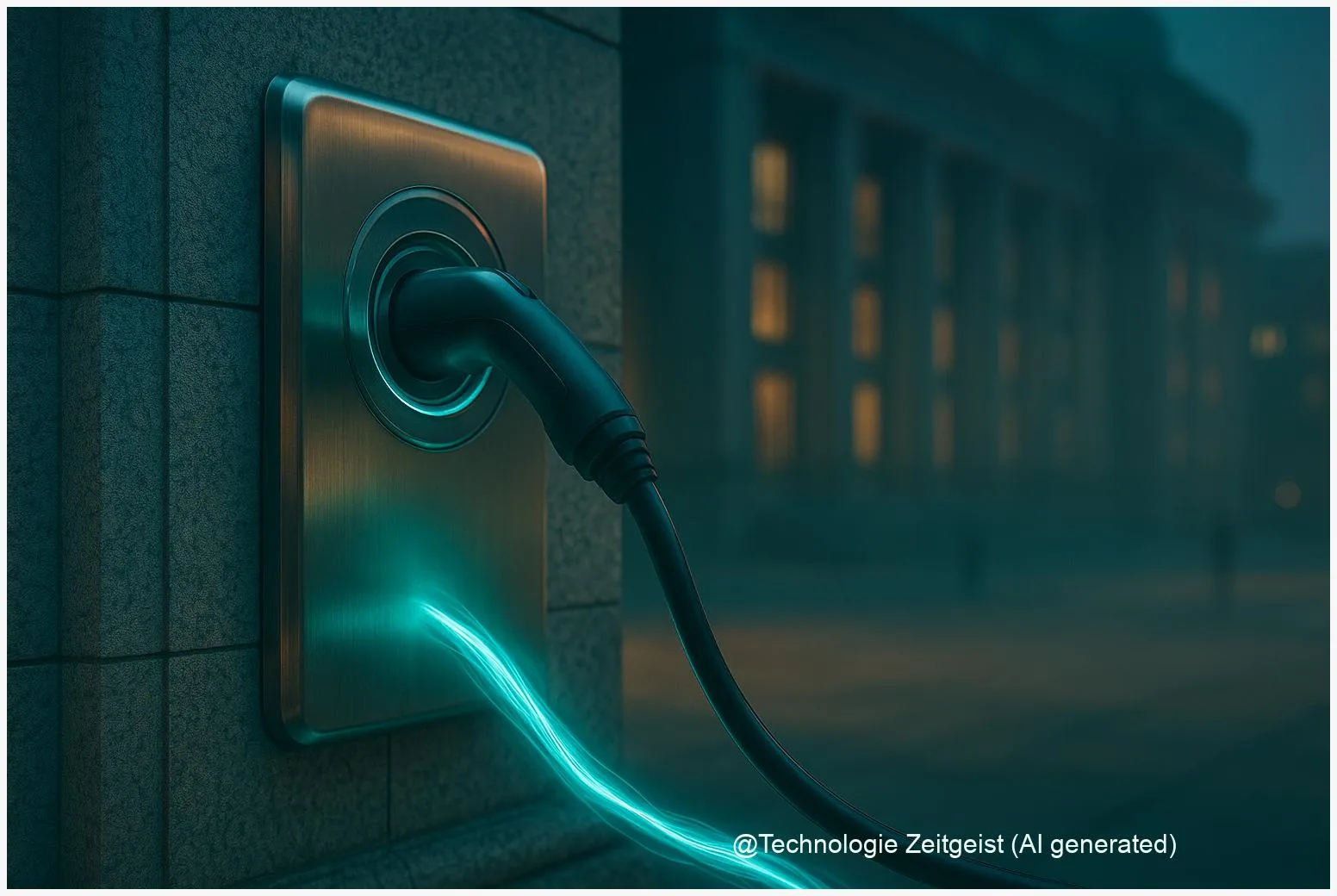
Public EV chargers are moving from car parks and motorway stops into the façades and forecourts of government buildings because many drivers cannot charge at home and public institutions sit where people already work, vote or access services. This article explains why public-sector sites are practical places for charging, what rules and numbers shape the rollout, and how local authorities can avoid common pitfalls while improving access and reliability.
Introduction
Charging an electric car is easy for many people who park at home. But a large share of urban residents, commuters and visitors do not have a private driveway. When you visit a city hall, public library or a social services office you may need to recharge — and that is where government buildings come in. They are dispersed across towns, open to many people during working hours and often sit near public transport nodes.
Policymakers have started to treat public buildings as strategic sites for chargers for two reasons. First, public institutions can reach users who are excluded from home charging. Second, legal frameworks introduced in recent years set minimum targets for publicly available charging and corridor coverage; these rules make public-sector sites a logical place to focus installations that are both visible and accessible. The rest of the article outlines the regulatory context, the practical choices for installation and operation, the trade-offs planners face, and what drivers can expect when they look for a charge near a government building.
Why public buildings matter for charging
Public buildings—city halls, courts, public libraries and health centres—play a role beyond their formal functions: they shape how residents move in a town. Installing chargers at these sites helps reach people who live in apartments, who work in the city centre, or who rely on daytime parking. A recent EU regulation created a clearer obligation to expand publicly available chargers along major transport corridors and within urban networks; the law uses a capacity metric expressed in kilowatts per registered electric vehicle and sets corridor targets such as chargers of 150 kW at regular intervals on principal highways.
Public-sector locations can act as reliable, well-signposted nodes in a broader charging network.
That metric—kW per vehicle—helps planners compare regions with different vehicle fleets, but it also hides practical detail: it does not tell if the full power can be used by several vehicles at once (the question of simultaneity). A location can report a high total output while in practice sharing that capacity across bays. For government buildings this distinction matters. If a town wants chargers that are available for short visits, planners must prioritise simultaneous usable power over headline capacity.
Practical constraints commonly surface at public buildings: limited pavement or parking space, protected heritage façades, and grid capacity. Grid upgrades are often the most time-consuming cost item. In many cases, installing ducting and spare electrical capacity (pre-cabling) during other works is the cheapest path. The EU’s building-related guidance already recommends pre-cabling in renovation and new construction to reduce later disruption.
If numbers are useful: European-wide statistics show a rapid increase in public points over recent years, and regulators now require corridor-level fast chargers such as the 150 kW hubs on major roads. Locally, however, the density of publicly usable chargers varies widely between cities, which is why public buildings are a practical way to fill gaps in daytime and central-city coverage.
| Charger type | Description | Typical power |
|---|---|---|
| Slow / Destination | Used where vehicles park for hours, e.g., libraries | 3.7–22 kW (AC) |
| Fast | Daytime top-ups in town centres or large car parks | 22–50 kW (AC/DC) |
| Rapid / High-power | Short stops, corridor hubs, motorway access | 50–150 kW (DC) |
| Ultra-fast | Strategic highway stations and high-turnover sites | >150 kW (DC) |
Public EV chargers in government buildings
Governments can choose different procurement and operating models for chargers at their sites. The simplest is direct procurement: the authority buys and operates chargers, which gives control over pricing and availability. A common alternative is a public–private partnership where a private operator installs and runs equipment in return for a long-term concession. There are also service models where the public body provides the site and the private partner covers installation, grid works and day-to-day operation.
Key design choices include the charge power, the number of bays, payment options and accessibility features. For buildings that serve the public during the day—administrative centres, job centres, community hubs—installing a mix of 22 kW destination chargers for longer stays and one or two 50–150 kW bays for quicker top-ups covers most needs. If a building hosts a fleet of municipal vehicles, dedicated higher-power bays and separate metering simplify billing and maintenance.
Procurement should specify interoperable connectors, ad‑hoc payment (card or app) and required uptime levels. The EU’s accessibility guidelines recommend physical access space, clear signage, and payment interfaces that do not require a smartphone—for example contactless cards or on-site terminal access. Where buildings are historically listed or space is tight, solutions such as curbside chargers a short walk away or shared-use agreements with nearby private parking can deliver access without altering protected structures.
A practical barrier is the electricity network. Government buildings often share local transformers with nearby houses and businesses, so adding high-power chargers can necessitate costly upgrades. Experience from countries that accelerated rollouts shows two useful tricks: prioritise pre-cabling and ducting during renovation projects, and use staged implementation—start with lower-power units and reserve space and capacity for later upgrades. That keeps early costs manageable while preserving the option to add rapid chargers as demand grows.
Opportunities and risks
Installing chargers at government buildings brings clear benefits. It increases equitable access for residents without private parking, supports municipal fleet electrification, and signals public commitment to sustainable transport. Visible chargers at civic sites are easy for residents to find and can normalise electric driving for people who may otherwise not consider it.
There are trade-offs. The upfront cost can be significant, especially when grid reinforcement is required. Maintenance and reliable operations are often underestimated in project budgets: charging hardware, software updates, and customer support require ongoing funding. Another risk is poor siting: chargers placed where they are rarely used still incur running and maintenance costs, while high-visibility sites can become congested if a few bays serve many users.
Interoperability and payment are practical friction points. Some older charge points accept only a vendor’s app or RFID card, which blocks ad‑hoc users. AFIR and related guidance push for ad‑hoc payments and clear pricing, but real-world implementation varies by operator and country. Vandalism and misuse are further operational concerns in remote or poorly lit locations; good lighting, surveillance and rapid-response maintenance contracts reduce these problems.
Equity and accessibility must not be an afterthought. Charging infrastructure at public buildings should allow access for people with reduced mobility and not just serve visitors with private garages. The EU guidance published in 2025 includes specific design considerations and recommends usability checks with local disability groups. Ignoring these requirements risks excluding users and creating infrastructure that appears public but is effectively unavailable to many people.
What to expect next
Expect governments to prioritise chargers at public buildings where they can show impact quickly: council offices, large libraries, hospital outpatient centres and municipal car parks are likely early candidates. On major roads, AFIR-led corridor targets will continue to drive installation of 150 kW hubs roughly every 60 km on primary routes, improving long-distance travel options.
For drivers asking “Where can I charge an EV near me?” the practical answer is to use a combination of operator apps and community maps. Tools such as PlugShare, Zap‑Map and OpenChargeMap list nearby stations, show connector types and often include user comments about usability. For key trips, check the operator’s live status or the official public charging portal where available, and ensure a payment method accepted at the charger is configured in advance.
Policy-wise, expect more precise reporting and harmonised data. Current regulations use kW per vehicle as a planning unit, but authorities are moving toward reporting usable simultaneous capacity and clearer tags for accessibility, payment and uptime. That will help drivers and planners alike: passengers will see reliable availability and towns will be able to plan grid investments with better data.
Finally, funding patterns should shift. Early phases often require public grants to cover grid and site costs; as markets mature, private investment and operation models scale up. Governments that prepare sites—by pre-cabling, reserving space and setting clear procurement rules—reduce the total cost and speed up private rollout. In short: public buildings are a practical next wave for visible, accessible chargers that serve many people every day.
Conclusion
Public EV chargers at government buildings address a clear gap: many residents lack home charging, and public institutions can serve visitors, commuters and municipal fleets in one place. Legal targets for corridor coverage and growing public demand make civic sites attractive for both destination and rapid chargers. Successful projects combine realistic grid planning, clear procurement rules, accessible design and practical payment options to keep chargers usable and inclusive.
While costs and technical constraints are real, staged installations and careful site selection reduce financial risk. Over time, clearer reporting standards and improved data will make planners’ decisions easier and drivers’ experiences more predictable. For towns that prepare now—by auditing sites and pre-cabling during renovations—government buildings will become effective, durable nodes in the public charging network.
If you have local experience with charging at public buildings, share your observations and the location — it helps others and informs better planning.



Leave a Reply