
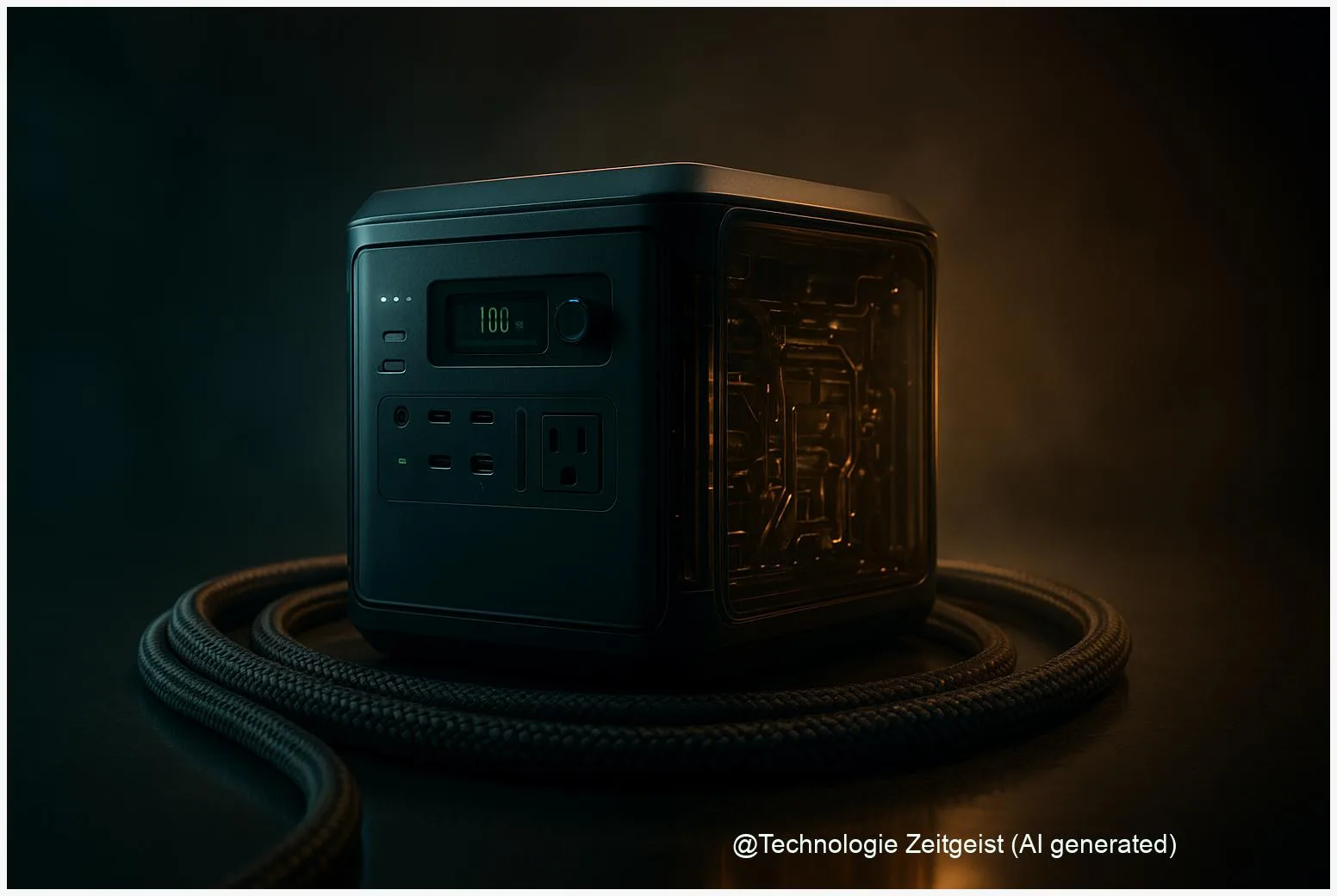
Portable power stations are increasingly considered for everyday home backup because they combine battery storage, inverter electronics and often solar charging in a single box. The market shift reflects more frequent local outages, lower battery costs and wider solar adoption; the result is that many households now can keep lights, a router and a fridge running for hours without complex installation. This change makes portable power stations a practical option for resilience and short-term autonomy.
Introduction
Frequent short outages, storm damage and a desire for independence from a single grid connection are prompting more households to consider simple backup options. A portable power station is one of the least disruptive ways to add temporary resilience: it needs no home rewiring, can be moved around and often charges from a wall outlet, a car or directly from solar panels.
How portable power stations work
At their core, portable power stations combine a rechargeable battery, an inverter that converts stored DC to AC, and a control system that manages charging, discharging and safety. Many models include MPPT solar charge controllers and multiple outputs. Typical battery chemistries are Li-ion and LiFePO4.
Practical home uses and simple setups
Small stations (500–1,000 Wh) can keep lights, a router and phone chargers running for hours. Larger units (1.5–3 kWh) or multiple batteries are needed for heavier loads. Solar-ready models accept 100–500 W of solar input; charging time depends on panel output and sun.
Benefits, limits and safety considerations
Benefits: immediate backup without installation, mobility, and pairing with solar. Limits: energy density, charging speed, and end-of-life recycling. Look for BMS, safety certifications, and clear recycling guidance.
Where the technology is headed
Trends include falling battery costs, greater LFP adoption, modular systems, faster charging and smarter software. Regulation on safety and recycling will influence product design and cost.
Conclusion
Portable power stations are a pragmatic path to short-term home backup. For basic resilience a unit between 500 and 2,000 Wh meets many needs. Consider larger systems or hybrids for extended outages and check safety and recycling support.

Leave a Reply