
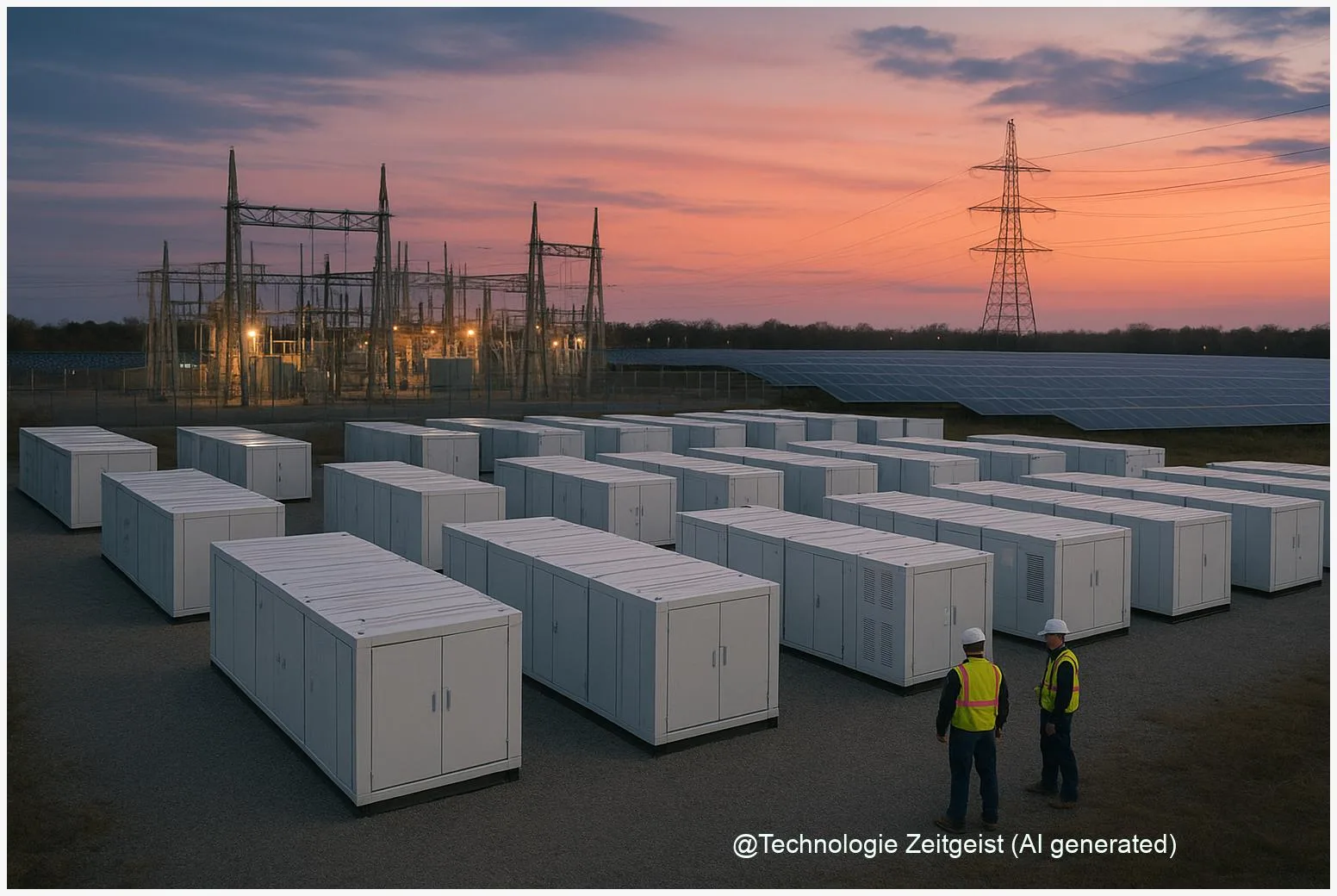
Massachusetts energy storage tender of about 1.3 GW signals a major step toward adding grid-scale batteries that can help manage peak demand and integrate more renewables. The award size refers to peak power capacity; the exact project mix, duration in megawatt-hours and winners must be checked in official state and grid operator documents. This article explains what such a tender means for the grid, how large battery projects operate, and which questions matter for communities and investors.
Introduction
Massachusetts has awarded — or set a goal for — roughly 1.3 gigawatts of large‑scale energy storage in a recent public tender process. That figure refers to peak power: the maximum rate at which batteries can deliver electricity to the grid at a moment in time. For readers who follow power systems loosely, this matters because batteries add short-term flexibility: they store electricity when supply exceeds demand and release it when the system needs it the most.
Think of a battery plant as a fast-responding reserve that can replace a portion of the services formerly supplied by gas turbines: frequency control, fast ramping and peak shaving. The tender’s headline number — 1.3 GW — is useful, but it leaves out a second key detail: how many megawatt‑hours (MWh) of stored energy each installation will hold. MW tells how fast energy can flow out; MWh tells how long it can flow. Both matter for grid value, permitting, and cost.
State agencies and the regional grid operator will supply the definitive project lists and technical details. This article uses those institutional categories and public reporting to explain the likely design, benefits and trade‑offs of a tender of this size, and which local and market signals to watch next.
What the Massachusetts energy storage tender means
An energy storage tender is a public process in which a government agency asks companies to propose projects that meet certain technical and policy goals. The state then evaluates bids and awards contracts or incentives. When the tender cites 1.3 GW, it describes the total peak power capacity sought across all selected projects, not necessarily a single site. The details that determine real-world impact are the MWh per site, technology chosen and contract terms.
The headline capacity gives scale; the duration and contract design determine operational value.
Two short clarifications help read announcements correctly. First, MW (or GW) measures how much power a system can supply instantly; MWh measures how much energy it can store and deliver over time. A 100 MW battery with 2 hours duration stores 200 MWh; a 100 MW system with 4 hours stores 400 MWh. Second, tenders often bundle several projects: the 1.3 GW total might be five projects of 260 MW, or a mix of many smaller sites.
Why 1.3 GW is notable: at system scale it can provide rapid response during evening peaks, reduce reliance on peaker plants and absorb extra wind or solar generation during low-demand hours. The exact contribution to emissions and reliability depends on how the storage is scheduled and whether the contracts reward energy, capacity or grid services.
If a short, comparative table helps:
| Feature | Description | Typical value |
|---|---|---|
| Tender headline | Total requested peak power | 1.3 GW |
| Common duration | How long batteries can discharge at full power | 2–4 hours (typical) |
Official documents from the Massachusetts Department of Energy Resources and ISO New England will list winners, project MW/MWh, and timelines; these are the documents to check to move from headline to detail.
How these large-scale storage projects work in practice
Large battery projects are combinations of three basic elements: battery cells, power electronics that convert direct current to grid-ready alternating current, and a control system that decides when to charge and discharge. Developers site projects where connection to the grid is feasible and where land, permitting and local acceptance align.
Operationally, developers choose between revenue streams: energy arbitrage (buying low, selling high), capacity payments (being available to supply power at peak times), and system services like frequency regulation. A common design for tenders today pairs relatively high MW with modest duration — for example, 4 hours — because that profile covers many market needs and fits existing lithium-ion technology economics.
Everyday example: when rooftop solar peaks at midday and demand is low, a battery charges from excess solar. Later, during evening peaks when many households use lights and appliances, the battery discharges and reduces the need for fast-start fossil plants. For grid operators, predictable dispatch and clear contractual rules determine whether this sequence reduces emissions and costs.
Project approval typically moves through interconnection studies with the regional grid operator, permitting at state and municipal levels, equipment procurement and construction. Interconnection queues can be long; a tender with firm contracts often accelerates developers by offering revenue certainty and priority in permitting or grid studies.
From a technical view, batteries respond within seconds to frequency changes and can provide hundreds of cycles per year. Durability and degradation matter: the economic model must balance upfront capital costs against expected cycles and replacement expenses over a 10–20 year project life.
Opportunities, costs and system tensions
A tender of this scale creates clear opportunities. For utilities and grid operators, it increases short-term flexibility, can lower peak prices and reduces the frequency of expensive peaker-plant starts. For developers, long-term contracts can unlock project financing and economies of scale. Communities may gain local jobs during construction and, in some cases, resilience benefits if projects include islanding or backup capabilities.
At the same time, tensions arise. Cost is front and center: battery projects have substantial upfront capital expenses, and returns depend on market design and contract length. If a tender primarily rewards short-duration services, projects may be optimized for fast revenue rather than longer duration that supports multi-hour reliability. That can leave gaps on really long peak days or when renewables underperform for extended periods.
Another concern is the siting and permitting process. Large projects require land, often near switching stations, and face municipal review. Communities may worry about safety, traffic during construction, or visual impacts. Clear communication about recycling plans, fire suppression systems and long-term uses of sites helps reduce friction.
Market design matters too. If capacity markets or ancillary service markets pay unevenly, storage owners chase the highest short-term returns, which can be good for investors but not always aligned with public policy goals like emissions reduction. Public tenders can shape incentives by setting minimum duration, prioritising co-location with renewables, or adding resilience criteria.
Finally, supply chain and labor considerations are practical risks: cell manufacturing constraints, shipping delays and skilled-labor availability can shift timelines and costs. Policymakers and developers typically factor these elements into schedule buffers and contract clauses.
What comes next: timelines, grid impacts and signs to watch
If tender awards are final, typical project timelines run from about one to three years for permitting, interconnection work and construction, though complex sites can take longer. Staggered commissioning — bringing units online in phases — is common for multi‑site portfolios, which smooths integration for the grid operator.
Key signs that show progress or problems: publication of the official award notice with detailed MW/MWh breakdowns; ISO New England interconnection queue updates; executed contracts or publicly filed agreements by developers; and permitting decisions at the municipal level. Those documents reveal how much of the 1.3 GW is already tied to firm projects and how much remains aspirational.
Operational impact depends on duration and dispatch rules. If much of the awarded capacity provides 2–4 hours of storage, the grid will see increased ability to shave evening peaks and absorb midday renewables; if the capacity were shorter (e.g., 30–60 minutes), the benefit shifts toward fast frequency response without much energy shifting.
For consumers and local stakeholders, look for announcements on community benefit agreements, planned local hiring, and emergency‑backup capabilities. For market participants, watch for changes in capacity market clearing prices and for new revenue stacking strategies from storage owners combining multiple services.
Finally, the broader lesson: a large tender sets direction but the actual effect depends on contract design and project execution. The headline 1.3 GW is a starting point; its value unfolds in the technical details that will appear in official state and grid operator filings over the months that follow.
Conclusion
The Massachusetts energy storage tender at around 1.3 GW signals a policy push to add substantial short‑term flexibility to the regional grid. That capacity, when paired with sufficient duration in MWh and clear contractual incentives, can reduce peak costs, support more renewables and ease pressure on fast‑starting fossil plants. The important follow-up is concrete detail: which projects won, how many hours of storage each site offers, and how contracts reward different grid services. Those specifics determine whether the tender delivers resilience, emissions benefits and value for ratepayers.
Join the discussion: leave a comment or share this article if you found the analysis useful.

Leave a Reply