
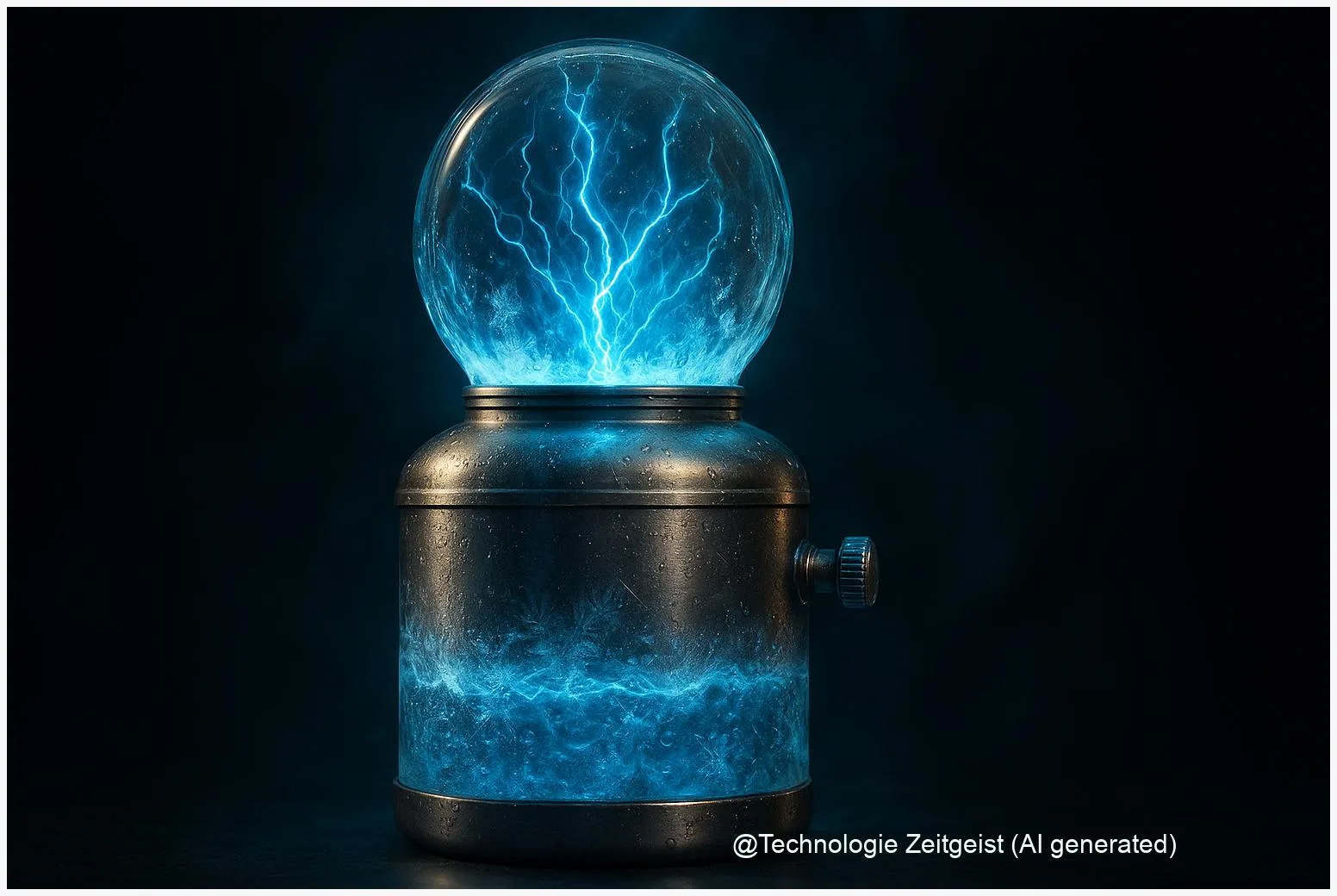
Liquid-Air Energy Storage is a way to store large amounts of electricity by turning air into a cryogenic liquid and later turning it back into power. The Carrington project is a high-profile example that plans around 300 MWh of storage and a 50 MW power rating; it shows how this technology could help balance electricity systems over hours or days. This article looks at how the process works, where it fits among other grid-scale storage options, and what practical trade-offs matter for decision makers.
Introduction
When electricity supply exceeds demand — for example on very windy nights — storing that surplus cheaply and releasing it when needed becomes essential for a renewable-led grid. Many storage technologies exist; most people recognise batteries, but they are not always the best solution for multi-hour or multi-day needs. Liquid-Air Energy Storage offers a different trade-off: lower energy cost per stored megawatt-hour at large scale, but with lower conversion efficiency than some battery systems. The Carrington project, backed by a major funding round, aims to reach about 300 MWh of stored energy and roughly 50 MW of output power. Reading about one project helps understand the general properties of the technology and the questions planners and communities typically face.
Liquid-Air Energy Storage: How it works
Liquid-Air Energy Storage stores electricity by cooling ambient air until it liquefies. Liquefied air is compact and kept in insulated tanks at low temperature. When power is needed, the liquid air is warmed and expanded through a turbine to generate electricity. Three stages describe the system: the charging stage (air compression and liquefaction), the storage stage (cryogenic tanks), and the discharging stage (regasification and power generation). Thermal energy storage components capture heat from compression and cold from vaporisation to reuse during the cycle and improve performance.
The key engineering idea is to keep and reuse heat and cold within the process so less input energy is wasted.
Two technical points make a large practical difference. First, round-trip efficiency (how much of the input electricity you get back) typically sits around 50–60 percent for stand‑alone LAES systems, according to reviews of academic and industry studies. Adding careful thermal recovery or pairing the plant with an external heat source can raise that figure toward the mid‑60s in model studies, but those cases rely on access to waste heat or other infrastructure. Second, the physical footprint and storage duration are different from batteries: cryogenic tanks store energy in bulk for hours or days with limited degradation over decades, making LAES suitable for seasonal or long-duration use where frequent cycling is not required.
If a quick comparison helps: lithium-ion batteries usually reach higher efficiency (often above 85 percent) and are ideal for short, frequent cycles. LAES trades efficiency for potentially lower cost at very large scale and for longer discharge times. That makes it part of the broader category known as long‑duration energy storage (LDES), which planners are increasingly interested in.
Table: Core features at a glance
| Feature | Description | Typical value |
|---|---|---|
| Energy medium | Liquid air (cryogenic) | Stored at low temperature |
| Round‑trip efficiency | Electricity in vs. electricity out, AC‑to‑AC | ~50–60 % (stand‑alone) |
Everyday use and real projects
Real projects show how the theory maps to practice. Carrington — the UK project often cited in industry reporting — planned around 300 MWh of storage and 50 MW of power, which corresponds to roughly six hours of continuous output at full power. A major financing announcement in mid‑2024 packaged around £300 million to start construction, and public statements in 2025 confirmed ground‑works and partner participation. Those figures come from company releases and industry coverage; they illustrate the scale at which LAES moves from pilot to commercial sizing.
Operationally, a plant of that size would act differently than a battery farm. Instead of many short charging cycles, operators expect to charge the tanks during extended periods of cheap or surplus electricity — for example, nights with strong wind generation — and discharge for several hours during peak demand windows or when renewable output drops for a day or two. For grid operators this can mean fewer emergency interventions and a more predictable resource for balancing several hours at a time.
For local communities, the visible parts are construction, cryogenic tanks, compressor halls, and noise/manpower during build‑out. Once operating, LAES plants have relatively low local emissions and no large chemical fire risk associated with batteries, but they do require careful handling of very cold liquids and safety procedures around cryogenic systems.
Developers highlight a multi‑decade operational life for these mechanical systems; independent, long‑term field data for commercial‑scale installations remain limited because few projects of this scale have operated for many years yet. That means early commercial projects serve both as power assets and as important data sources for future planning.
Opportunities and risks
LAES brings several opportunities. First, it is relatively location‑flexible: unlike pumped hydro, it does not need a large height difference or reservoir and can therefore be sited nearer to demand centres. Second, its storage duration suits system needs that batteries struggle to meet economically today, such as bridging multi‑hour lulls in wind or solar production. Third, cryogenic tanks degrade slowly, so long asset life is plausible if maintenance is sound.
At the same time, the technology has clear risks and trade‑offs. Lower round‑trip efficiency means more electricity must be available for charging to deliver the same output energy compared with high‑efficiency batteries. That has cost and emissions implications unless charging uses surplus renewable power or low‑carbon grid electricity. The economics therefore depend heavily on local electricity price patterns, access to waste heat, and market rules that reward capacity over pure energy throughput.
Project risk is another factor. Moving from demonstration plants to first full‑scale commercial sites involves construction complexity, supply‑chain demands for compressors and cryogenic equipment, and integration with local grid infrastructure. Financing structures often include public or development bank participation because the technology is new at scale; that can lower investment risk but also means projects draw particular scrutiny on timelines and deliverables.
Finally, knowledge gaps remain. Several technical reviews point to a range of reported efficiencies and underline that comparisons require consistent system boundaries. Some influential studies on LAES are from 2021 and earlier; since those are more than two years old they are still valuable for fundamentals but may not fully reflect the latest engineering progress on commercial projects. Practitioners should therefore treat older model numbers as informative but verify them against emerging field data from operating plants.
Where this can lead
Over the next five to ten years, liquid‑air plants could become a regular option in system planning where long‑duration storage is needed and where sites can access low‑cost charging power or industrial heat. If several commercial projects deliver measured performance near their modelled expectations, the technology may scale further and attract different financing patterns that do not rely on public underwriting.
Policy and market design will shape outcomes. Markets that pay separately for capacity (availability to deliver power), long‑duration flexibility, and seasonal reliability increase the revenue opportunities for lower‑efficiency, large‑scale stores. Conversely, markets that only reward short‑term energy arbitrage will favour high‑efficiency batteries.
For communities and planners, the practical implication is to treat LAES as an additional option in the toolbox: suitable where duration, low energy cost per stored megawatt‑hour, and site flexibility matter. Developers should provide transparent performance guarantees and independent measurement of round‑trip efficiency, auxiliary power use, and lifetime maintenance requirements. Regulators and system operators benefit from early access to operational data to refine planning models and market products that acknowledge long‑duration services.
In short, scaling depends less on a single material breakthrough and more on getting finance, permitting, and measured performance aligned across the first commercial projects.
Conclusion
Liquid‑Air Energy Storage offers a clear set of trade‑offs: lower conversion efficiency than modern batteries, but potential cost and longevity advantages at very large scale and for longer discharge durations. The Carrington‑scale projects demonstrate how the technology can be applied to store hundreds of megawatt‑hours and deliver multi‑hour power when renewables are low. Decision makers should combine conservative efficiency assumptions with a demand‑side view of how many hours of storage the system needs, and insist on independent field data from the first commercial plants. Over time, as measured performance becomes available, LAES may take its place among other long‑duration options that help stabilise a low‑carbon grid.
Share your thoughts and questions — join the discussion and forward this article to colleagues.



Leave a Reply