
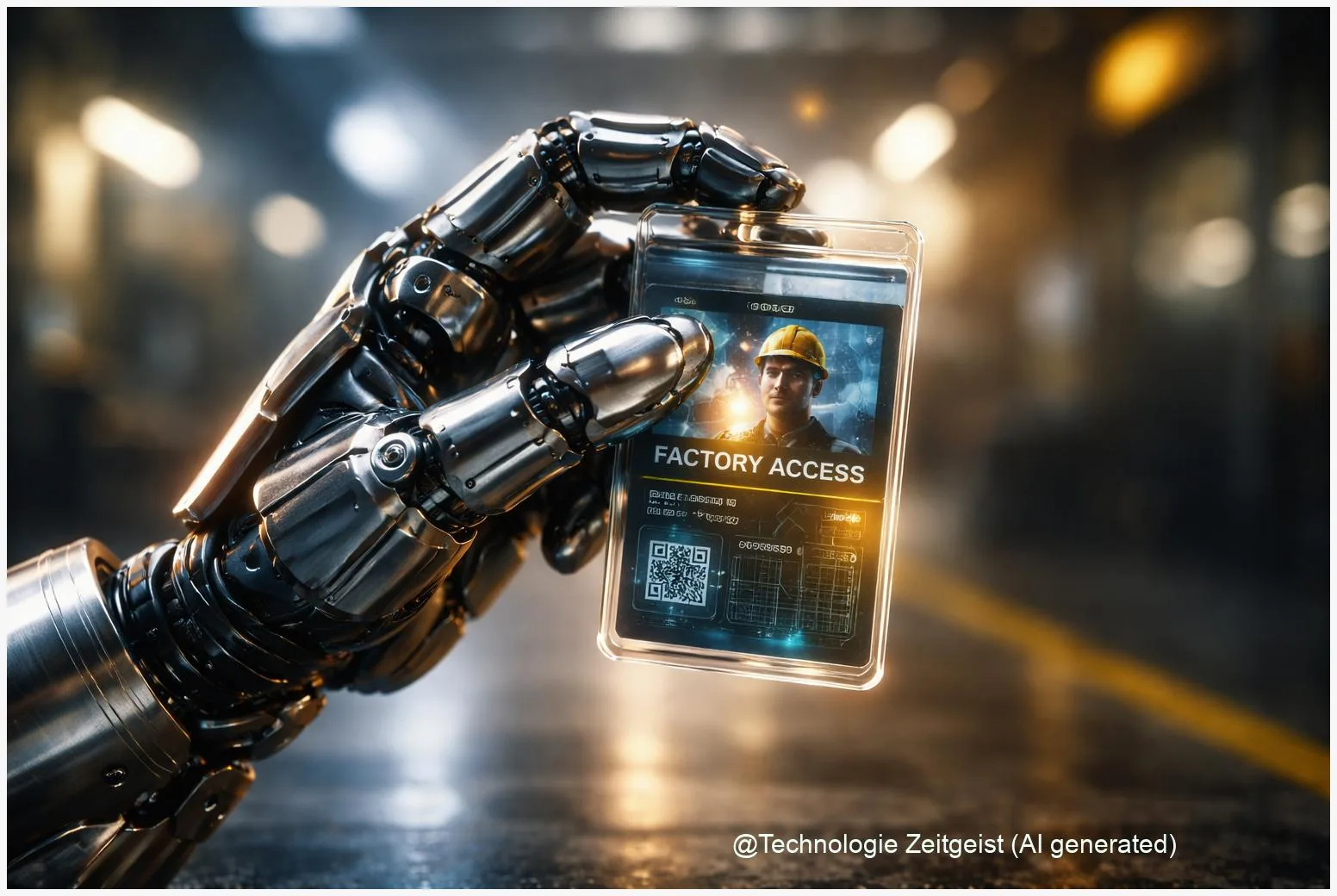
Humanoid robots are moving from lab demos to paid pilots, and 2026 will show where they first make practical sense at work. This article focuses on what changes first for factories, warehouses and service sites, and why the term “Humanoid robots” now appears in procurement discussions. You will get concrete markers—battery life, uptime, task success rates—and a short checklist to judge pilots and early deployments.
Introduction
Humanoid robots are no longer only a research headline. By the end of 2025 several manufacturers reported thousands of shipped units, mainly low-cost models from a few suppliers. That shift matters because it changes where companies can realistically test machines that look and move like people, rather than fixed arms or mobile carts.
For workers and managers the key question is pragmatic: which tasks become cheaper or safer when done by a bipedal robot, and which tasks remain better for humans? The answer depends less on a single company’s announcement and more on measurable field data: battery runtime, how often the robot completes a task without human rescue, and how much maintenance it needs.
This article describes the technical basics, current pilot sites, practical opportunities and risks, and the short list of metrics that will decide whether humanoid robots reach everyday workplaces in 2026.
How humanoid robots work
At a basic level a humanoid robot combines four elements: a mechanical body with joints and actuators, sensors for sight and touch, onboard computers that plan movement, and software that interprets data and issues commands. Actuators are the motors that move limbs; perception systems use cameras or lidar to understand the environment; and control software coordinates balance and motion.
One common technical term is neural network. A neural network is a computing model made of many simple processing units that learn patterns from data. For a robot, neural networks help recognise objects, estimate distance, or predict the next safe step while walking. These networks do not reason like humans; they map inputs (camera images, joint angles) to outputs (move left, grip) based on prior training.
“Progress in 2025 came from cheaper hardware and better integration of perception and grasping, not from a sudden leap in autonomy.”
What changed in 2025 was scale and cost. Several manufacturers reported higher shipment numbers, mostly of lower-cost units intended for trials rather than full-production work. That means many more sites can run pilots, but it also raises a question: shipments do not equal productive hours. For buyers the decisive data are uptime (hours per day the robot performs useful work), task success rate (how often it finishes a given job), and mean time between failures (MTBF).
If a table helps to compare what to check first, the basic checklist looks like this:
| Feature | Description | Value |
|---|---|---|
| Mobility | Walking speed, obstacle avoidance | 0.5–1.5 m/s typical trial range |
| Manipulation | Grip strength, fine motor control | Simple pick/place to light assembly |
| Sensors | Cameras, proximity sensors, force sensing | Standard RGB cameras + depth |
The combination of cost reductions and model improvements makes pilots affordable for more companies. But affordability alone does not guarantee value: the robot must do a defined task reliably and integrate with existing software and safety systems.
Where companies are testing them now
Early deployments in late 2025 and early 2026 concentrate on structured environments. Warehouses, logistics hubs and assembly lines are typical because the surroundings are predictable, tasks repeatable, and safety perimeters easier to enforce. Several manufacturers have reported thousands of units shipped in 2025, primarily to such trial sites.
Two patterns stand out. First, some vendors focus on low-cost, high-volume units intended for simple tasks like shelf-to-packing transfer or corridor deliveries. These machines serve as an intermediate step between floor robots and human workers: they can carry boxes, push trolleys, or move between stations with basic obstacle avoidance.
Second, a smaller group of companies aims for higher-capability humanoids that try more complex actions—fine manipulation, collaborative work with humans, or continuous operation. In those cases pilots tend to be in the vendor’s own factories or in close partnerships with one or two customers. Corporate announcements from late 2025 name internal factory pilots and limited external trials; independent reporting indicates that public, proven uptime data remain scarce.
For readers who want background on robotics concepts and machine learning that power these systems, the TechZeitGeist explainer on humanoid designs is useful: Humanoid robots explained. For how AI models help perception and language interactions, this overview is a practical reference: Large language models explained.
Concrete examples reported by news outlets include large shipment figures from several Chinese manufacturers in 2025 and pilot lines run by other vendors inside their own facilities. Those examples show a market split: many low-cost pilots to test integration, and a few cautious, higher-investment trials seeking deeper automation benefits.
Opportunities and risks for workplaces
When assessing opportunities, think in terms of tasks, not appearances. Humanoid robots make sense where a human-shaped form simplifies the job: walking on stairs, using the same tools and switches as people, or moving through human-scale spaces. That can reduce the cost of retrofitting a site compared with installing custom fixtures or conveyors.
On the opportunity side, pilots suggest benefits in flexibility and situational use: one robot can move across several stations, perform light assembly steps, or act as a mobile inspector. For small and medium businesses this flexibility is attractive because it avoids a heavy investment in bespoke automation.
Risks remain substantial. Cost models are still uncertain: purchase price may be competitive, but software licenses, maintenance, spare parts and integration work add to total cost of ownership. Many 2025 shipments appear to be trials or marketing placements; that inflates headline numbers without proving economic benefit.
Safety, standards and regulation are other tension points. Humanoid robots operate in people’s spaces and must meet workplace safety rules. Regulators in different regions are still adapting standards originally written for industrial robots. Companies should expect additional requirements on guardrails, emergency stops, and human–robot interaction logging.
Finally, workforce effects are complex. Early pilots mainly change the mix of tasks—robots often take repetitive or ergonomically risky work, while humans keep oversight, exception handling and finely skilled assembly. Planning pilots with clear training programs and redeployment strategies reduces friction more than assuming blanket job loss or benefit.
What to watch in 2026
Three measurable developments will decide whether humanoid robots move from pilot curiosity to everyday tool in 2026.
First, independent uptime and task‑success reporting. Vendors should provide telemetry showing hours in productive work, frequency of human interventions, and MTBF. A credible pilot report gives an average daily useful-hours figure, not just shipment counts.
Second, real integration with enterprise systems. Practical deployments require easy interfaces to warehouse management, order systems and safety controls. If robots arrive with open SDKs and documented APIs, integration costs fall; closed, proprietary stacks raise lifetime costs.
Third, maintenance economics. Look for transparent service agreements: response times for broken actuators, parts availability, and a clear plan for software updates. Expect warranty terms to be decisive in procurement conversations during 2026.
For businesses considering trials, request simple, measurable KPIs in contracts: average task success rate, mean downtime per week, energy consumed per productive hour, and fault-resolution times. These numbers make vendor claims comparable across offers.
Policy and standards activity will also matter. Watch for region-specific safety guidance and clarity on liability for autonomous actions. These regulatory signals determine insurance costs and whether robots can work unsupervised in mixed human environments.
Conclusion
Humanoid robots in 2026 look set to expand as a tool for structured, repeatable tasks where their human shape reduces retrofit cost. The decisive shift will not be shipment numbers alone, but verifiable field metrics: uptime, task success, maintainability and clear integration pathways. Many 2025 shipments lowered the entry barrier for pilots, yet they also highlighted a gap between marketing claims and operational data. For companies and supervisors the sensible path in 2026 is cautious experimentation with strict KPIs, not immediate large-scale replacement.
If you have experience with a pilot or questions about evaluating a trial, share your observations and start a discussion.



Leave a Reply