
Insights
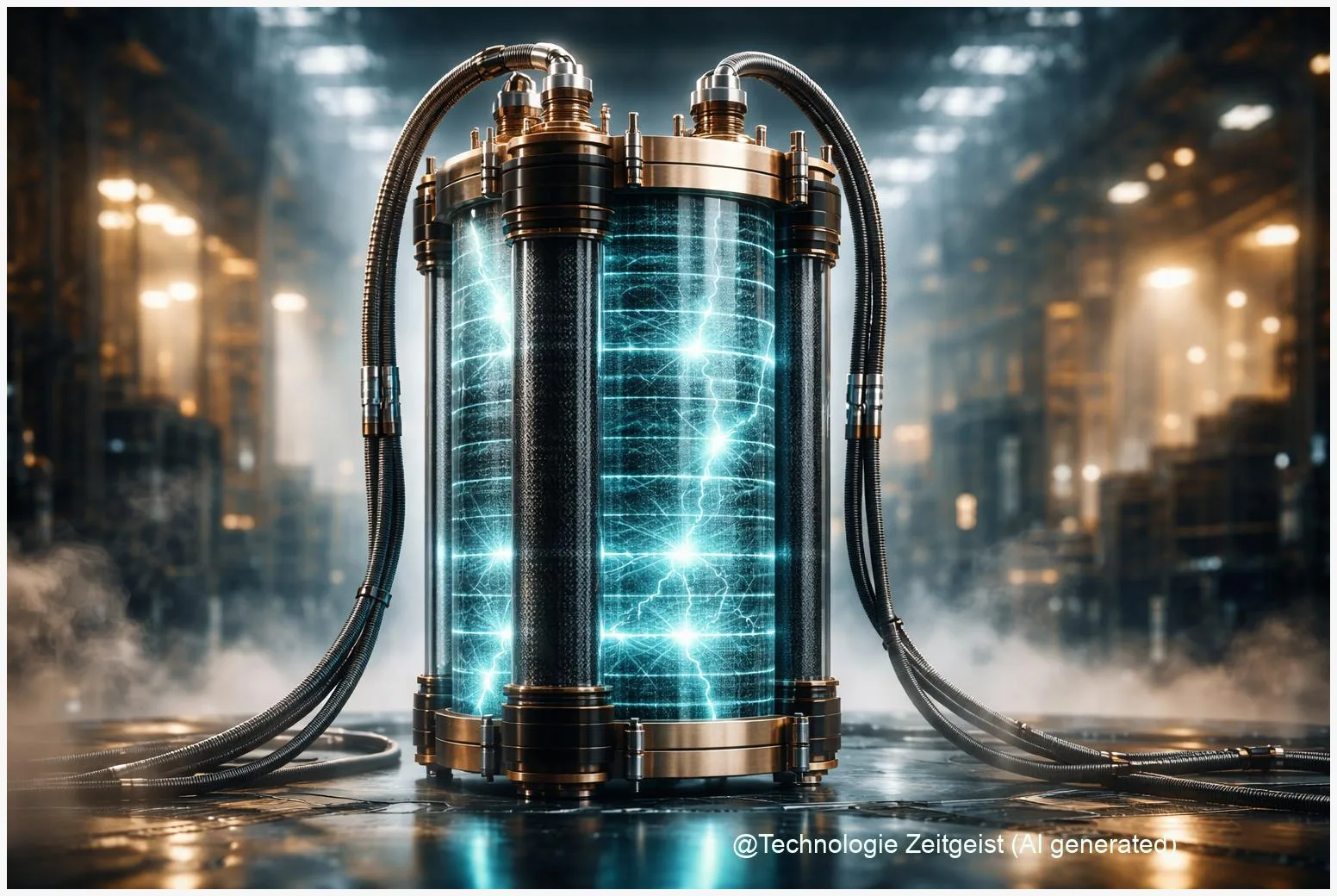
Supercapacitor energy storage is moving from lab to factory scale as manufacturers open large plants. New European facilities target fast grid services and AI data‑centres, but public information does not yet confirm a delivered GWh‑scale system without further per‑cell energy data.
Key Facts
- Skeleton Technologies opened a € 220 million SuperFactory near Leipzig in 2025, designed for up to 12 million cells per year.
- Supercapacitors deliver very high power and fast response but store far less energy than batteries; they fit seconds‑to‑minutes grid services.
- Public company releases use power (gigawatts) language; converting that into GWh requires per‑cell energy (Wh) and expected system design.
Introduction
Manufacturers announced new European factories in 2025 to scale up supercapacitor production for grid support and AI centres. That expansion brings the idea of GWh‑scale deployments into headlines, but published factory capacities use cell counts and power terms, not clear GWh energy figures.
What is new
In late 2025, a prominent supercapacitor maker opened a € 220 million SuperFactory near Leipzig, stating the plant is designed for up to 12 million cells per year and about 420 jobs. A separate factory in Finland was described in company releases as providing “one gigawatt of battery power.” These announcements are verifiable company statements that signal rising manufacturing scale, but they do not state a delivered system energy in GWh. Translating cells per year into a GWh figure requires data on energy per cell (Wh) and how cells are assembled into systems.
What it means
Supercapacitor energy storage excels at very fast power delivery and almost unlimited short‑cycle life, so grids would use it for frequency support, ride‑through and smoothing power spikes rather than multi‑hour backup. That makes supercaps attractive where seconds or a few minutes of response prevent outages or reduce stress on batteries. However, energy density remains much lower than lithium batteries and published cost comparisons can be misleading unless matched to the service duration. Note: several technical summaries cited here are from 2023 and should be seen as older than 24 months; they describe typical supercapacitor limits and use‑cases and remain useful for comparison.
What comes next
To claim a GWh‑scale supercapacitor project, manufacturers or project developers must publish per‑cell energy (Wh), planned system architectures and installation plans. The immediate next steps are product datasheets, third‑party test reports and pilot system announcements with clear kWh/GWh numbers. Regulators and grid operators will also need to adjust market rules that currently reward services with longer minimum durations, so short‑duration devices can compete fairly. Industry observers expect pilots and utility tenders in 2026–2027 as manufacturers scale production capacity.
Conclusion
Growing factory capacity shows supercapacitor energy storage is reaching industrial scale, but public announcements so far give cell counts and power figures rather than confirmed GWh system deliveries. For grid planners, the important move is from pilot to published system data: Wh per cell, kWh per rack and verified field tests.
Join the conversation: share your view on short‑duration storage and practical pilots in the comments or on social.

Leave a Reply