
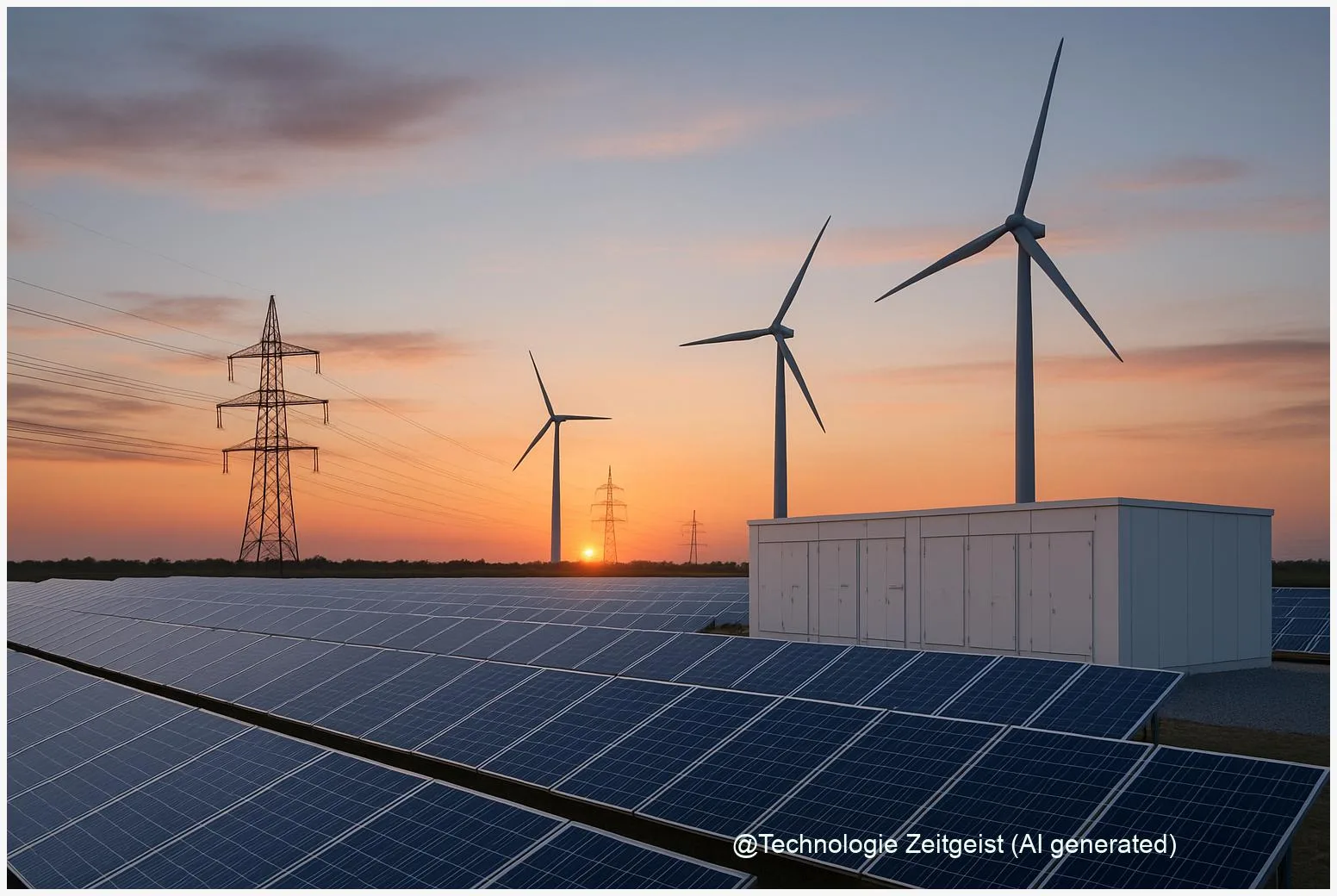
Renewable energy 2026 is likely to mean a clear majority of new electricity generation in many regions, driven by cheaper solar and wind and faster battery deployment. The following overview describes which technical and policy pieces must fall into place for renewables to become dominant by 2026, and what that shift would mean for power grids, storage and everyday electricity use.
Introduction
Electricity users today notice higher shares of solar and wind when they look at bills, local projects or new rooftop panels in the neighbourhood. Behind these visible signs are two linked challenges: matching variable supply to demand, and expanding networks fast enough so clean generation reaches consumers. This text examines how those challenges are being solved in practice and whether the conditions exist for renewables to become the dominant source of new electricity by 2026.
Technical advances — notably cheaper solar panels and improved batteries — are only one part of the story. Policy choices, permitting speed and grid investments determine how quickly new wind and solar capacity can actually deliver usable electricity. The next sections describe the fundamentals, give concrete everyday examples, outline main tensions and sketch plausible paths for the near future.
Why renewables are accelerating
The uptake of solar and wind in the early 2020s was driven largely by cost declines and clearer policy frameworks. Photovoltaic (PV) module prices fell substantially over the last decade, and wind‑project economics improved through larger turbines and better site assessment. As developers choose projects, levelized costs of electricity from utility PV and onshore wind are now among the cheapest options in many markets, which explains why annual additions of renewable capacity have been consistently high.
Cheap generation alone does not guarantee usable power; systems need flexibility—grids, markets and storage—to handle variability.
Three systemic trends enable faster integration:
- Modular scale-up: Solar and battery projects can be built in stages, lowering upfront risk.
- Market signals and contracts: Power purchase agreements and merchant markets help finance projects quickly when prices and offtake are predictable.
- Policy push: Auctions, renewable targets and streamlined permitting accelerate deployment where applied effectively.
To place a simple number: recent international analyses indicate that renewables supplied roughly a third of global electricity in the mid-2020s, with year‑to‑year increases expected in 2025→2026. Exact shares vary by source and methodology; authoritative datasets such as those from the International Energy Agency (IEA) and IRENA provide the detailed regional splits used by system planners.
If a short comparison clarifies the balance, the table below shows how the main technologies contribute and where limits appear in practice.
| Technology | Role | Typical contribution | Key constraint |
|---|---|---|---|
| Utility PV | Bulk daytime generation | High GW additions per year | Grid connection and land use |
| Onshore wind | Large-scale variable supply | Strong seasonal and diurnal complement to PV | Permitting, local acceptance |
| Battery storage | Short-term firming and peak shaving | Hours of flexibility | Cost per kWh and permitting |
| Hydro & now flexible gas | System balancing and inertia | Dispatchable capacity when available | Resource limits and emissions for gas |
Renewable energy 2026: grid and storage fundamentals
Variable generation from wind and solar changes hourly and seasonally. To keep lights on, grids need flexibility. Flexibility is the system’s ability to shift supply or demand on short notice. There are four widely used flexibility tools: batteries, flexible generation (often gas in the near term), demand response (shifting when consumers use power) and interconnections to neighbouring regions.
Batteries are prominent because they act fast and can be deployed near load centres. A battery stores excess solar at midday and discharges it in the evening. Batteries currently provide a few hours of storage economically; for multi-day or seasonal balancing, other options such as hydrogen or more grid interconnection are being developed.
Two practical points matter for 2026 dominance. First, speed of grid upgrades: even cheap renewable projects can be delayed for years if transmission lines and substations are not expanded. Second, markets and operational rules must reward flexibility. Where markets pay for short-term balancing and capacity, storage and flexible demand become financially viable; where markets are rigid, fossil plants or curtailment fill gaps instead.
Policymakers and grid operators use several levers to help this transition: clearer interconnection rules, targeted auctions for storage and measures to speed permitting of grid work. If these pieces are advanced across major markets in 2025 and early 2026, the technical bottlenecks to a rapid share increase can be reduced substantially.
Everyday examples and practical changes
Many of the changes that make renewables dominant show up in ordinary life. Households see more rooftop PV installations and new local battery offers. Companies sign long‑term power purchase agreements (PPAs) to secure low‑cost, green electricity for factories and data centres. Cities install EV chargers that are increasingly paired with local solar and storage so charging happens when cheap renewable power is available.
On the grid level, balancing areas add batteries to manage evening peaks and to provide frequency control. In some regions, industrial consumers receive price signals to shift energy‑intensive tasks to midday when solar is abundant. These examples may sound technical, but consumers experience them mainly through lower wholesale prices at certain hours, more renewables on their local grid and, sometimes, targeted incentives to install home batteries.
For households, one concrete takeaway is this: combining rooftop PV with a small battery reduces exposure to evening price spikes and increases the share of self‑consumed renewable power. For local planners, clustering distributed resources and coordinating them via smart controls reduces the need for expensive distribution upgrades.
Opportunities and risks as dominance grows
Dominance of renewables would bring clear benefits: lower operating costs, reduced fossil fuel dependence and faster emissions reductions from the power sector. However, the shift also creates tensions. Rapid build-out can stress permitting systems and local acceptance, leading to legal delays. Supply chains for modules, turbines and batteries must scale without new bottlenecks in critical minerals and components.
Grid stability is not an unsolvable problem, but it requires deliberate investment. Systems with high renewable shares need more dynamic operation, stronger forecasting and rules that remunerate flexibility. Otherwise, there is a risk of higher curtailment — when available renewable power is wasted because the grid cannot use it — which lowers the economic benefits of added capacity.
Another tension is distribution of benefits. If renewable projects are concentrated in particular regions or owned externally, local communities may not see the economic upside. Policies that support local participation and revenue-sharing help reduce resistance and make deployment smoother.
Conclusion
By 2026 many markets could already see renewables supplying most new electricity — provided grids, storage and permitting move at similar speed to project deployment. Cost declines in PV and wind make large additions economically attractive; batteries and smarter markets convert variable output into reliable supply. The result would be cheaper, cleaner electricity for many consumers, alongside new system‑management challenges that require public planning and market reforms.
Achieving practical dominance does not depend on a single factor. It requires aligned policy, investment in networks and storage, and active steps to integrate distributed resources. Where those elements are present, renewable energy can shift from a growing share to the default choice for new generation by 2026.
Share your thoughts and experiences with local renewables — and feel free to share this article if you found it useful.

Leave a Reply