
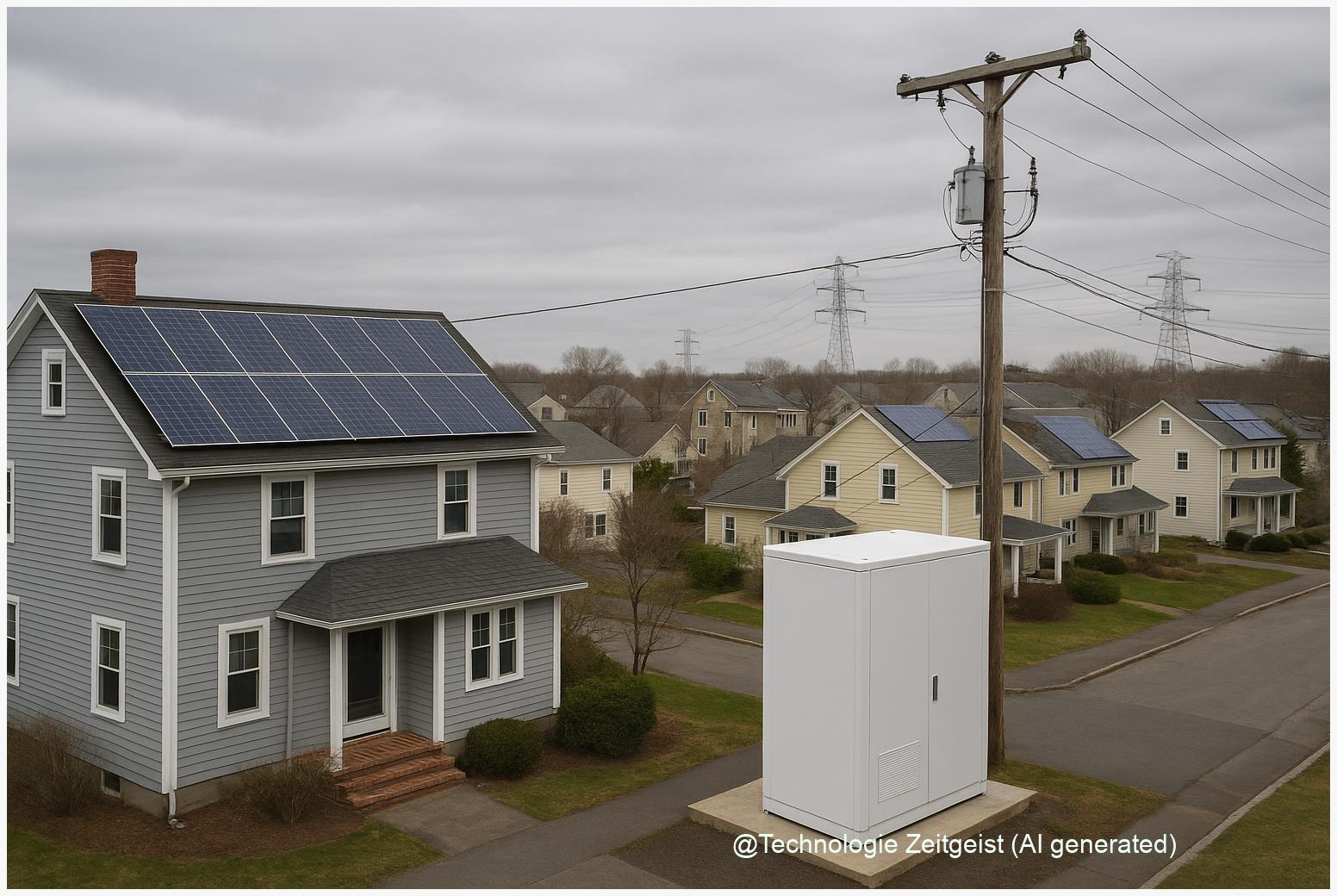
Analysts estimate that Massachusetts solar storage savings could reach about $313 million per year under a specific program scenario, but that total depends on how benefits are counted and over what time frame. Solar‑plus‑storage means rooftop or ground‑mounted solar paired with batteries to shift when electricity is used or exported; the program’s claimed savings arise from avoided energy costs, reduced capacity needs, and fewer grid upgrades. This article explains why the $313 million figure can be accurate in one model and much smaller in another.
Introduction
You may have heard a headline number — $313 million in savings for Massachusetts ratepayers — and wondered how a program of solar panels plus batteries could produce so much value. The short answer is that the number bundles several different kinds of benefits into one total. To judge whether that total is realistic you need to know the time period, which benefits are included, and which costs are subtracted.
Solar‑plus‑storage combines a photovoltaic array (solar panels that produce electricity) with a battery. A battery stores excess solar generation for use later; this increases the share of local solar that is consumed where it is produced and lets systems deliver power at times when electricity is expensive. That combination can reduce what utilities buy on the wholesale market, lower the need for new capacity, and reduce stress on distribution lines.
Regulatory analyses in Massachusetts and independent studies show that these mechanisms can create substantial value, but the precise dollar figure depends on assumptions about market prices, how often and how batteries are used, and whether resilience or environmental benefits are monetized. Below, the article explains the calculation steps, gives everyday examples, outlines tensions, and points to how policy and market design determine who sees the savings.
How Massachusetts solar storage savings are calculated
At a basic level, analysts add up avoided costs and compare them with program and project costs. Avoided costs include: avoided energy (less wholesale power bought during peak prices), avoided capacity (less need to procure or build peak capacity), avoided transmission and distribution upgrades, and some operational grid services (for example, frequency response). In Massachusetts regulatory filings, each of these value streams is estimated and then summed to produce a net benefit for ratepayers.
Different benefit‑cost tests give different answers about who benefits and by how much.
Key modelling choices that drive a $313 million result are: the time horizon (a 10‑, 20‑, or 30‑year span), whether the number is an annual estimate or a present‑value total, the discount rate used to compare future values, and which benefits are monetized. For example, a model that treats resilience (avoided outage costs) as a monetary benefit will report larger savings than one that does not.
Small changes in assumptions change results materially: raising assumed wholesale prices by around 20 % can increase avoided energy value significantly, while increasing the discount rate reduces long‑term benefit totals. Because of such sensitivities, regulators typically show a range of scenarios rather than a single definitive number.
Table: Typical benefit categories used in Massachusetts analyses
| Benefit category | What it means | How it’s measured |
|---|---|---|
| Avoided energy | Less wholesale power purchased during high‑price hours | USD/MWh x shifted MWh |
| Avoided capacity | Less need to pay for or build peak capacity | USD/kW‑yr x kW capacity value |
| Distribution deferral | Postponed investments in local wires and transformers | Estimated capex avoided |
| Grid services | Frequency, voltage, and ancillary services | Market prices or avoided cost estimates |
When a program report cites $313 million, it is essential to check whether that number is an annualized value, a present‑value total over a period, or a scenario outcome. Massachusetts regulators (DPU, DOER) and market operator ISO‑NE provide the data inputs most commonly used in these models.
What solar‑plus‑storage does in everyday places
The effects are easiest to grasp through practical examples. For a homeowner with solar and a battery, storage means more self‑consumption: panels produce in midday, the battery stores surplus, and the house uses that energy in the evening when grid electricity is often more expensive. That reduces the household’s utility bill and the amount the utility must buy from the wholesale market at premium prices.
For a commercial building, batteries remove short, expensive peaks in demand that otherwise force the utility to secure or build additional capacity. If many consumers and businesses act this way, the combined effect reduces the system‑level peak and lowers capacity procurement costs paid by all ratepayers.
On the distribution network, strategically sited solar‑plus‑storage can defer upgrades. Instead of enlarging a local transformer or reconductoring a line, a utility can rely on local batteries to supply constrained hours. That deferral translates into avoided capital expenditures which, when allocated across ratepayers, show up as system savings.
It sounds abstract, but the mechanism is straightforward: shifting energy from low‑value times to high‑value times raises the effective value of local solar. The magnitude of that value depends on how often batteries discharge at peak times, how steeply market prices rise during peaks, and whether the market credits batteries for reliability and ancillary services.
Who benefits, and where the trade‑offs lie
Multiple parties can gain, but distribution of benefits is a policy choice. Ratepayers as a group benefit if program costs are lower than avoided system costs; specific bill savings for households depend on tariff design. Generators and wholesale markets see lower peak demand, and utilities may see reduced capital outlays. Project developers earn returns from incentives or market revenues.
Tensions arise around cost allocation and program design. If benefits flow mostly to participating customers (for example, lower bills for those who install storage), non‑participants may not see immediate savings and could pay a share of program subsidies. Regulators must decide which benefit‑cost test to use: a participant test shows value to adopters, a system test measures aggregate savings, and a societal test adds environmental and resilience values.
Measurement challenges also matter. Capacity value from storage depends on how batteries are dispatched: if they are reserved for customer backup, they provide less value to the grid and vice versa. Degradation over time reduces battery output, so realistic lifetime and cycle assumptions matter. Many Massachusetts filings model multiple scenarios to show this sensitivity.
Equity questions are important. Programs that rely on upfront incentives can favor wealthier households who can invest in panels and batteries. Targeted policies—low‑income incentives, community storage projects, or tariff changes—can spread value more evenly. Without such measures, aggregate savings might coexist with unequal distribution of benefits.
Policy and market steps that matter next
For the $313 million claim to translate into realized savings, several policy and market conditions must align. First, markets need accurate price signals that reward shifting energy to times of true scarcity. That requires transparent wholesale price formation and capacity valuation in ISO‑NE auctions.
Second, regulatory frameworks must pick and consistently apply benefit‑cost tests and make model inputs public. When regulators publish time‑series data, stakeholders can reproduce and test results; that transparency reduces disputes over headline numbers.
Third, program design should balance incentives with measures that protect non‑participants. Examples include directing a share of program savings to low‑income programs or designing tariffs that fairly allocate avoided cost benefits across all customers.
Finally, operational rules that allow distributed resources to offer grid services at scale — standardized interconnection, aggregation rules, and compensation for ancillary services — will determine how much of the modeled value actually appears in system operations and bills.
Conclusion
The headline that Massachusetts’ solar‑plus‑storage program could save ratepayers $313 million per year reflects a plausible scenario when avoided energy, capacity, distribution deferral, and some resilience values are added together. That plausibility, however, rests on model choices: time horizon, price paths, dispatch strategies, and which benefits count.
A prudent way to read any single dollar figure is to treat it as one scenario within a transparent range. Regulators and analysts who publish their assumptions and model runs allow stakeholders to see when $313 million is the central estimate and when it is near an optimistic bound. If policy makers want broadly shared savings, program rules must deliberately allocate costs and benefits toward equity as well as efficiency.
Join the conversation: share this article or comment with your perspective on how local programs should balance savings and fairness.




Leave a Reply