
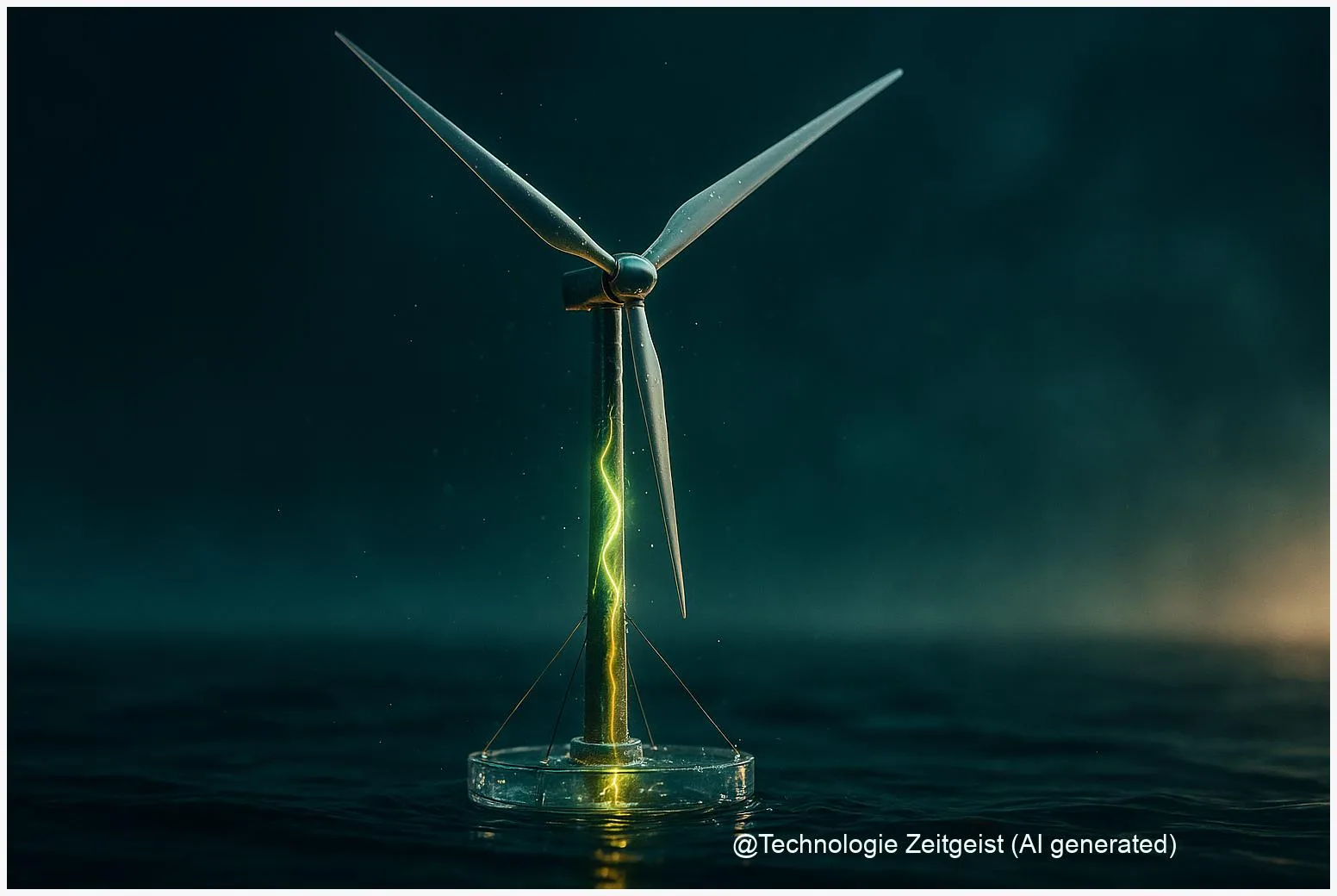
Japan’s first commercial floating wind power project began commercial operation in early 2026, and it matters beyond the turbines themselves. The small Goto floating wind farm shows how floating wind power can use deep coastal zones that fixed foundations cannot reach, testing new floater designs and local supply chains. For communities and planners, the project is a practical step toward larger offshore capacity and clearer rules for marine use.
Introduction
The sea near Goto City, off Nagasaki, now hosts eight turbines that together supply 16.8 MW of capacity. That number is small compared with giant offshore parks abroad, but the site is important because it is Japan’s first commercial floating wind project under the Marine Renewable Energy Sea-Area Utilization Act. For readers wondering what that actually means in practice: the farm tests hardware, regulatory steps and local integration needed before larger floating arrays become commonplace.
Floating platforms allow turbines to sit in deeper water where traditional monopile foundations are impractical. Japan’s coastline has many deep shelves close to shore, so floating solutions open far more area for offshore wind than fixed foundations alone. The Goto project therefore serves as a first operational example of how the country might expand offshore capacity without recreating the supply and permitting patterns of fixed-bottom projects.
How floating wind power works
Floating wind power places wind turbines on buoyant platforms anchored to the seabed rather than fixed foundations. A floater supports the turbine and connects to the seabed with mooring lines and anchors. The arrangement reduces the need for deep, rigid piles and allows deployment in water depths of tens to hundreds of metres.
There are several floater types: spar (a long, vertical cylinder), semi-submersible (several pontoons joined by columns) and tension-leg platforms (kept very steady by taut vertical tethers). The Goto farm uses a hybrid-spar floater that combines steel and concrete elements to balance cost, stability and manufacturability. That hybrid design aims to keep the centre of gravity low while simplifying local construction.
The hybrid-spar approach mixes familiar materials to fit local shipyards and port logistics.
Electricity from each turbine is collected on the platform and carried by subsea cable to a shore landing. Compared with fixed-bottom farms, floating projects often face higher initial costs for the floater and mooring, and they require vessels capable of handling large structures. On the other hand, they unlock areas with stronger and more consistent winds because they can be placed farther offshore and in deeper water.
In the case of Goto, the farm consists of eight 2.1 MW turbines for a total of 16.8 MW. That scale is primarily demonstrative: it validates the connection methods, measures real sea-state impacts on operations, and gives engineers data to improve later, larger plants. For readers tracking technology, the important point is that floating wind power takes established turbine technology and pairs it with novel marine engineering to reach locations that fixed foundations cannot use.
If a table helps, the following compact comparison highlights basic differences:
| Feature | Description | Typical value |
|---|---|---|
| Water depth | Where the technology is usable | Fixed: up to ~60 m; Floating: 50–300+ m |
| Anchor method | Moorings vs piles | Moorings and anchors for floating |
Why Goto matters for Japan’s energy mix
Japan has limited shallow waters suitable for fixed-bottom offshore wind, while many of its best wind sites lie over deeper continental shelves near the coast. Floating wind opens those areas, increasing the technical potential for offshore wind capacity without pushing turbines into distant, high-cost zones.
The Goto project is small in absolute output, but it provides a real-world reference for policymakers, grid operators and manufacturers. Certification under the Marine Renewable Energy Sea-Area Utilization Act gives the site a clear regulatory standing, which matters because predictable rules reduce investment risk. For grid planners, the farm offers practical data on how to integrate variable offshore output from sites located farther from existing substations.
Industry partners behind Goto include major utilities and energy firms that bring experience in construction, grid connection and operations. That consortium approach helps coordinate transmission upgrades and maintenance arrangements, and it spreads technical risk. Local suppliers — shipyards, cable contractors and port operators — also gain experience that can cut time and cost for later projects.
For communities, benefits can include local jobs during construction and new contracts for ports, but these arrive alongside questions about fishing access, shipping lanes and visual impact. Goto offers an early case of how those trade-offs play out in negotiation: early monitoring, clear communication and local procurement were part of planning documents and public statements.
Overall, the farm’s main value is the lessons it produces: how floater designs behave in local seas, what the real maintenance needs are, and what permits and contracts actually take in practice. Those lessons help make future, larger floating parks faster to permit and cheaper to build.
Practical challenges and everyday implications
For households and local businesses, the immediate change from a 16.8 MW farm is subtle: electricity mixes into the regional grid, and bills or emissions change only slowly as more capacity is added. The project’s real effects are technical and institutional. Engineers monitor wear on moorings, nacelle access procedures in rough weather, and the lifespan of subsea cables in active tidal zones. These are not abstract concerns; they determine how often a turbine is offline and therefore the effective contribution to local supply.
Cost is another everyday concern translated from engineering: floating platforms and specialized installation vessels currently add to capital costs compared with fixed foundations. Those higher upfront costs tend to fall with experience, larger serial production, and local supply-chain maturity. Learning curves from early projects like Goto are what drive those cost reductions over time.
Environmental monitoring is part of normal operations. Studies around floating turbines look at collision risk for birds, changes in underwater noise, and how moorings affect sediment. Such monitoring is standard for modern projects and helps build public trust when results and mitigation measures are shared openly.
Another practical point is maintenance access. Service vessels and crew-transfer methods need to work in the specific sea conditions of a site. Goto provides real data on wave and wind windows for safe maintenance, which lowers operational risk for subsequent projects and informs insurance terms.
In short, the farm’s daily contribution is primarily informational: it turns engineering assumptions into measured performance, which is how the industry reduces surprises and brings costs down. For people living near the coast, that means a better-informed debate about larger deployments in the future.
What comes next: scaling, costs and timelines
Goto is symptomatic of the next phase in offshore wind: moving from demonstration to commercial-scale learning. To reach multi-gigawatt deployment, the industry needs serial fabrication of floaters, reliable local vessel capacity, and standardized mooring designs. Each element shortens construction time and lowers prices per megawatt.
Costs are coming down globally for floating wind, but they remain higher than many mature fixed-bottom markets. Key drivers for cost reduction are larger turbines (which reduce balance-of-system costs per MW), industrial-scale floater yards, and improved installation methods that require fewer vessel days. The Goto farm provides empirical input on these variables: how long installation takes, how often specialized vessels are needed, and what spare-part inventories operators actually require.
Policy also matters. Certifying projects under a clear marine-use regime, as happened for Goto, reduces a key uncertainty for investors. Public and private R&D funds that target floater standardisation and port upgrades accelerate the learning process. International collaboration helps too: many technologies and lessons are transferable across regions with similar sea conditions.
For timelines, the simple fact is that industrial scaling takes years. Small commercial projects like Goto create evidence that can speed approvals for larger arrays, but a step change to hundreds or thousands of megawatts requires steady policy support and manufacturing ramp-up. Observers often expect meaningful cost and capacity growth through the late 2020s and into the 2030s as the sector matures.
For people following energy change, the important takeaway is practical: watch whether subsequent projects increase turbine size, adopt standard floater modules, and reduce installation times. Those signs indicate that floating wind power is moving from early commercial tests to an industrial routine that contributes substantially to national supply.
Conclusion
Japan’s Goto floating wind farm is a small plant in output but a significant step in practice. It demonstrates how floating wind power can access deep coastal resources, tests hybrid floater designs suited to local industry, and gives regulators and grid operators the performance data they need to plan larger projects. The immediate energy effect is modest, but the project’s greatest value is the lessons it produces: clearer rules for marine use, real maintenance data, and a local supply-chain rehearsal that can lower costs for future parks.
Join the conversation: share insights or questions about floating wind and local energy planning.


Leave a Reply