
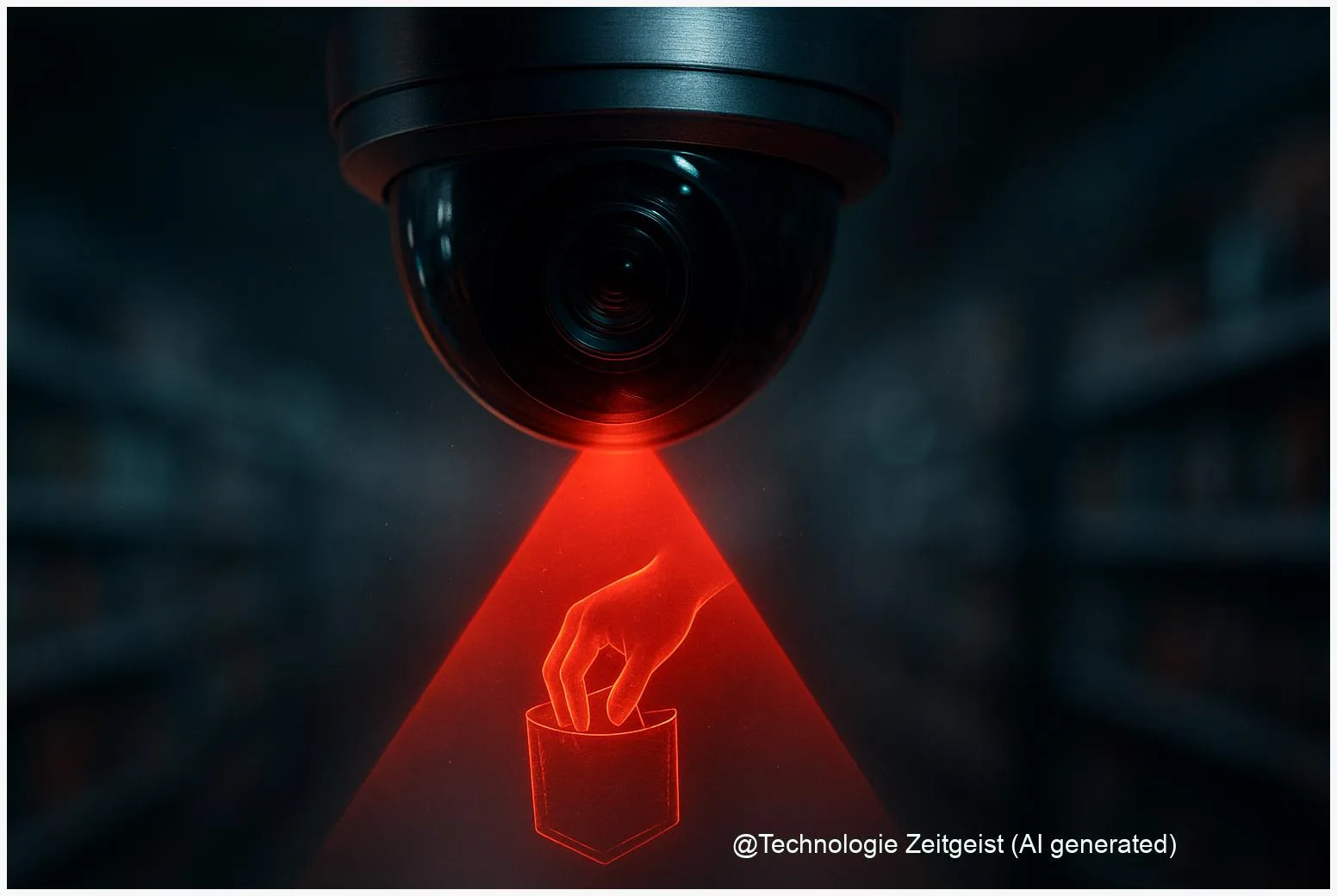
Stores increasingly use AI shoplifting detection to flag suspicious actions on camera and reduce inventory losses. Modern systems combine object detection, person tracking, simple pose cues and receipt or point‑of‑sale data to create time‑based alerts. When configured carefully, these systems can cut manual review time and highlight likely thefts, but they also generate false alarms and raise privacy questions that require legal checks and human review.
Introduction
Store managers want fewer losses and faster, less intrusive ways to spot theft. Cameras with AI promise to do some of that work by turning hours of footage into short alerts for staff to check. The idea is not that cameras alone decide guilt, but that algorithms help prioritise where people should look.
Technically, AI shoplifting detection is a layered process: the camera sees pixels, software converts pixels into objects and tracks people over time, and a classifier flags patterns that match known theft behaviours. In practice, systems are often paired with checkout or receipt data so an alert can be checked against what a person actually paid for. That mix of video and transactional data is why places from small shops to large membership clubs began piloting these systems in recent years.
How AI shoplifting detection works
At the technical core are three steps that turn camera footage into a short alert. First, object detection finds people and items in each frame. These detectors use models similar to “single‑shot” networks that mark bounding boxes around visible objects. Second, multi‑object tracking links boxes across frames so the system knows which person carried which item. Third, temporal analysis looks at those tracks as a small time series and classifies whether the sequence resembles a suspicious action.
Many systems do not try to read intent; they look for short patterns such as concealment, unusual hand movements near shelves, or leaving with items without paying.
Some deployments add pose estimation, which means the software estimates simple body keypoints (hands, head, shoulders). Pose features make it easier to tell if someone put an item under clothing or into a bag. Others focus on purely box‑based motion: distance to shelf, speed, whether the person passes through an exit without a matching transaction.
A common practical improvement is multimodal fusion: linking video alerts with point‑of‑sale (POS) records, exit gates, or receipt images. For example, an alert that a person left with a concealed item can be cross‑checked against a nearby receipt or the last scanned basket. That reduces false alarms and gives staff a clearer action to take.
If a compact comparison helps, the table below summarises typical components and trade‑offs.
| Component | What it detects | Strength | Weakness |
|---|---|---|---|
| Object detection | People and visible items | Fast on modern hardware | Misses occluded or small objects |
| Multi‑object tracking | Who carried what over time | Creates short, checkable sequences | Fragile with crowding and camera angle |
| Pose/time‑series classifier | Concealment, unusual hand motion | Higher precision when trained well | Needs diverse training data |
What this looks like in a typical store
Operationally, a retailer usually starts with a pilot in a small number of stores. Cameras already installed are connected to an edge box or a cloud service where inference runs. When the system flags a short clip, messages go to a staff app or loss‑prevention console with a thumbnail, timestamp and confidence score. Staff then decide whether to review the full clip, check a receipt or approach the customer.
Practical examples are not limited to big chains. Membership clubs and supermarkets have trialled exit checks that compare a person’s passing motion and bag contents with their receipt. Smaller shops often use alerts to prioritise human review of CCTV, saving time compared with scanning many hours of footage. Reports from pilot programmes show systems reduce the time teams spend on footage review, though exact loss‑reduction figures vary widely between studies.
Behind the scenes, common adjustments greatly affect performance: camera angle and height, store lighting, aisle width, and how often staff provide feedback to correct false alarms. Vendors may report high accuracy on curated datasets, but real stores introduce different clothing, shopping behaviours and occlusions. That mismatch is why many experts recommend measuring precision (how many alerts are correct) before expanding a deployment.
Benefits and risks for shops and customers
For retailers, the clear benefit is faster, more targeted loss‑prevention. Alerts cut the work of manually scanning hours of footage and can highlight incidents that would otherwise be missed. When video is combined with transaction data, staff can check an alert against a receipt in seconds, reducing unnecessary confrontations.
However, risks are significant. False positives — alarms that wrongly label normal behaviour as suspicious — cost time and can harm customer trust. Even a low false‑positive rate becomes meaningful at scale: a system that fires only 1 % false alarms might still generate many incidents over weeks in a busy store.
Privacy is another key concern. In the European Union, automated profiling and decisions that affect individuals often require transparency and a data‑protection impact assessment. That means stores need clear retention rules, access controls, and documentation of how alerts are generated. The legal landscape varies, so local compliance checks are necessary.
Bias and fairness deserve attention as well. Systems trained on limited datasets may misinterpret behaviours that are normal for certain groups of shoppers. Independent evaluation and diverse training data help, but a human‑in‑the‑loop review is still essential to avoid discriminatory outcomes.
Where the technology may go next
Expect two parallel trends. First, better edge compute will move more processing into the store, lowering latency and preserving bandwidth. That makes it easier to run updated models quickly and keeps raw video inside the premises if a retailer prefers. Second, multimodal integration will deepen: tighter links between video, POS, shelf sensors and receipt images will improve accuracy because more context reduces guesswork.
Algorithmically, research is shifting from single‑clip classification toward short sequence understanding and compact time‑series models that run efficiently on modest hardware. Those models aim to keep precision high while reducing false alarms in diverse conditions.
Regulation and independent audits will shape adoption. As deployments grow, expect more standardised third‑party evaluations and contractual requirements for transparency, data retention and vendor audits. That process will likely raise costs for vendors but increase trust for retailers and customers.
For store teams, the practical implication is clear: deployments that pair AI alerts with clear operational processes, staff training and privacy safeguards will perform better than systems treated as plug‑and‑play. The technology helps prioritise human attention, but success depends on thoughtful implementation.
Conclusion
AI shoplifting detection can shorten the time staff spend finding relevant footage and can highlight incidents that warrant a human check. The most reliable setups combine object detection, tracking and short time‑series classifiers with transaction or receipt checks to reduce false alarms. Yet lab accuracy does not always translate to stores: camera placement, lighting and the diversity of real shoppers still matter, and legal safeguards must be in place.
For retailers considering these systems, the priority should be precision, multimodal validation and a staged pilot with independent evaluation. For customers, the technology should mean fewer invasive checks and clearer rules about how long footage is kept and who can view it.
Join the discussion: share your experience with in‑store AI alerts or practical questions about privacy and accuracy.




Leave a Reply