
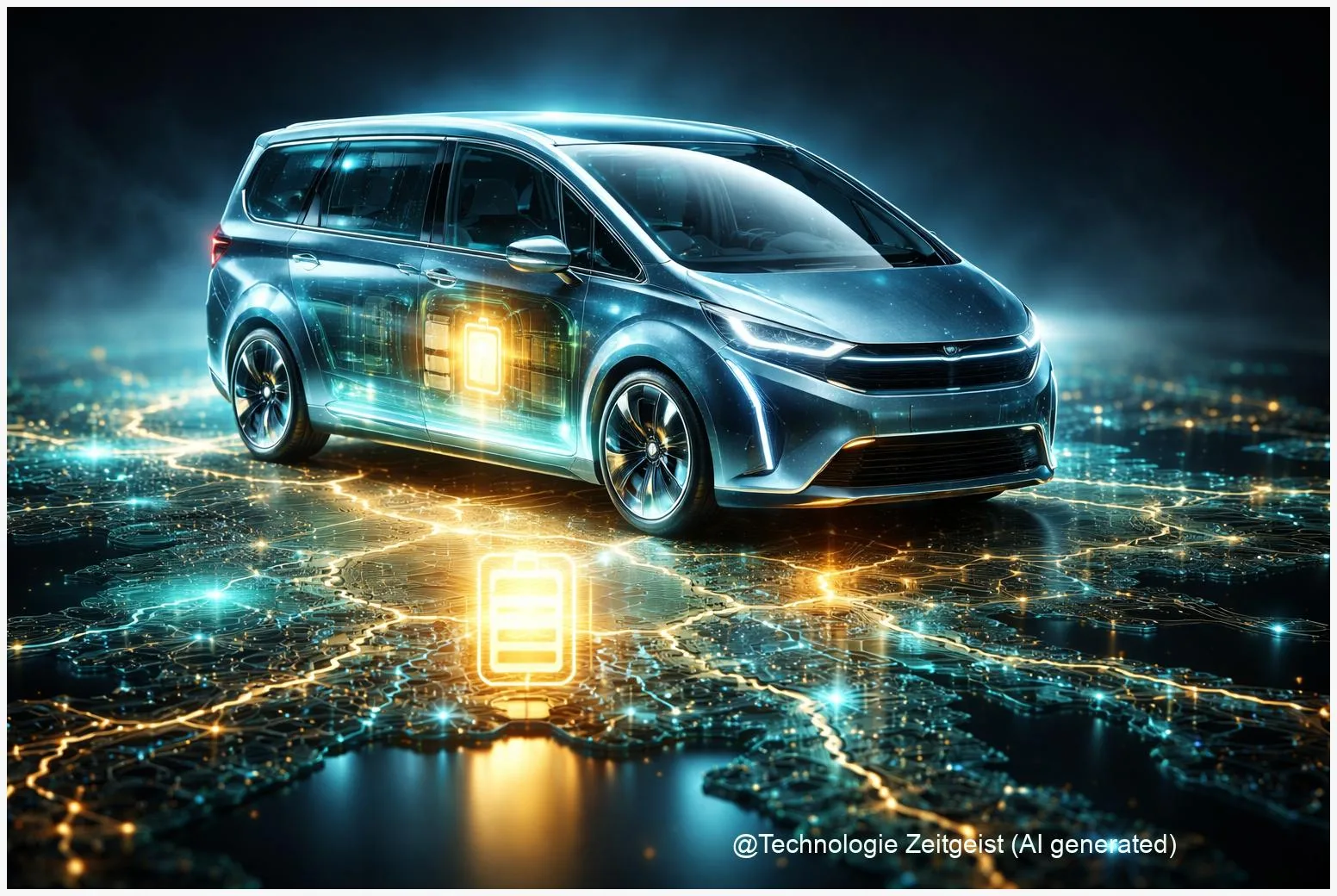
Electric minivan is becoming a practical choice for many families in Europe because newer models combine large interior space, real‑world range suitable for weekly use and modern charging options. Urban rules, growing public charging and targeted grid investments reduce common obstacles. This article looks at what makes an electric minivan practical in Europe, compares everyday trade‑offs such as range and payload, and offers clear criteria for buyers and policy makers.
Introduction
Buying a family car now often involves a practical question: can one electric vehicle cover daily life, holidays and a weekend with a trailer? For many households the answer is moving from theoretical to practical because mainstream manufacturers have started offering larger battery options in multi‑purpose vehicles. A new electric minivan can carry children, pushchairs and sports gear, and still deliver highway range that suits weekly routines.
Europe matters here: narrow streets, modest driveway space in many cities, and strong public policy for clean zones change how families compare minivans with SUVs. The segment also faces technical constraints—battery mass, payload loss and charging speed—but recent models show those trade‑offs are manageable for ordinary families. This article examines the defining features of electric minivans, practical everyday use in Europe, the economic and infrastructure frictions that remain, and realistic scenarios for the near future.
What an electric minivan really is
Start with a brief definition. A minivan, also called an MPV (multi‑purpose vehicle), is a passenger vehicle prioritising interior space, flexible seating and easy access—features families value for school runs, shopping and longer trips. An electric minivan applies battery electric drive to that body concept. Compared with an SUV, a minivan typically offers more usable interior volume for a similar footprint and usually easier third‑row access.
Technically, electric minivans follow the same engineering choices as other battery electric vehicles: a high‑voltage battery pack, one or more electric motors, a power electronics module and thermal management. Key parameters that determine daily usefulness are usable battery capacity (kWh), energy consumption per 100 km, and a vehicle’s curb weight which affects payload—the weight available for people and luggage.
Why size matters: large batteries give range but add mass; that mass reduces payload and can change handling. Manufacturers mitigate the effects with stronger chassis, revised suspension and careful packaging so the interior space remains competitive. The Volkswagen ID.Buzz is a useful example: it offers battery options in the 79–86 kWh band and WLTP ranges that in brochure figures sit in the 300–450 km band depending on trim. Real‑world numbers tend to be lower under full load or cold conditions, but the manufacturer specs show how mainstream OEMs now build MPVs on electric platforms.
A practical point: an electric minivan is not the same as converting a diesel van to electric. Passenger‑oriented features—child seat anchors, HVAC comfort for several passengers, sliding doors and low step‑in height—are central to the minivan proposition and matter as much as battery specs.
Everyday family use and charging in Europe
For a family, practicality breaks down into a few everyday factors: interior space and flexibility, real‑world driving range, and how charging fits routines. A typical family drives under 40–60 km on many weekdays. That means an electric minivan with 300+ km real‑world range can often be charged once every few days rather than daily—important if home charging is AC speed limited.
Home charging is the most convenient mode: an overnight 7–11 kW AC wallbox typically restores several dozen kilometres per hour of parked time. For longer trips and quick top‑ups, public DC fast chargers (50–150 kW or higher) shorten stops. In Europe, public charging coverage is expanding, though availability varies: metropolitan areas and major highways are well served, rural regions less so. Local grid upgrades and targeted storage projects—such as national funding rounds for grid batteries—aim to ease local bottlenecks and make higher‑power charging more reliable for neighbourhoods and holiday corridors.
Practical example: a family returns from holiday with a full boot and a roof box. The vehicle’s energy consumption increases under load and when towing, so the WLTP number can be optimistic. That matters for route planning: families should plan charging stops with margin—allowing for a 15–25 % reduction against brochure range in cold or loaded conditions. Heat‑pump equipped HVAC and pre‑conditioning while plugged in reduce range loss in winter.
Space and seats: minivans keep flexible seating layouts—folding second and third rows, sliding doors for tighter parking spots, and larger rear openings for child seats. In Europe’s narrower driveways and busy kerbs these access features are more than niceties: they shorten the time parents spend handling children and cargo during daily trips.
Finally: charging etiquette and local rules are part of the picture. In some cities, dedicated EV parking and curbside charging are expanding; in others families must rely on communal charging points or workplace chargers. Knowing where and how often you can top up determines whether an electric minivan is truly practical for your household.
Opportunities, costs and tensions
Electric minivans present clear opportunities: lower running energy costs, quieter cabins, strong acceleration at low speeds and exemption from many urban access charges. For owners who charge mostly at home and use public chargers occasionally, annual energy costs can be markedly below petrol or diesel equivalents. Fleet buyers—family shuttle services or larger households—also see benefits from lower maintenance needs and predictable energy bills.
But the tensions are practical and measurable. First, upfront price: many electric MPVs sit at a premium versus equivalent internal‑combustion models. Total‑cost‑of‑ownership calculations narrow gaps over time but depend on local electricity prices, incentives and residual values. Second, payload trade‑offs matter: batteries add weight and eat into payload margins. For buyers who plan heavy loads or frequent towing, the payload limit can be the deciding factor.
Charging infrastructure creates other frictions. Home wallbox installation can be straightforward for single‑family houses but more complex for apartment dwellers—here access to workplace or communal charging matters. Public charging speed and reliability vary across countries and regions; high‑power charging reduces travel time but requires network capacity and sometimes grid upgrades. National and regional storage or grid projects that relieve local congestion will improve access over several years.
Another tension: real‑world range variability. Cold weather, roof boxes, full passenger loads and towing all increase consumption. Manufacturers publish WLTP figures; users should expect 10–25 % lower numbers in demanding use. Finally, software and ecosystem matters: navigation that integrates charger availability, battery pre‑conditioning and route planning for EVs improves day‑to‑day practicality and reduces user anxiety.
Where the segment could go next
The near future for electric minivans in Europe depends on three connected developments: product availability, charging and policy. On the product side, more mainstream models—offered by established brands and priced competitively—will push the segment from niche to mainstream. Manufacturers are moving established MPV nameplates to modular EV architectures and offering larger usable battery sizes that match family needs.
Charging progress is the second linchpin. Public networks will continue to densify on highways and around cities. Where grid reinforcement is slow, targeted investments—such as national storage funding or local battery projects—can smooth peak demand and enable more high‑power chargers without repeated blackouts. Those investments also make charging more predictable for families who rely on public points for holiday recharges.
Policy and incentives remain decisive. Purchase incentives, reduced tolls, and parking advantages in low‑emission zones change the economics for families. At the same time, regulatory clarity on vehicle classes, incentives for second‑life usage of EV batteries, and recycling rules will affect long‑term total costs and sustainability credentials, which matter to many buyers.
For a family that is thinking ahead: match vehicle size and range to actual weekly kilometres, check home and local charging options, and allow margin for real‑world range under load. If you park on‑street without a private charger, prioritise models with good fast‑charging capability and efficient heat‑management. Over time, as more models arrive and public charging improves, the electric minivan stands to become an increasingly practical, everyday family choice in Europe.
Conclusion
Electric minivans now combine practical interior space with battery options that suit many family use patterns. For European households the deciding questions are simple: can the vehicle carry your routine loads, does your local charging set‑up match the model’s charging profile, and do the economics fit your budget when you include incentives and expected energy costs? Recent production models show these vehicles are ready for ordinary family life, though buyers should plan for real‑world range, payload limits and access to reliable charging. As charging infrastructure and targeted grid investments advance, the segment’s practicality will only increase—especially where policy reduces upfront cost and eases local charging for apartment dwellers.
If you own or test‑drove a family EV, share your experience in the comments and pass this article on to someone shopping for a bigger family car.


Leave a Reply