
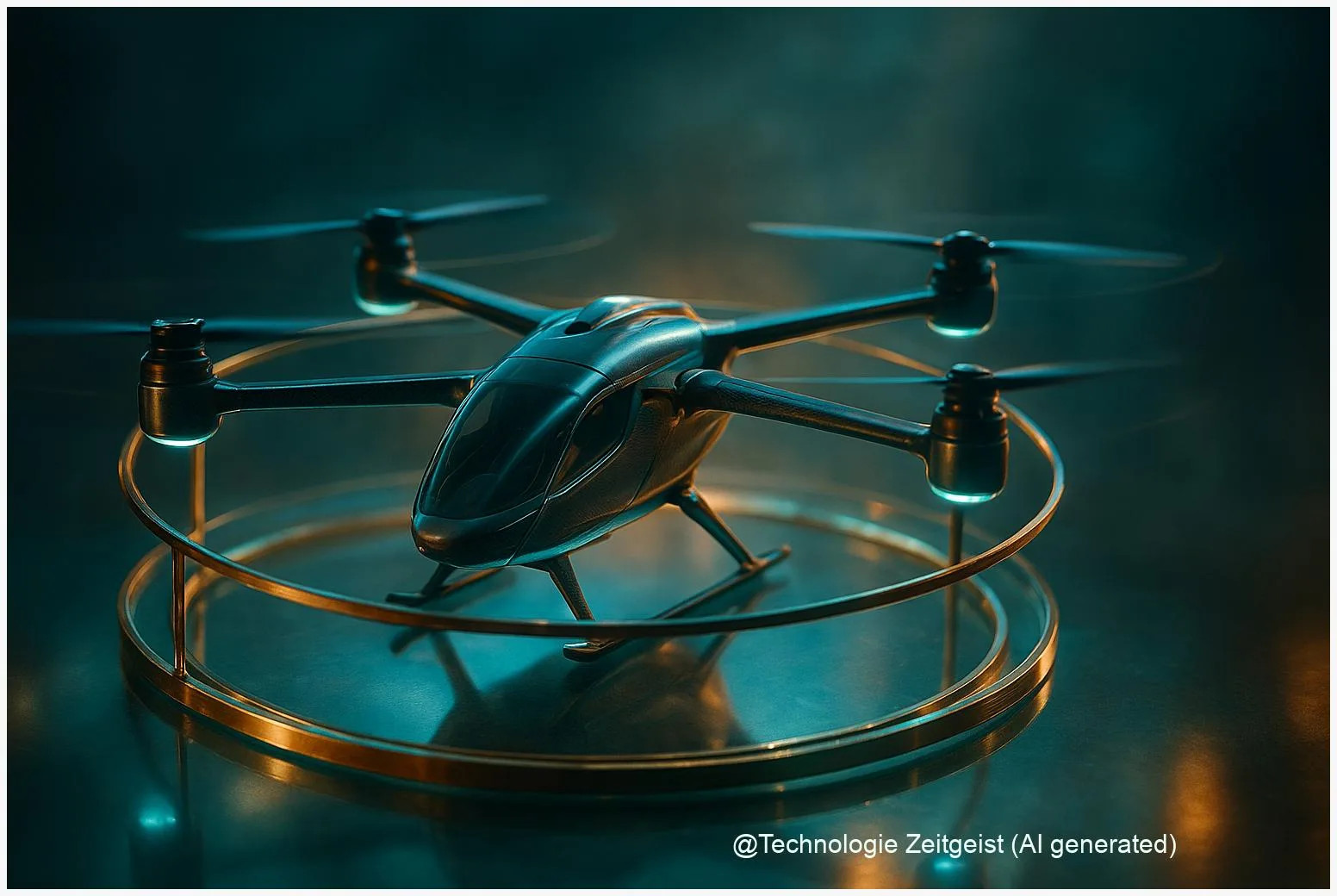
Electric air taxis are becoming feasible because regulators, manufacturers and city planners have closed several technical and legal gaps at once. The vehicles, commonly called eVTOLs (electric vertical takeoff and landing aircraft), now benefit from better batteries, distributed electric propulsion and clearer certification paths. This article looks at the regulatory milestones, the practical experience of a city trip, the main safety and cost tensions, and realistic timelines for when limited commercial services may begin.
Introduction
City travel often means long trips to a distant airport or slow surface journeys across traffic. For many people the promise of short, quiet hops across a city sounds attractive—but that promise depends on three things lining up: safe aircraft, clear rules, and places to land and charge. The vehicles behind that promise are eVTOLs, which are electric aircraft that take off and land vertically and usually carry a small number of passengers.
Until recently each of those three requirements presented a difficult problem. Aircraft needed batteries that could store enough energy without being too heavy. Regulators needed certifiable rules that fit neither classic aeroplane law nor helicopter law. Cities needed compact, safe vertiports and energy connections. Over the past few years progress on all three fronts has become measurable: agencies published targeted certification guidance, manufacturers completed prototype programmes, and early vertiport designs moved from experiments to pilot approvals. The remainder of the article walks through those developments in plain terms and points to realistic signs that show if and when services will begin in a nearby city.
Why electric air taxis are finally feasible
Technically, eVTOLs combine mature and recently improved systems. The most visible change is propulsion: electric motors are lighter, cheaper and easier to distribute than traditional turbine engines. That allows multiple small rotors or fans around the airframe, which improves redundancy—if one motor fails, others can compensate. This distributed electric propulsion also helps keep noise and vibration lower than many historical rotorcraft.
Battery progress matters too. Energy density for aircraft-grade lithium battery packs has been improving at a slow but steady pace. That means a practical short-range eVTOL can now carry useful payloads for trips of roughly ten to fifty minutes flight time (typical operational ranges are in the dozens of kilometres). Batteries remain heavier than aviation fuel for the same energy, so designers trade off range, payload and charging speed to meet a city route profile.
Certification and infrastructure advances are the final pieces: authorities released specific guidance for powered‑lift aircraft and vertiports, so startups no longer operate purely in a regulative grey area.
Two certification items are central and worth a short explanation. A Type Certificate is the formal approval that an aircraft design meets safety rules; a Type Inspection Authorization (TIA) lets the manufacturer run the final tests required by the authority. For pilots and operations, regulators also created a new powered‑lift rule that clarifies training and operational minimums.
Below is a compact comparison of recent milestones that illustrate the converging progress. The entries show regulator publications and a representative manufacturer milestone.
| Body | Milestone | Date |
|---|---|---|
| FAA | Final rule for powered‑lift pilot/operations | Oct 2024 |
| EASA | Means‑of‑Compliance for special condition VTOL (MOC‑4) | Jul 2025 |
| Manufacturer (example) | Type Inspection Authorization (TIA) / power‑on tests | 2025 (selected firms) |
Why this matters: regulators no longer have to invent rules from scratch. Authorities now propose or publish targeted documents—one set for pilot and operations requirements, another for aircraft technical compliance, and a third for vertiport design. That structured approach reduces a major source of uncertainty for manufacturers and cities.
How a short air taxi trip would work
A realistic short service looks and feels like a compact, managed shuttle. You book a seat on an app, arrive at a vertiport—a small, fenced landing area with waiting space and charging points—and board a low‑noise eVTOL designed for short hops. Many proposed services plan aircraft with four to six passenger seats plus a pilot during initial operations.
Vertiports are not the same as large airports. They include a touchdown and lift‑off area (TLOF/FATO), passenger handling, emergency services scaled to the size of the operation, and charging hardware for the batteries. Regulators and international bodies published guidance on geometry, downwash zones and firefighting standards so planners know the technical checks needed before opening a site. A vertiport may be a rooftop on a parking structure, a small riverside plaza, or a purpose‑built ground facility—each option needs specific approvals from the local aviation authority and usually the city planning office.
Turnover time matters: quick charging or battery swaps shorten ground time and increase economic viability. Current plans expect operational turnaround times measured in tens of minutes, not hours, for short city hops. For a passenger that means a door‑to‑door trip can be half an hour or less for distances that take an hour by car in heavy traffic, depending on access to vertiports at both ends.
Air traffic control integration is another piece. eVTOLs will initially operate on defined corridors and altitudes with close coordination between operator flight‑control centres and air traffic services. That reduces complexity for pilots and helps integrate services safely with other aircraft. Over time, traffic management systems for low‑level urban airspace will become more automated, but early services rely on clear, manual procedures and dedicated routes.
Safety, costs and regulatory tensions
Safety is the central question people ask. Two technical topics dominate safety debates: battery‑system behaviour and flight‑control systems. Energy storage systems (ESS) require robust monitoring and containment to prevent thermal runaway; regulators now request specific means‑of‑compliance and test data that demonstrate safe behaviour under crash or fire scenarios. Flight guidance systems (FGS) and automated protections must handle rare situations such as multiple simultaneous failures. Regulators demand conservative design margins and repeated flight testing before allowing passenger operations.
Costs are the other major limitation. Building vertiports, installing power infrastructure, purchasing aircraft and training specialised staff are capital‑intensive tasks. Early services will therefore focus on premium routes or wealthy cities where initial fares can cover higher unit costs. Economies of scale may bring down prices over time, but initial tickets are likely to be priced above standard taxis and ride‑share services.
Regulatory tension exists between jurisdictions. The FAA and EASA have been active but not identical in their approaches: one agency may emphasize operational rules while another focuses on technical compliance documents. That difference requires manufacturers to demonstrate compliance with multiple sets of documents if they plan international services. Local authorities add another layer with vertiport permitting, noise rules and urban planning constraints. These layers slow roll‑out in multi‑city strategies.
Public acceptance is not guaranteed. People judge noise, visual impact, and perceived safety. Early demonstration flights and transparent safety reporting help, but operators will need to invest in community engagement, noise mitigation and visible emergency procedures to earn trust.
When you might actually fly and what to watch
Timelines depend on three measurable signals: formal type‑certificate issuance for a model, an authority granting operational approvals for a city, and completion of vertiport permits and power connections. Manufacturers and regulators gave public target windows for limited services in several places: some firms aim for pilot or tourist operations in cities from 2026, while broader scheduled networks are generally expected after 2027 if testing and approvals go smoothly. These are conditional targets, not guarantees.
Concrete signs to watch that indicate progress:
- First Type Certificate issued by a major regulator (FAA or EASA) for an eVTOL model.
- Local authority approval for a vertiport with charging and firefighting arrangements.
- Operator receives permission for passenger‑carrying demonstration flights or a sandbox scheme in a city.
For readers curious about concrete cases, several manufacturers and cities already announced pilot programmes and memoranda of understanding for early operations. Those announcements show where efforts concentrate, but the real turning point is an official Type Certificate plus a city operating licence. Once both exist, an initial commercial timetable can follow fairly quickly.
From a personal perspective you may first experience an air taxi as a short sightseeing or demonstration flight, then as a paid shuttle on a constrained route, and only later as a networked, city‑wide service. That staged progression reduces safety risk and lets regulators and operators collect the data needed for wider approval.
Conclusion
Electric air taxis are no longer just conceptual because the necessary technical components, regulatory building blocks and early infrastructure concepts have advanced in parallel. Batteries and distributed electric propulsion make short urban hops possible; regulators have published pilot and type‑approval guidance; and vertiport planning and pilot projects show how services might be routed inside cities. Limitations remain—costs, battery safety proofs and local permits—but the combination of clearer certification paths and concrete pilot programmes means limited commercial services are plausible in selected cities within a few years. Whether you will be able to use one depends on where you live and how quickly local authorities permit vertiports and routes.
Do you have questions or experiences with local air mobility projects? Share your thoughts and pass this on to someone who commutes by road.




Leave a Reply