
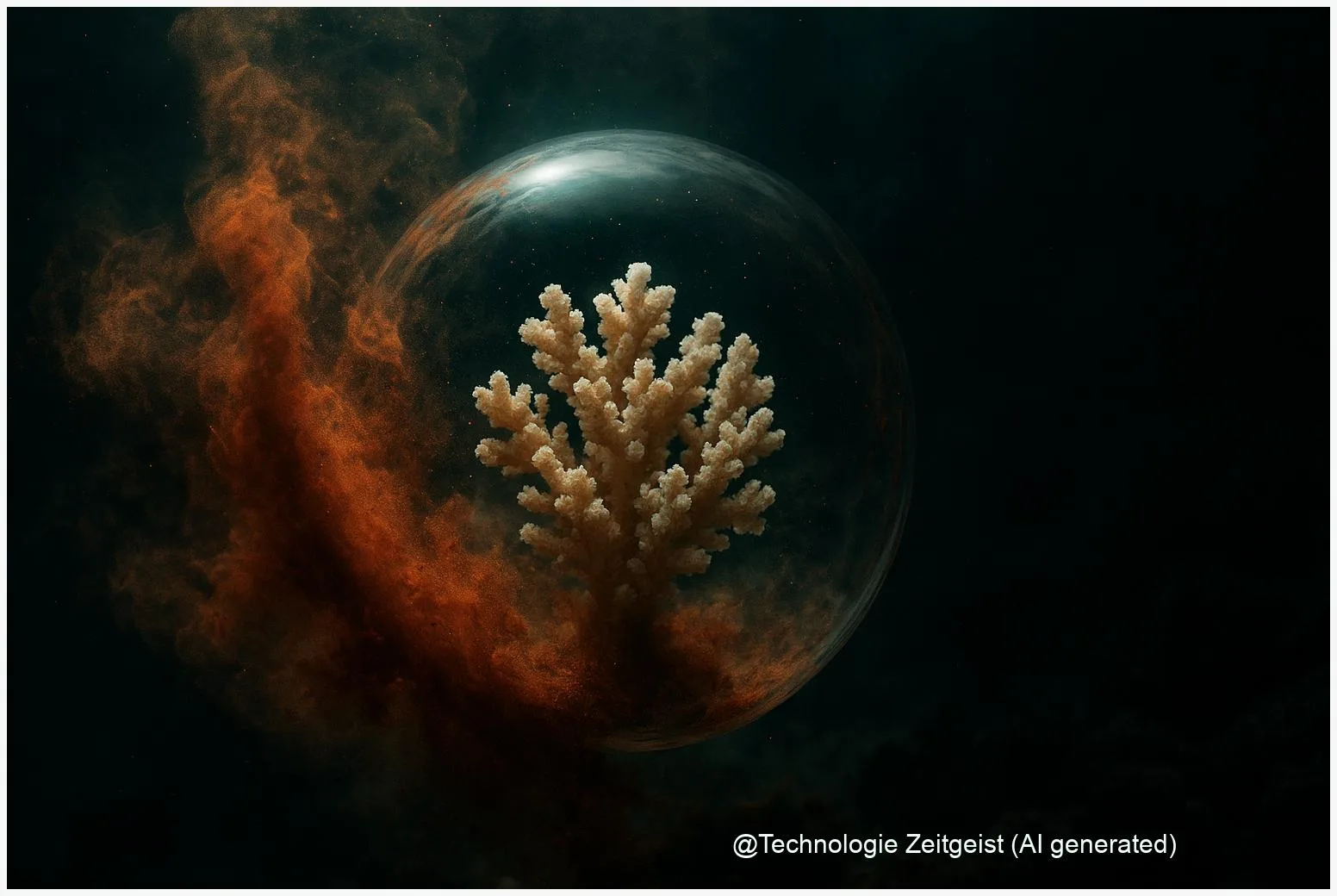
Dredging coral reefs creates sediment plumes and reduced light that can undo years of recovery and stop new corals from settling. This article examines how suspended sediment concentration, sedimentation rates and smothering work together to damage reef organisms and reduce recruitment, and it shows why many projects cause effects that stretch beyond the immediate work zone. The analysis clarifies which monitoring metrics matter and what mitigation steps are most likely to protect reefs over the long term.
Introduction
The first visible sign of dredging near a reef is not always a cloud in the water. It is the stunted regrowth, the lack of tiny new corals, or a slow increase in disease. Many coastal projects remove or move seabed material to make room for ports, marinas or land reclamation, and they release fine particles that spread with currents. That suspended material reduces the light corals rely on and settles on surfaces, where it physically smothers delicate tissue and juvenile recruits. Over time, repeated or intense sediment pulses can shift a reef from gradual recovery to long-term decline.
This article focuses on the essential mechanisms by which dredging harms coral reefs, the practical ways these impacts appear in real projects, the limits of current mitigation, and which monitoring and policy approaches make sense for durable protection. The discussion uses published findings and government guidance so readers can understand what measurements matter, why some thresholds are proposed, and why recovery that took years can be lost in weeks or months of sediment exposure.
Dredging coral reefs: mechanisms of harm
Dredging releases particles into the water column; scientists measure those with suspended sediment concentration (SSC, usually mg·L−1) and turbidity (NTU). High SSC darkens the water and reduces photosynthetically active radiation (PAR), the light corals need for their symbiotic algae to produce energy. Reduced light slows growth and weakens stress resistance. The same particles also settle out: sedimentation is measured in mg·cm−2·d−1 and represents material that can physically blanket coral tissue.
Smothering is not a single event but a combination of burial depth and time. Thin, frequent dustings may be scraped off by the coral’s natural cleaning processes, but sustained deposits over days to weeks overwhelm those defences. Field studies report recruitment collapse near dredging when sedimentation exceeds roughly 0.8 mg·cm−2·d−1 in sensitive areas; above that, new coral larvae rarely establish (this is a field result and depends on local currents and sediment grain size).
Dredging-related plumes have been associated with higher disease prevalence and measurable declines in growth and recruitment on reefs tens to hundreds of metres from the work site.
Besides light and burial, fine sediments can change the chemical microenvironment: organic-rich fines host microbes that increase disease risk, and altered light spectra (loss of blue light) further reduce photosynthetic efficiency. Physical damage from vessels and anchors adds direct risk, while the combined stressors—lower growth, fewer recruits, more disease—can produce legacy effects. Where structure or key coral species are lost, full recovery can take years to decades, especially if fine sediment continues to be reworked into the system.
If numbers help, the ranges reported across studies are broad because reefs differ: chronic SSC values in some nearshore systems have been reported from below 10 mg·L−1 to well over 100 mg·L−1, and short-term spikes can be much higher. Sedimentation tolerances likewise vary by species, but persistent high deposition for weeks is repeatedly linked to elevated mortality.
If a compact summary is useful, the table below lists the most relevant monitoring features and what they indicate.
| Feature | Description | Typical value (example) |
|---|---|---|
| SSC | Suspended sediment in the water column; drives light loss | Few to 100+ mg·L−1 (site dependent) |
| Sedimentation | Mass of sediment settling on surfaces; smothers tissue and recruits | Thresholds near 0.8 mg·cm−2·d−1 linked to failed recruitment in field studies |
| Spectral PAR loss | Loss of blue light disproportionally reduces photosynthesis | Variable; often greater functional loss than bulk PAR suggests |
How dredging shows up near ports and coasts
On a coast, dredging appears in two practical ways: a visible plume after spoil release and subtle long-term changes in seabed composition. Hopper dredges that overflow or dispose spoil offshore create broad plumes; cutter‑suction or backhoe dredges tend to release fines closer to the worksite but can still produce concentrated plumes under certain conditions. The particle size and the tidal and wind-driven currents determine plume shape and reach.
Case studies show the consequences. Post-project analyses of major port works found sedimentation and biological responses extending hundreds of metres from channels, with parts of reefs showing partial mortality and increased disease prevalence. In several instances, monitoring that covered only a small radius—typical contractual monitoring of ±50 m—missed impacts several hundred metres away. That gap matters because reef recovery is a function of both surviving adult corals and the steady arrival of juvenile recruits. If recruitment falls to near zero, recovery that might have taken five to ten years can be delayed or lost.
For coastal managers and companies, the obvious options include timing work outside coral spawning seasons, selecting equipment and methods that minimise overflow, and careful placement of spoil. But those measures are only effective when paired with robust baseline data and calibrated monitoring. Without pre‑project SSC and sedimentation time series, it is difficult to distinguish normal variability from dredge-driven change.
Another practical point: sediment type matters. Fine silts stay in suspension longer and travel farther than coarse sands. Fine sediments also settle into reef crevices and around juvenile corals, where they are harder to remove by currents or cleaning organisms. Therefore, a project that disturbs mostly coarse sand poses different risks than one that releases large fines.
Finally, the combined influence of heat stress, pollution and dredging is additive. A reef already weakened by warm-water bleaching will be less able to tolerate sediment stress. That interaction makes it harder to attribute cause from observation alone and argues for more conservative thresholds when multiple stressors are present.
Mitigation, trade-offs and scientific uncertainties
Mitigation has improved, but trade-offs and uncertainties remain. Modern guidance recommends combined monitoring metrics—SSC or calibrated NTU, sedimentation (sediment traps or TurfPods) and spectral PAR—rather than a single measure. Agencies suggest setting site‑specific thresholds based on local background variability (for example, 95th or 99th percentile SSC values) and coupling those to duration or frequency limits: short, infrequent spikes are less harmful than continuous exposure.
Technical measures reduce but do not eliminate risk. Silt curtains may attenuate plumes in sheltered waters but can fail in strong currents. Overflow minimisation, improved hopper operations, and locating spoil in areas with fast dispersal lower local deposition. Where avoidance is impossible, compensatory restoration is sometimes required, but restoration carries uncertainty: planting corals on formerly healthy substrate cannot fully replace lost reef structure or the ecological role of certain species.
Scientific uncertainty affects thresholds. Laboratory experiments often use simplified water and light conditions and therefore may underestimate field impacts caused by spectral shifts and complex hydrodynamics. Field studies give practical benchmarks—such as the recruitment threshold around 0.8 mg·cm−2·d−1—but those values are context dependent. Measurement issues also complicate management: NTU readings depend on particle colour and shape, and converting NTU to SSC requires site calibration.
Regulatory frameworks increasingly demand adaptive management: continuous monitoring, predefined escalation steps (reduce, pause, stop), and transparent reporting. Recent government guidance stresses baseline data, broader monitoring radii, and explicit rules about fine sediment content in spoil. Those changes reflect practical lessons from projects where limited monitoring underestimated both plume reach and ecological consequence.
In short, mitigation can lower risk but success depends on good science applied early: detailed baseline surveys, calibrated sensors, plume modelling, and clear operational triggers linked to conservative thresholds when reefs face other pressures.
Where policy and technology are heading
Monitoring and modeling are getting more sophisticated. Real‑time sensor stacks—ADCP backscatter calibrated to SSC, optical backscatter sensors, spectral PAR sensors and deployed sediment traps—allow faster decisions during works. Coupled plume models that use local tides and winds can predict where sediment may accumulate and inform larger monitoring radii; case studies have shown impacts reaching several hundred metres or more, so planning that assumes narrow on-site effects is increasingly seen as inadequate.
On the policy side, some authorities now require explicit mitigation hierarchies: avoid, minimise, then compensate. Guidance documents recommend defining measurable triggers for action (for example, percentile‑based SSC thresholds and a sedimentation value that would halt operations). There is also a growing emphasis on publishing monitoring data and independent audits so decisions can be externally verified.
Technologies that reduce overflow and selectively manage fines are improving dredge performance. In parallel, restoration science recognises limits: replanting corals helps local structure but cannot quickly replace lost recruitment dynamics if sediment inputs continue. That recognition is shifting conversations from post‑project restoration to stricter prevention during operations.
What can communities and readers expect? Better environmental assessments that include longer baseline monitoring, clearer permit conditions with adaptive triggers, and more transparent reporting are likely to become standard in many jurisdictions. For contractors, investments in cleaner dredging technologies and pre‑project sediment profiling will be increasingly necessary to gain approvals.
Conclusion
Dredging can erase years of coral recovery because suspended sediments reduce light, settled fines smother recruits and tissue, and the combination increases disease and reduces growth. The severity of impact depends on sediment type, local currents, the intensity and duration of exposure, and the reef’s existing health. Effective protection requires calibrated monitoring tied to site‑specific thresholds, broader monitoring radii than commonly practiced, and adaptive rules that force rapid operational changes when triggers are exceeded. Restoration helps only after sources of sediment are managed; if fines continue to enter reef areas, natural recovery is unlikely to regain lost ground quickly.
Join the conversation: share this article with someone interested in marine protection or post a question about local dredging projects.


Leave a Reply