
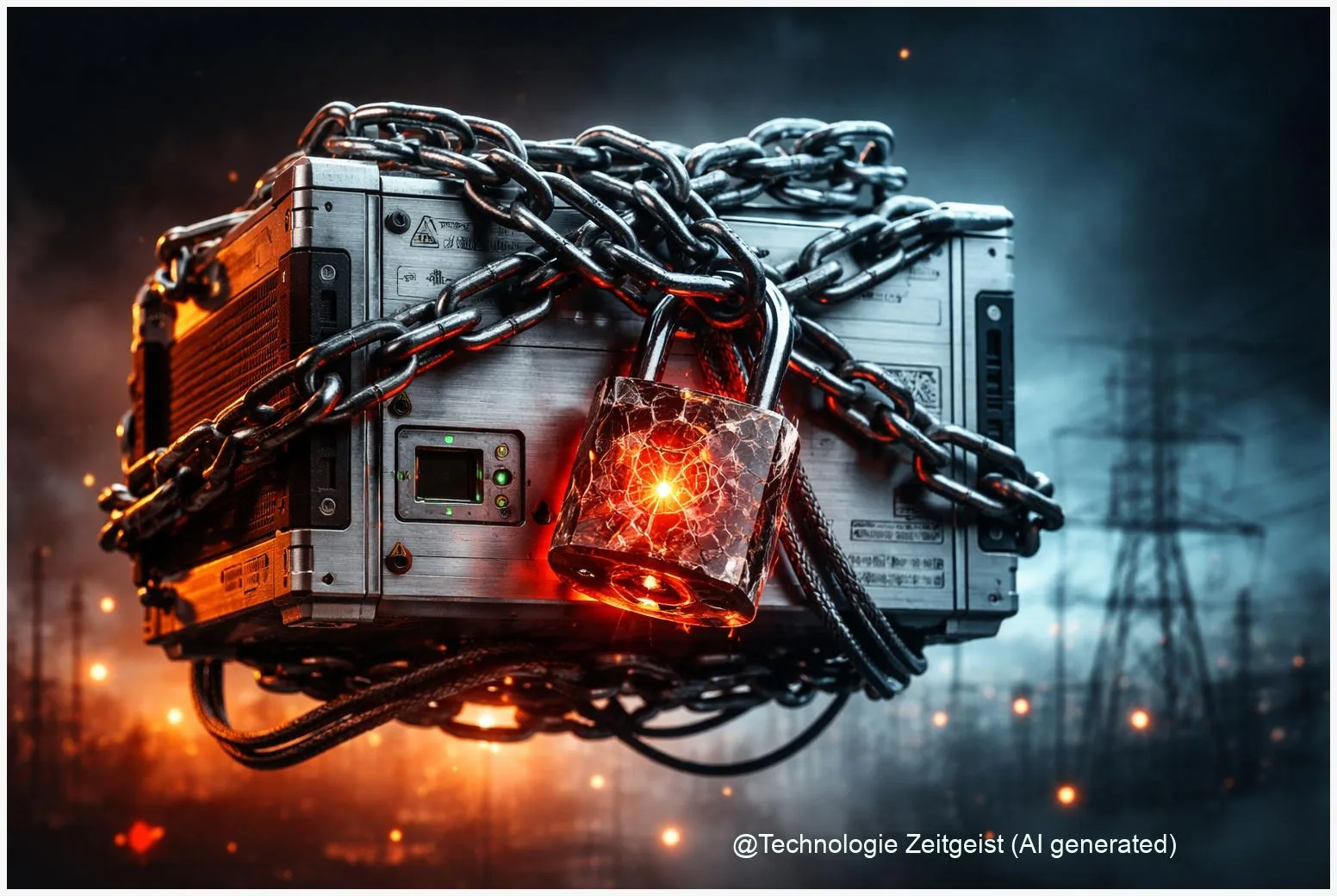
Grid-connected battery projects are increasingly important for balancing power, but they also introduce fresh cyber risks. Weak remote access, low-resolution telemetry, and complex device chains can turn a single fault into a multi-site outage. This article explains why battery sites are exposed and which practical measures operators and regulators use to reduce the danger.
Introduction
Large battery plants sit between the electricity grid and markets that need rapid flexibility. When an inverter trips or a control channel is misconfigured, the effect can be immediate: a plant that should provide peak capacity suddenly goes quiet. That makes the combination of electrical protections and digital control especially sensitive. Several authoritative analyses highlighted patterns that remain relevant: conservative protection settings, limited per-module logging, and widespread vendor remote-maintenance channels. Readers will learn which elements in a battery plant create an attack surface and what practical changes cut both reliability and cyber risk without heroic expense.
How battery storage systems are built
Utility battery systems bring together several specialised devices: a battery management system (BMS), inverter modules, a plant controller or PLC, site telemetry that reports to grid operators or traders, and often a vendor cloud for maintenance. These components exchange control, status, and firmware data using protocols such as Modbus/TCP or IEC 61850. If a single layer fails to provide high-resolution data, diagnosing whether a trip was electrical or malicious becomes much harder.
| Feature | Description | Operational role |
|---|---|---|
| Battery Management System (BMS) | Cell and pack safety monitoring | Prevents thermal events, reports state-of-charge |
| Inverter modules | Convert DC to grid-compatible AC | Apply protection trip logic and ride-through settings |
| Plant controller / PLC | Coordinates modules and dispatches commands | Local decision-making and telemetry aggregation |
What makes battery sites an easy target
Three structural reasons increase exposure: many connected devices, mixing of IT and OT channels, and insufficiently detailed monitoring. A typical access path can run from a vendor cloud through VPN or remote-access gateways to a plant controller and into inverter registers and the BMS. Industrial protocols often lack strong built-in encryption or role-based access, making network segmentation and OT-aware intrusion detection important. Telemetry is frequently too coarse; protections trigger in milliseconds while SCADA values may be seconds or minutes apart, so fast oscillography and per-module logs are important for forensics. Supply-chain and firmware integrity issues also matter when updates are unsigned or vendor access is overly permissive.
Battery storage cybersecurity in daily operation
Day-to-day risks appear in remote maintenance, firmware updates, and market dispatch. Best practice for remote maintenance is to force external access through a central jump-host with multi-factor authentication, session recording, and short-lived credentials. Firmware should be cryptographically signed with auditable verification before deployment. Market dispatch pressures can push inverters near protection thresholds; misaligned settings can turn routine commands into trips. Authorities recommend recording sub-second inverter telemetry, retaining per-module fault codes, and feeding that data into an OT-aware SIEM to distinguish faults from malicious actions.
Risks, mitigations and realistic costs
Most measures reduce both cyber exposure and operational uncertainty and usually do not require replacing hardware. Technical measures include enabling high-resolution logging (for example millisecond-level oscillography or <=10 ms sampling where feasible), enforcing firmware signing and pre-deployment verification, hardening remote access with a jump-host or ZTNA plus MFA and session recording, segmenting networks with firewalls and OT-aware IDS/IPS, and adding SIEM correlation rules that alert on multi-module trip patterns or unusual Modbus writes. Costs vary by plant size; enabling fast logging and SIEM ingestion can range from a low five-figure amount upward depending on retention and integration, while vendor governance and signed firmware checks are often lower recurring costs. Comparing mitigation costs with a single avoided multi-hour outage often shows strong value.
Conclusion
Battery plants provide essential flexibility, but their layered protections and digital controls create exposure. Pragmatic steps—better visibility, stricter vendor access, and cryptographic controls for firmware—reduce accidental trips and deliberate manipulation and make incidents easier to investigate and recover from. Policy, procurement clauses, commissioning tests with high-resolution logging, and operational rules for remote maintenance complement firewalls and IDS rules to keep systems reliable.

Leave a Reply