
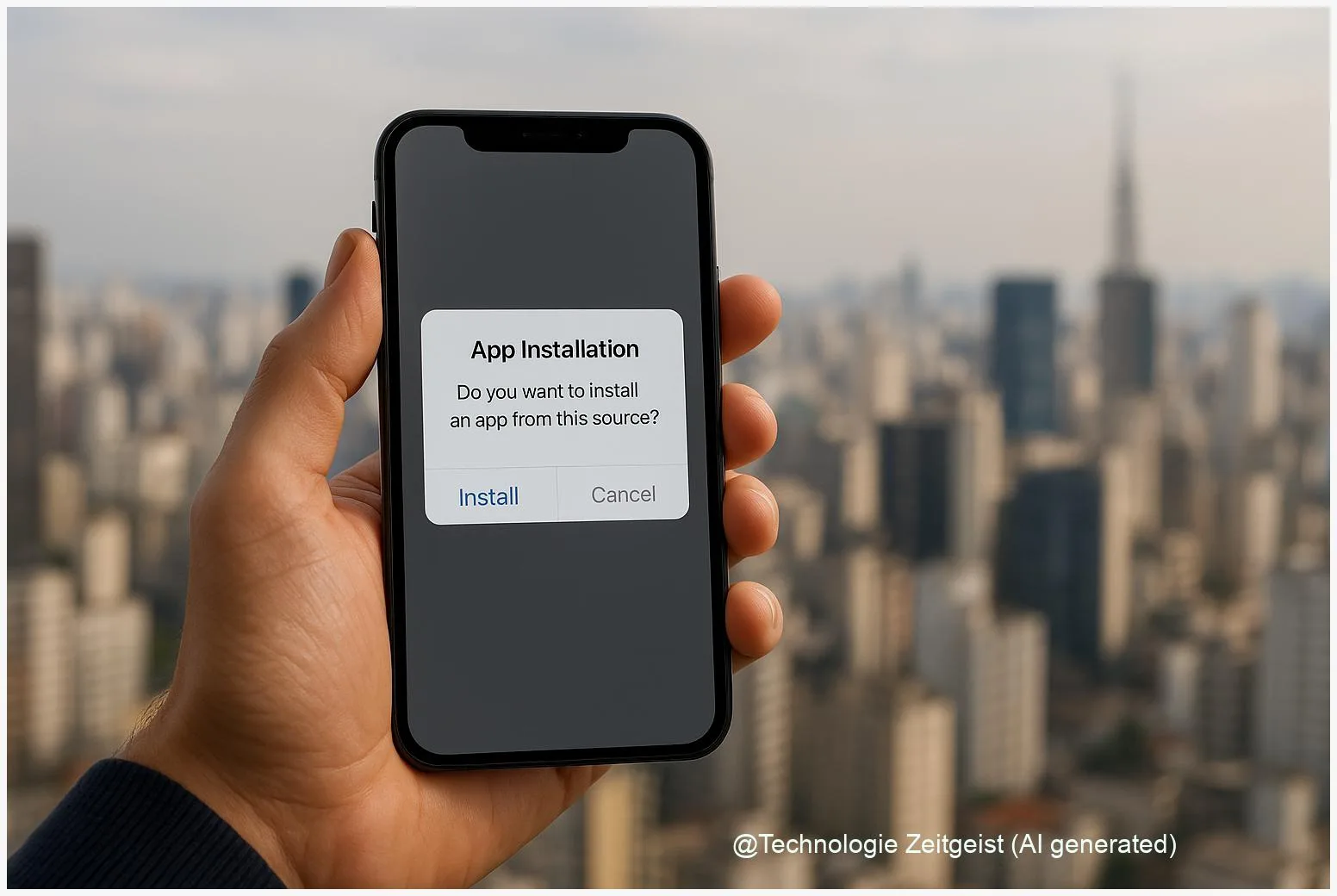
Brazil will gain a way to install apps on an iPhone without using Apple’s App Store, a shift often called iPhone Brazil app sideloading. For users this promises more choice; for developers it changes how apps reach customers and how revenues flow. This article outlines what the change likely means, how sideloading could work on iOS in Brazil, and the most important practical risks and opportunities to watch.
Introduction
Apple has long required iPhone apps to be distributed through its App Store, where it enforces review rules and collects fees. Reports in late 2025 indicate the company will permit users in Brazil to install apps from sources outside Apple’s storefront. That matters because it changes how people obtain software and how developers sell it. For everyday users the question is straightforward: will this make your phone more useful or less safe? For developers it is about access to customers and pricing power. The change is rooted in legal and regulatory pressure that several countries have applied to large app platforms; Brazil’s approach is shaping a national exception that aims to increase competition while asking platforms to maintain core safety controls.
What iPhone Brazil app sideloading means
Sideloading means installing an app on your device from a source other than the platform’s official store. On Android, sideloading has been common for years; on iPhone it has been effectively blocked for most users. Allowing sideloading in Brazil would be a formal change to that rule: iPhone Brazil app sideloading would give Brazilian iPhone owners the option to install apps directly from developers, alternative app stores, or corporate distribution systems.
Technically, iOS enforces app signing and sandboxing to control what software can run and how it can interact with the system. If sideloading is allowed, Apple must either relax some policies or add controlled paths that let non‑App Store apps run while keeping key protections. In practice this could mean Apple accepts apps signed by approved third parties, makes it possible to add alternate app stores as system-recognised sources, or introduces prominent warnings and additional permission checks during installation.
Platforms can offer choice while still applying verification; the details of that verification decide how large the security trade-offs are.
Regulatory context matters: similar moves in other jurisdictions were driven by competition or digital markets rules aimed at preventing a single platform from locking in developers. A Brazil-only implementation can be tailored: it may apply only to users with a Brazilian App Store account or to devices bought or registered in Brazil. The exact scope determines how many people and apps are affected and how developers will respond commercially.
For readers tracking the change: the headline effect is more distribution routes. The subtler effects are on app updates, payment systems, and software safety checks that today are largely managed by Apple’s App Store policies.
How installing apps outside the App Store could work
There are several practical approaches Apple could use to let people install apps outside the App Store while trying to limit harm.
One option is a controlled sideloading API. Apple would expose an official installation path that accepts packages signed by developers and verified by Apple’s cryptographic checks, but that bypasses App Store review. This keeps a signature-based trust model while permitting alternate storefronts. Another approach is allowing third-party app stores to register with iOS; the system would recognise them and allow installs after a user explicitly enables the store. A third, more permissive, model would simply accept apps installed via device management or downloaded from the web after the user permits it—this is closer to how Android works today.
Each option has consequences for updates. If alternate stores are supported, they must provide update channels and security mechanisms similar to the App Store. Otherwise users may install an app that never receives timely security patches. Apple could require all stores and independent packages to implement automatic update support and to meet minimum security requirements to be legally allowed in Brazil.
From a user point of view, the process might look like this: the system warns that the app is from an external source, shows details about the developer signature and update policy, and requires a one‑time setting change to allow external installations. For developers and alternative stores, it will be important to explain update frequency, how they handle data protection, and whether payments occur inside the app or through external checkout—an important commercial distinction.
Opportunities and risks for users and developers
Allowing sideloading brings clear opportunities. Developers can reach customers without following every App Store rule or paying Apple’s fees, which may make niche or lower-priced apps more viable. Alternative marketplaces could offer different revenue splits, subscription models, or localized pricing that better fits Brazilian consumers. Users could gain access to apps not approved by the App Store, educational or regional software, and business apps distributed directly by companies.
However, risks are real and measurable. First, security: a broader distribution environment can increase the chance that malicious or poorly maintained software reaches users. Apple’s current model centralises review and automated scanning; breaking that model requires compensating safeguards such as strong signatures, independent malware scanning, and faster patching obligations for distributors.
Second, fragmentation: developers may need to support multiple distribution channels, each with different rules for payments and updates. That raises costs, especially for smaller teams. Users may face inconsistent update behaviour and difficulty finding trustworthy apps among many stores. Third, consumer protection: refunds, privacy guarantees, and dispute resolution differ across sellers. Lawmakers and platform operators will need to align on rules that make those guarantees enforceable for Brazilian consumers.
There is also an economic trade: Apple could lose some commission revenue in Brazil, which could lower its incentives to maintain certain local services unless new commercial terms are negotiated. Developers may gain margin but also face more direct competition and marketing costs. The net effect on app prices and quality will depend on how many users actually choose alternatives and how easily alternative stores can build trust.
Likely next steps and what to watch
Expect a phased approach rather than an instantaneous shift. Apple will likely publish technical documentation and developer guidance, and regulators may set implementation deadlines. Watch for three immediate signals: the scope of permitted sideloading (users in Brazil only or broader), the technical model Apple adopts (registered third‑party stores, signed packages, or looser installs), and the rules for payments and consumer protections.
In the weeks after an announcement, security researchers will examine the implementation for new attack vectors. Developers should test distribution outside the App Store and prepare update mechanisms. Payment providers, banks, and consumer protection agencies will evaluate how subscription cancellation, chargebacks, and in‑app purchases are handled across different channels.
For policymakers and industry watchers, Brazil’s model may become a template elsewhere. If the rules balance openness and safety well, other countries considering platform competition rules could adopt similar carve‑outs. Conversely, if fragmentation leads to consumer harm, future regulations may tighten or add cross‑border constraints. In short: the design details decide whether sideloading becomes a practical benefit or a managed experiment with limited adoption.
Practical advice for readers who live in Brazil or follow the market: keep devices updated, read installation prompts carefully, and prefer apps from known developers or stores that publish clear update and refund policies. For developers, document update channels and test how in‑app and external payments will work under multiple distribution scenarios.
Conclusion
Allowing apps outside the App Store in Brazil changes rules that have defined iPhone software for years. It opens distribution and pricing choices for developers and users, while creating new responsibilities for platform operators, regulators and store operators to keep devices safe and users protected. The practical outcome will depend on the technical details Apple publishes and the legal requirements Brazil attaches to the change. Observing those details will show whether this becomes a sustained expansion of choice or an experiment with tightly limited scope.
Share your experience and questions about app stores and mobile security — join the conversation and pass this article to someone curious about app choices.




Leave a Reply