
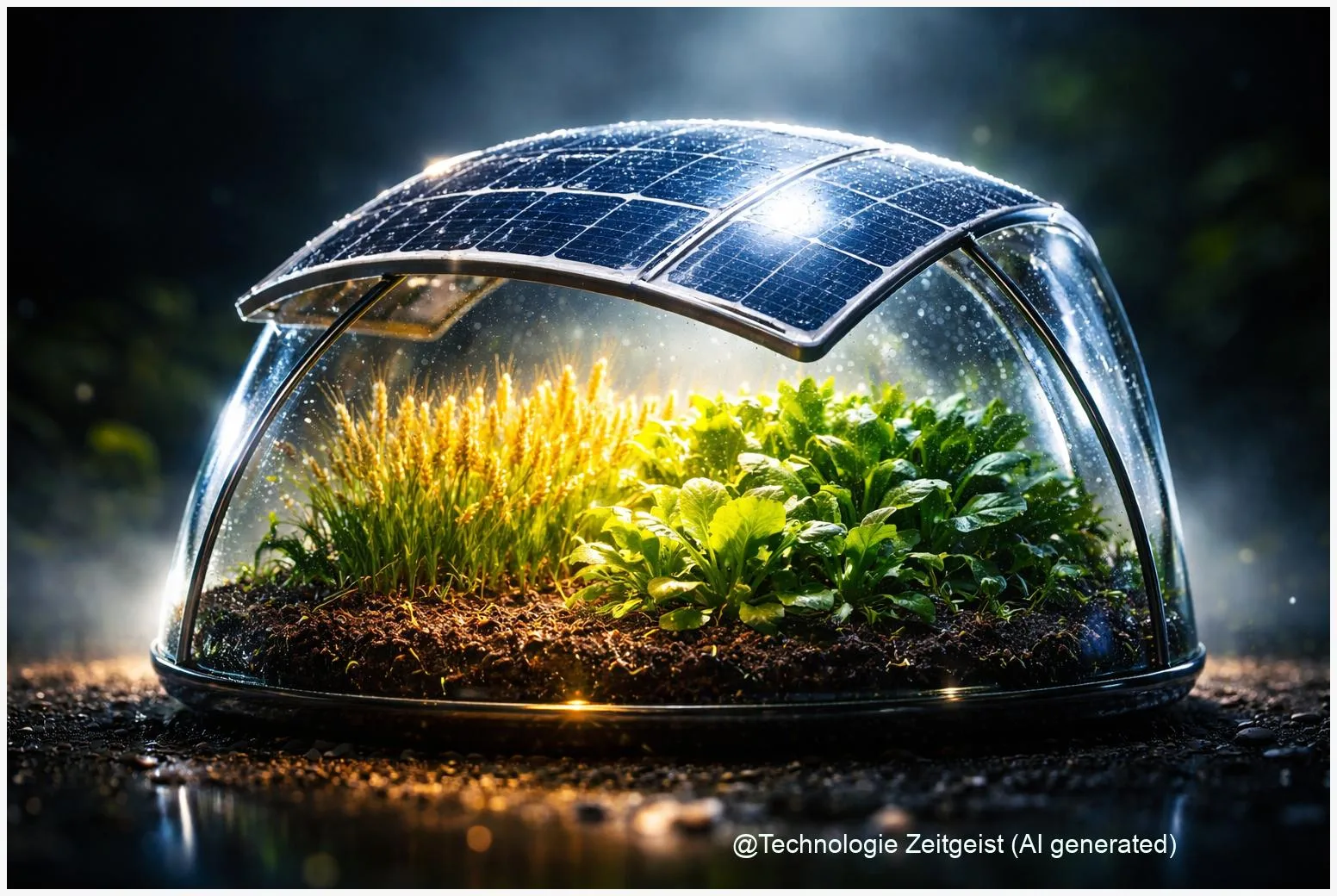
Agrivoltaics offers a way to produce electricity and crops on the same land, reducing pressure on farmland while creating a new income stream for farmers. This approach places solar panels above or among crops so panels and plants can coexist; the technical trade-offs depend on panel layout, crop type and local climate. The article lays out the practical basics, typical benefits and key limits to help farmers, planners and curious readers understand why agrivoltaics is being taken seriously across Europe.
Introduction
Land for both food and clean power is scarce in many regions. Farmers face hotter summers, tighter water supplies and pressure to diversify income — while national energy plans seek new sites for solar without swallowing agricultural land. Agrivoltaics puts solar panels above fields or between rows so the same hectare yields both electricity and crops. At first glance it sounds like a compromise, but small changes in panel height, row spacing and orientation can make a big difference to light, temperature and water use at the plant level.
That balance — keeping farming viable while producing useful electricity — is the practical problem agrivoltaics is trying to solve. The European Commission and national bodies now publish guidance, and researchers use simulation tools and on-farm trials to measure effects. This article brings those pieces together into clear, action-oriented explanations and examples so readers can see what works, what does not, and why the approach is gaining attention across Europe.
How agrivoltaics works
Agrivoltaics describes systems where photovoltaic modules and crops occupy the same area. There are three typical layouts: elevated horizontal arrays with room for tractors, staggered rows leaving regular light gaps, and vertical or semi-transparent panels for orchards and vineyard edges. The key idea is to manage how sunlight reaches plants while also capturing energy on top.
Design choices determine whether the site favors energy, crops or a balanced combination — there is no single correct layout.
Two technical terms are useful. Power density (often reported in MW/ha) expresses how much solar capacity is installed per hectare. The European Commission report used values between 0.2 and 0.9 MW/ha and often modelled a 0.6 MW/ha baseline; that JRC study is from 2023 and is therefore more than two years old. The other term, LCOE (levelised cost of electricity), summarises lifetime costs per kilowatt-hour: agrivoltaic structures tend to raise CAPEX compared with simple ground-mounted arrays because they require taller supports and more complex mounting.
Practical consequences follow. Partial shading under panels changes the microclimate: soil stays cooler, evaporation often falls, and daytime temperatures near the plant canopy can be lower. Those effects can help heat- or drought-sensitive crops, but heavy shading reduces yields for light-hungry plants. Electrical design must also handle non-uniform illumination to avoid string mismatch and hot spots.
If a short comparison helps, think of the system as two linked machines: the PV array, optimised for energy capture, and the crop system, optimised for yield. The design challenge is to find settings where the combined value (energy revenue plus crop revenue and savings such as reduced irrigation) is preferable to either use alone.
If numbers clarify, here are typical reference figures used in policy and technical reports:
| Feature | Description | Representative value |
|---|---|---|
| Power density | Installed PV capacity per hectare | 0.2–0.9 MW/ha (common scenario 0.6 MW/ha) |
| CAPEX premium | Extra structure and installation costs vs ground-mount | Around +20 % (site-dependent) |
Where solar and crops already share space
Pilot farms across Europe and elsewhere demonstrate that agrivoltaics is practical for a range of crops. Vineyards, berry beds, some vegetable tunnels and orchards are common early adopters because these plants tolerate partial shade and often benefit from lower heat stress. Trials have also shown benefits for pasture and forage where livestock can graze under elevated panels.
How much benefit depends on crop and climate. For example, fruit crops and some leafy vegetables can keep steady yields while saving water, because shading reduces evaporation. Conversely, crops that need full sunlight — certain cereals and oilseeds — often see yield reductions under dense coverage unless spacing is generous. These outcomes are not surprises for farmers: they mirror how partial shade alters plant physiology and water demand.
On the energy side, agrivoltaic arrays produce less installed capacity per hectare than dense ground-mount parks, but they create combined value. A farmer may receive electricity revenue, continue producing crops, save on irrigation or cooling, and in many countries access targeted incentives. That combination changes farm economics in ways that single-purpose installations do not.
Tools used by planners range from quick pvlib screening notebooks, which estimate PV yield from basic geometry and local weather, to detailed Radiance or AIANA ray-tracing simulations that compute the light available to crops hour by hour. Field trials remain essential: models give a first approximation, but local soil, microclimate and farm machinery needs determine whether a design is workable.
Opportunities and trade-offs
Agrivoltaics offers clear opportunities: more productive land use, extra income streams for farmers, and possibly lower irrigation needs in hot regions. From a planning perspective it can reduce conflicts between solar expansion and food production, which has political value when national targets for renewables rise.
At the same time there are real trade-offs. Elevated structures cost more, sometimes around 20 % extra in CAPEX compared with standard ground-mounted arrays, as reported in EU analyses. Electricity costs per kilowatt-hour can therefore be higher unless systems are optimised or supported by incentives. Permitting raises questions too: some countries treat agrivoltaic installations as a change in land use unless rules explicitly protect agricultural status.
Operational issues matter for farmers. Rigid, low-mounted panels can block machinery access, increase soil compaction during installation, and complicate crop protection measures. Electrically, partial shading creates non-uniform irradiance that requires string-level planning and sometimes microinverters or optimisers to protect yield and module health.
Finally, social and policy tensions can appear. If payments or land prices rise because an area becomes attractive for agrivoltaics, smaller farms may face pressure. To avoid perverse outcomes, many technical guidelines stress reversibility, monitoring and limits on how much crop yield may be reduced — for example some national specifications reference acceptable yield-loss bands so the land remains primarily agricultural.
Looking ahead: rules, pilots and business models
Policy and data will shape whether agrivoltaics stays a niche or scales widely. Authorities across Europe now publish guidance and standards; better harmonisation of definitions and monitoring requirements would reduce permitting friction and give investors clearer expectations. Pilots instrumented with meteorology, soil sensors and yield records can build the datasets planners need to compare designs across climates and crops.
Business models are evolving. Options include farmer-owned systems where the farm keeps electricity revenues, leasing agreements where developers pay rent for shaded land, and cost-share or cooperative models. Public incentives that require multi-year monitoring are becoming more common; they aim to ensure benefits reach farmers and that installations are reversible if a trial fails.
On the technical side, accessible modelling stacks such as pvlib for quick screens and Radiance-based tools like AIANA for detailed irradiance studies are lowering the entry barriers for accurate design. That reduces the risk of costly mistakes: a poorly designed layout can harm crop yields and void the financial case.
For readers who follow farming or local planning, the likely near-term pattern is more targeted pilots and clearer national rules rather than unchecked roll-out. Where incentives and monitoring align, agrivoltaics can be a practical addition to the farm toolkit; where permitting is slow or costs remain high, adoption will stay limited to well-funded demonstrations.
Conclusion
Agrivoltaics combines two valuable outputs from the same land: food and electricity. It is neither a universal solution nor a simple retrofit. The approach works best where panel geometry, crop choice and local climate are matched with clear rules and careful electrical and agricultural design. European reports and growing pilot evidence show material potential at modest land shares, but they also emphasise higher installation costs, the need for standardized monitoring and the importance of preserving farm operations. For farmers and planners, the sensible path is cautious experimentation: small, instrumented trials, transparent contracts and design guided by validated models.
If you have experience with agrivoltaics or questions about how it might fit a local farm, share your thoughts and pass this article on to colleagues.




Leave a Reply