
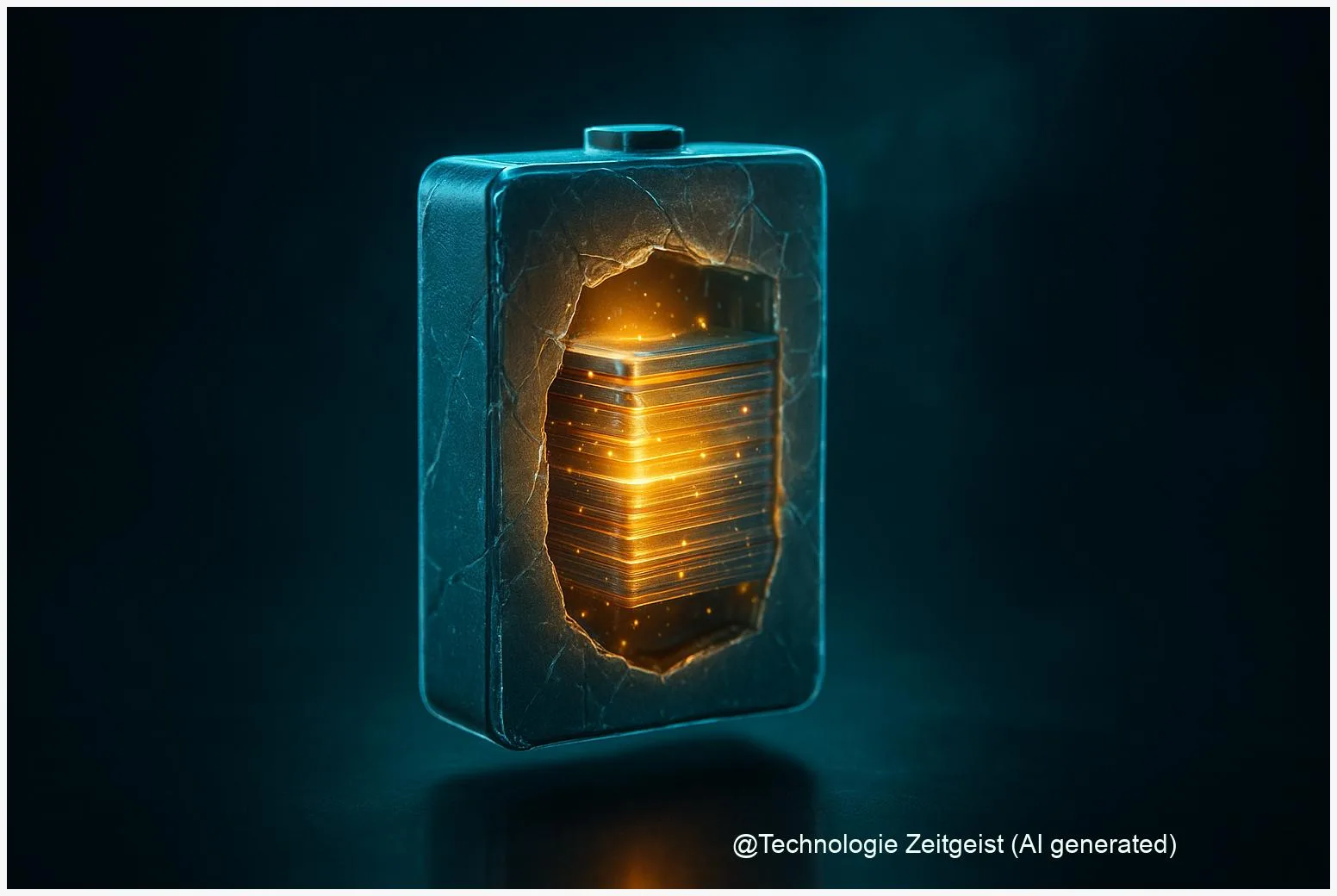
Solid-state EV battery advances have moved from lab headlines into vehicle tests and pilot lines, and they promise higher safety and potentially greater range. This article describes what a solid-state EV battery is, which technical gaps remain, and how recent 2024–2025 developments change the likely timetable for mainstream cars. Readers will leave with a clear sense of practical effects on range, charging, and safety, plus what to watch next.
Introduction
When you look at electric cars on the road, their batteries are what determine how far they go, how fast they charge, and how safe they feel in accidents. Recent headlines about solid-state cells suggest clear improvements across those three points, but the reality mixes laboratory promise, pilot production and unresolved engineering tasks. This article maps the terrain: the physical difference of solid electrolytes, what vehicle makers are doing now, and which technical and industrial hurdles still decide whether ordinary buyers will actually benefit in the next few years. The overview stays practical, with concrete examples from 2024–2025 that help form a realistic timetable for mainstream cars.
Solid-state EV battery fundamentals
A solid-state EV battery replaces the liquid electrolyte used in today’s lithium-ion cells with a solid material that conducts ions. That sounds small, but the change affects three basic aspects: energy density (how much energy fits per kilogram), safety (how likely the cell is to short or catch fire), and packaging (how a cell has to be pressed, sealed and cooled inside a vehicle).
Solid electrolytes come in several families: sulfides, oxides (including garnet-like ceramics), halide/oxyhalide glasses and polymer-based systems. Each class balances ion conductivity, chemical stability against lithium metal, and manufacturability. For example, sulfide electrolytes often show high conductivity at room temperature but can be sensitive to moisture; halide glasses can be easier to process and withstand air better, but their long-term interface chemistry with electrodes needs careful engineering.
Recent peer-reviewed work found wide variation among lab results, highlighting how sensitive these cells are to assembly details and testing protocols.
That peer-reviewed comparison is important: a multi-group study published in 2024 showed very large spreads in measured cell performance across different labs. The result is a reminder that headline numbers (high capacity, fast charge) often come from carefully tuned lab cells and may not reflect the performance of mass-produced automotive cells.
If a table helps, here are the main electrolyte classes and how they differ at a glance.
| Electrolyte class | Strength | Main challenge |
|---|---|---|
| Sulfide | High conductivity at room temperature | Moisture sensitivity and interface reactivity |
| Oxide / garnet | Thermally stable and robust | Hard to process; brittle and needs surface engineering |
| Halide / oxyhalide (amorphous) | Good processability; better low-temperature conductivity in recent examples | Long-term interface chemistry still under study |
In short: the materials science is advanced and growing fast, but converting lab cells into large-format pouch or prismatic cells for cars introduces mechanical, thermal and manufacturing questions that have driven the current industry focus on pilot production and vehicle tests.
How manufacturers are testing these batteries in cars
Manufacturers moved from papers to pilots in 2024–2025. Several automakers and battery companies reported vehicle tests, prototype sample shipments and demonstration production lines. Those steps do not mean overnight availability, but they do indicate that integration issues — pack assembly, cooling and safety validation — are being actively worked on.
Examples matter because they show the kinds of problems engineers actually face. One major carmaker reported testing large-format solid-state cells inside a production platform to evaluate packaging stresses and thermal behaviour. A battery developer publicly shipped B1 prototype samples to partners and built a pilot line to validate automated manufacturing steps. Another large manufacturer opened a demonstration production line to exercise production processes at pilot scale. These are practical, verifiable milestones that move technology risk from pure material science toward production engineering risk.
What should drivers expect from this stage? Three realistic effects that can appear early on: slightly improved safety margins (solid electrolytes are less flammable than liquid electrolytes), modest gains in specific energy for the cell (allowing either longer range or smaller packs), and early-adopter vehicles with limited series production rather than immediate mass-market rollout. Note that optimistic range numbers reported in some media — for example very high single-digit improvements or claims of >800 km in exceptional demonstrations — are often based on lab prototypes or projected pack designs rather than independent automotive testing.
Finally, tests increasingly examine performance in cold conditions. New amorphous halide-style electrolytes reported in 2025 keep ionic conductivity at far lower temperatures than many earlier solid electrolytes, which matters if you live where winter temperatures routinely drop well below freezing.
Opportunities and risks for drivers and fleets
Solid-state cells promise three customer-visible benefits: safer chemistry, higher potential energy density, and possibly faster charging. Safer chemistry follows because solid electrolytes do not contain flammable organic solvents. That reduces the chance of a thermal-runaway fire in a damaged cell, although pack-level safety still depends on sensors, mechanical design and vehicle systems.
Higher energy density means either longer range or smaller battery packs for the same range. That can improve real-world fuel economy and reduce vehicle weight, but the real gain depends on whether the full pack (cells, casings, cooling) realizes the cell-level advantages. Many early claims focus on cell-level numbers; industry testing is needed to confirm pack-level benefits.
On the risk side, manufacturing scale-up and supply chains are central. Some solid electrolytes require different raw materials or purer processing steps than current lithium-ion cells, and that creates near-term supply and cost uncertainty. Another significant risk is reproducibility: interlaboratory studies have shown large variability in results when different teams assemble and test nominally the same solid-state cells. That matters because automotive suppliers need stable, predictable yields and long calendar life, not just occasional high-performing cells.
Finally, recycling and second-life strategies will need redesign. Solid electrolytes change the chemical mix inside a battery pack, and recycling processes optimized for liquid-electrolyte cells may not be directly transferable. That creates both a short-term cost and a medium-term opportunity for firms that can adapt recycling streams early.
What adoption could realistically look like
Timelines are the perennial question. The technical progress of 2024–2025 shows that the field is moving from lab demonstrations to pilot production and vehicle tests. That progression usually implies a staged market entry: limited-series or premium models first, broader adoption later as costs fall and yields improve. Based on demonstrable pilot projects in 2025 and industrial roadmaps, a realistic scenario is early, limited-series cars from 2027 and wider adoption through the late 2020s.
Two important qualifiers shape that timetable. First, early commercial cells will likely go into specialized or premium models where manufacturers can accept higher unit cost for differentiated performance. Second, mass-market adoption depends on yield, cost per kWh and the ability to integrate new cell types into existing battery-pack factories. Pilot lines and sample shipments in 2025 reduce material and integration uncertainty, but they do not eliminate the big manufacturing questions of volume, yield and long-term durability.
For consumers and fleet buyers, practical advice is straightforward: when considering a vehicle that quotes a new battery chemistry, ask for independent validation — dealer or OEM statements about production readiness are helpful, but field tests and third-party test reports give stronger evidence. For policy makers and regulators, standardising test protocols and reporting (for example: assembly pressures, number of replicates, temperature points) will shorten the time between prototype claims and reliable, comparable industrial data.
Conclusion
Solid-state EV battery technology has advanced from isolated lab breakthroughs to visible industrial steps: pilot lines, sample shipments and on-road tests. That narrows technical uncertainty and increases confidence that solid electrolytes can deliver safer cells and improved energy density. Yet key challenges remain: reproducible manufacturing, consistent pack-level gains, supply-chain adaptation and recycling. The most likely outcome in the coming years is a gradual rollout—early premium or limited-series cars first, with broader availability later in the decade as factories learn to produce these cells reliably and at scale.
Join the conversation: share your experiences with EV range or fleet testing, or ask a question to keep the discussion practical and focused.



Leave a Reply