
Insights
Apple’s decision to use Google’s Gemini as a cloud backbone aims to boost assistant intelligence. The change affects Siri with Gemini by adding a powerful server model while keeping smaller models on iPhone for quick, private tasks. The result should be smarter responses but also new privacy and latency trade-offs.
Key Facts
- Apple will combine on-device models with a licensed Gemini model running in Apple’s private cloud compute.
- On-device models handle simple requests fast and privately, while Gemini handles complex reasoning and long-context tasks.
- Privacy claims hinge on Apple’s private cloud and technical controls; contract details are not public.
Introduction
Who: Apple and Google are the main actors in the announcement reported in January 2026. What: Apple will use Google’s Gemini models as a cloud backbone for Siri. When: the news surfaced in early January 2026. Why it matters: this hybrid setup changes how the assistant balances speed, capability and user data handling.
What is new
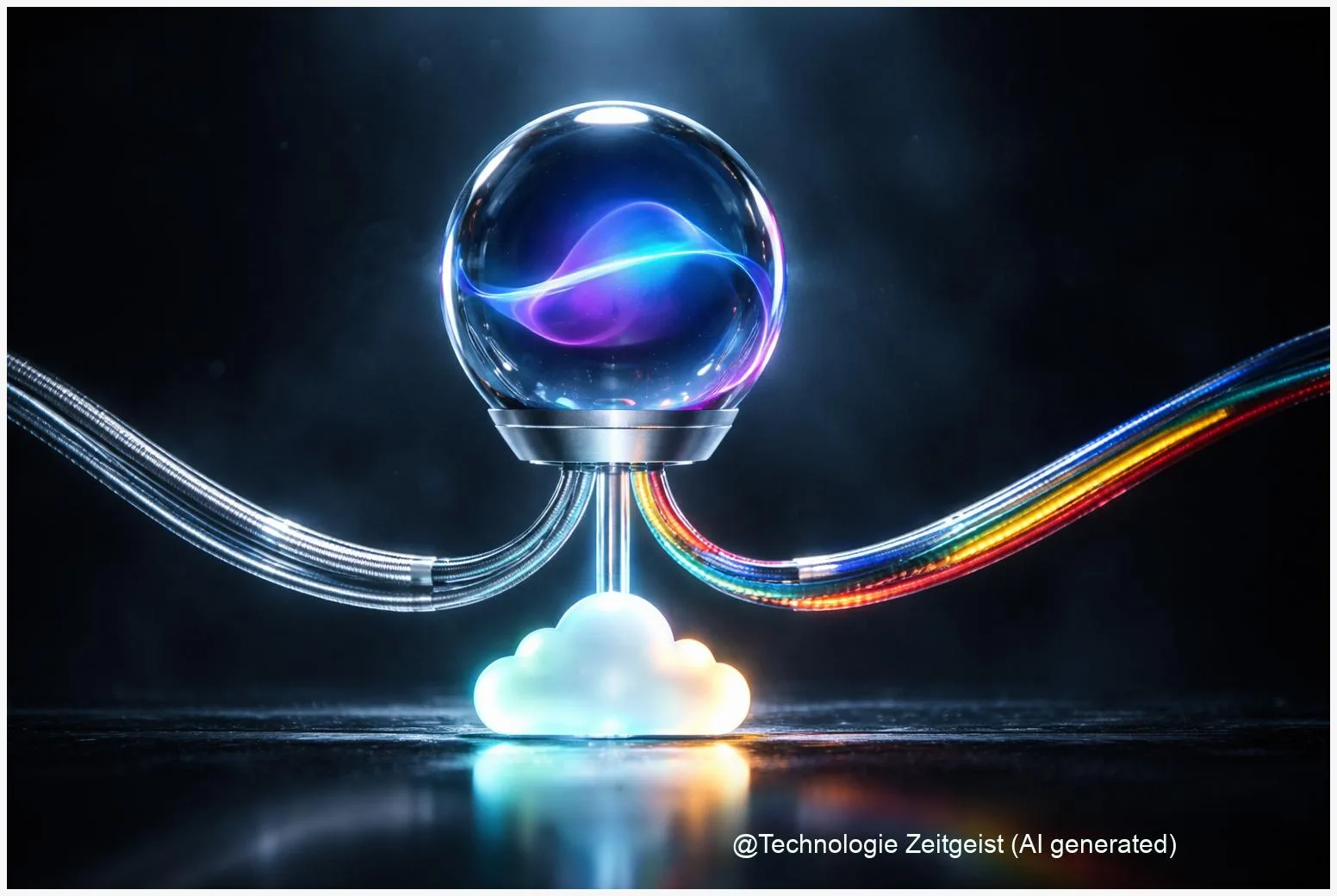
Apple announced a move to integrate Google’s Gemini as a large cloud model that will back more complex Siri tasks. At the same time, Apple will keep and advance its smaller on-device models for immediate, private responses. Technically, this is a hybrid architecture: local models manage low-latency commands and privacy-sensitive processing, while a licensed Gemini instance in Apple’s private cloud provides heavier reasoning and multimodal capabilities.
What it means
For users, Siri with Gemini should give more helpful answers, longer-context conversations, and better handling of complex requests. Practical trade-offs include slightly longer response times when the assistant needs cloud reasoning and new questions about which data leaves the device. Apple says models will run on Apple devices and private cloud compute; whether telemetry or training access is shared depends on contractual and technical controls that have not been published.
What comes next
Expect a staged rollout: general capability upgrades first, deeper personalization later. Engineers will need to solve latency and cost at scale by routing tasks, caching results, and using small on-device models for common actions. Regulators and privacy advocates may ask for clarity about telemetry and model update policies. Developers should watch for new APIs that distinguish local intents from cloud-powered features.
Conclusion
Siri with Gemini marks a clear move to hybrid AI: smaller local models for speed and privacy, plus a powerful cloud model for hard tasks. The net effect should be a smarter assistant, but user experience will depend on how Apple balances latency, cost and data controls.
Join the conversation: share your experiences and questions about smart assistants, and pass this on to others who rely on Siri.

Leave a Reply