
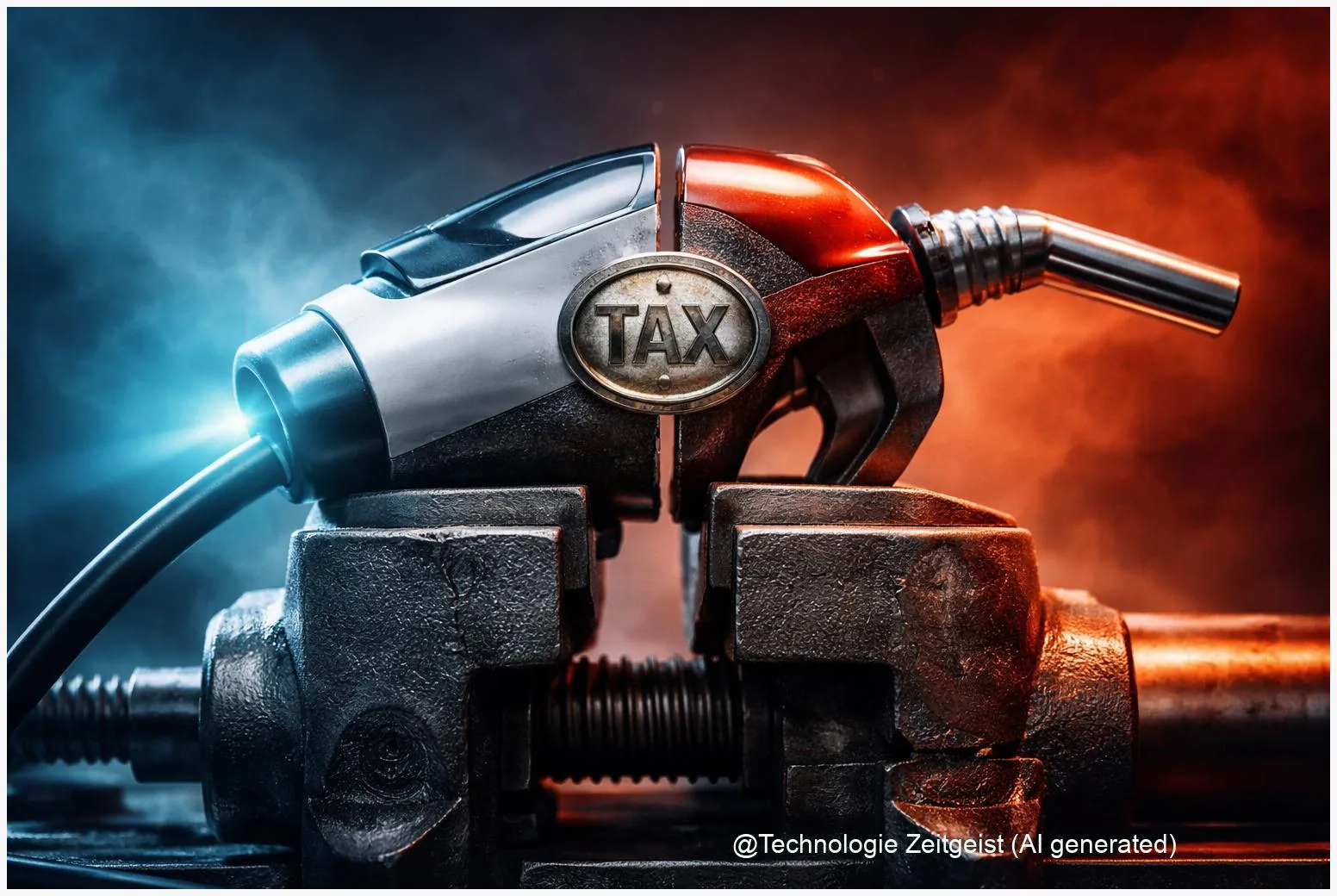
Plug-in hybrids now sit between pure electric cars and conventional petrol models — and US policy has begun to treat them differently. Changes to tax credits, stricter supply-chain rules and new regulatory signals mean many models lost or risk losing large point-of-sale incentives. This article describes the policy levers, the practical thresholds such as the 7 kWh battery rule, and what the shifts mean for buyers, makers and public goals for cleaner transport.
Introduction
For years plug-in hybrids offered a compromise: limited electric driving for short trips and a petrol engine for range. That hybrid appeal is now colliding with two policy trends in the United States. First, a broad set of tax incentives introduced in the Inflation Reduction Act became conditional on where batteries and parts are made. Second, regulators and public debate have grown more sceptical about the real-world emissions benefits of short-range hybrids. Together these shifts mean the financial advantage that once made plug-in hybrids attractive is smaller or uncertain for many buyers.
At the centre of these changes are a handful of concrete rules: a minimum battery capacity often cited as 7 kWh, limits on vehicle price, and rising sourcing thresholds for critical minerals and battery components. The result is not a sudden ban; it is a rebalancing of incentives that nudges manufacturers and buyers toward full battery electric vehicles (BEVs) in many segments. The next sections unpack how the rules work, what they mean in everyday terms, where the tensions lie, and plausible near-term outcomes for drivers and carmakers.
Plug-in hybrids: how they work and why policy matters
A plug-in hybrid electric vehicle (PHEV) combines an internal combustion engine with a rechargeable battery and an electric motor. Unlike a conventional hybrid, which recharges the battery only from the engine and braking, a plug-in hybrid can be plugged into the grid to recharge and typically offers a short all-electric range. The battery size in many modern PHEVs is often around 7 kWh or slightly higher; regulators use a similar threshold to distinguish eligible plug-in models for some tax rules.
“A small battery and frequent petrol use can sharply reduce the real emissions advantage of plug-in hybrids compared with fully electric cars.”
Policy attention focuses on a few measurable features: battery capacity (measured in kWh), the electric-only range (miles or kilometres), the vehicle’s final assembly location, and the sourcing of critical minerals and components. In US federal rules the clean vehicle credit for new vehicles is structured so that a model needs a minimum battery capacity (commonly cited as 7 kWh) and then must satisfy supply-chain tests to receive the full credit. Other administrative gates include vehicle price ceilings and buyer income limits.
How those rules play out in the market depends on manufacturer choices. Some companies can certify supply‑chain percentages and place assembly in eligible locations; others cannot. That gap turns technical criteria into a decisive commercial factor.
If a compact comparison helps, the table below highlights the practical differences between a typical BEV and a typical PHEV under the current rules.
| Feature | Typical BEV | Typical PHEV |
|---|---|---|
| Battery capacity | ~40–75 kWh | ~7–20 kWh |
| Electric range | ~150–300+ miles | ~20–50 miles |
| Eligibility sensitivity | Strongly dependent on sourcing & MSRP | Often fails sourcing tests despite meeting battery size |
How incentives and regulations determine value
Two separate policy tools determine how attractive a plug-in hybrid is to a buyer: tax incentives and regulatory signals. Tax law (administered by Treasury and the IRS) sets consumer-facing credits and eligibility. Regulatory agencies (for example environmental regulators) influence rules on emissions and future compliance requirements. These operate independently but interact in practice because manufacturers respond to both when planning supply chains and sets of models.
For the federal clean vehicle credit, the headline numbers are tangible: a new qualified vehicle may get up to $7,500, split into two halves tied to separate supply‑chain tests. There are caps on MSRP — about $55,000 for most cars and $80,000 for certain larger models — and income limits for buyers. For used vehicles a smaller credit exists: up to $4,000 or 30 % of the sale price, whichever is lower, with a sale-price cap of $25,000. Such thresholds turn the incentive from a blanket subsidy into a technical checklist.
What changed recently is the timeline for sourcing requirements. The rules raise the percentage of critical minerals and value of battery components that must come from qualifying sources year by year. That schedule effectively narrows the set of models that qualify for the full credit unless manufacturers localise supply chains or change suppliers. Administrative requirements such as VIN reporting and manufacturer certification add further friction; dealer systems and IRS registries have struggled with delays, which reduces the practical availability of point-of-sale credits.
Because the credit can now be transferred at point of sale — a buyer can elect to have an eligible dealer receive the credit and reduce the purchase price immediately — operational problems matter: if a dealer is not registered or a VIN is not in the IRS database, the immediate price reduction may not occur even when a model later proves eligible on paper. That difference between paper eligibility and the money in the buyer’s hand is politically important and explains why producers are rethinking which PHEV models are worth continuing.
Everyday use and total cost of ownership
For an individual buyer, the decision to choose a plug-in hybrid often comes down to daily routines and total cost of ownership (TCO). A PHEV can be a pragmatic choice if most trips are short and a home charger is available, because the electric-drive portion eliminates petrol consumption for routine commuting. But the TCO calculation is sensitive to the size of acquisition incentives.
To make this concrete: an illustrative PHEV might carry an incremental premium of a few thousand dollars compared with a conventional petrol car. If a point-of-sale credit reduces that premium by the full federal amount, the net extra cost can become small or even negligible, making the PHEV attractive. Without the credit, payback times measured by fuel savings lengthen significantly. Academic modelling and market analysis show that point-of-sale incentives materially increase short-term uptake of low-emission vehicles; removing them has a measurable near-term effect on sales.
Real-world emissions depend on charging behaviour. If a driver rarely charges and instead uses the petrol engine most of the time, a PHEV’s lifecycle emissions approach those of efficient petrol cars rather than BEVs. That has been a focus of consumer and regulatory scrutiny and is one reason why policy designers have tightened how incentives are targeted. For drivers who consistently charge at home and use electric mode for short trips, a PHEV still delivers a small but useful emissions reduction and convenience benefit compared with a conventional car.
Practical advice for buyers: check the manufacturer certification and dealer registration status if you plan to rely on a point-of-sale transfer of the federal credit. Confirm the expected electric range and realistic charging setup at home or work. Those three practical checks — eligibility paperwork, range, and charging access — often determine whether a PHEV is a cost-effective choice for an individual household.
Risks, tensions and the future scenarios
There are several tensions around plug-in hybrids. One is political and reputational: PHEVs have been criticised for delivering weaker real-world emissions savings than advertised. Another is supply-chain complexity: meeting increasing sourcing thresholds requires parts and cell production to move to qualifying jurisdictions, which takes time and investment. A third is market signalling: when incentives increasingly favour BEVs, manufacturers face a strategic choice between investing in PHEVs or focusing on full electrification.
These tensions produce a small set of plausible near‑term scenarios. In one, manufacturers that can meet sourcing requirements keep offering PHEVs and capture buyers who want a familiar transition technology. In another, many PHEV models are phased out in favour of BEVs because the administrative and certification costs outweigh narrow profit margins. A middle path sees PHEVs concentrated in niche segments — for example certain luxury or fleet models — where higher margins or different duty cycles justify the extra expense.
Policy responses matter. If regulators ease sourcing schedules or simplify certification, more PHEV models might qualify again. If supply-chain rules remain strict and enforcement improves, manufacturers will either localise production or drop models that cannot meet thresholds. For consumers the practical implication is clear: model availability and point-of-sale incentives in 2026 may look noticeably different than they did in 2023–2024, especially for compact PHEVs with small batteries.
Conclusion
Policy changes in the United States have shifted the economic logic around plug-in hybrids. Technical thresholds such as a minimum battery of about 7 kWh, rising sourcing percentages for critical minerals and battery components, price caps and income limits mean that many PHEV models no longer qualify for the full federal incentives that once made them appealing. The shift is not an immediate ban but a reallocation of subsidy that pushes manufacturers toward clearer choices: invest in eligible supply chains, reprice models, or pivot to full battery electric vehicles. For buyers the practical step is to confirm point-of-sale eligibility and realistic electric range before deciding.
Share your experience with plug-in hybrids or questions about eligibility — join the discussion and pass this article to someone choosing their next car.

Leave a Reply