
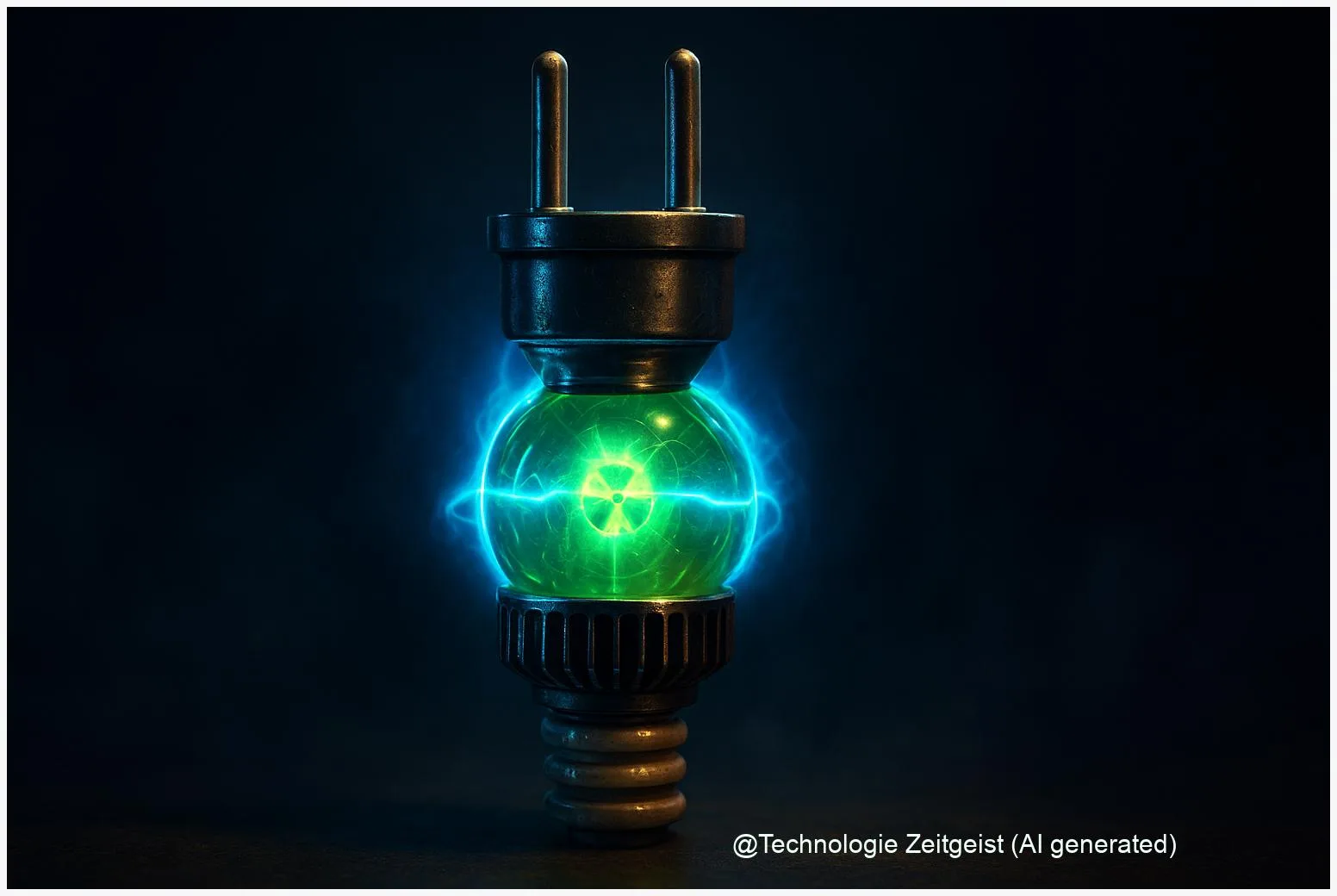
Governments and utilities are asking a familiar question: how to secure reliable, low‑carbon power at scale. Nuclear energy is reappearing on policy lists because it can deliver firm, low‑emission electricity and long operational lives — and because recent policy packages, new financing models and a wave of smaller reactor designs have made investment politically plausible again. This article shows the five forces behind the comeback and what realistic scenarios mean for grids, budgets and climate targets.
Introduction
The central problem for many countries is simple but stubborn: electricity demand is rising while weather‑dependent renewables need backup, and climate targets require rapid cuts in emissions. Nations that once scaled back nuclear programmes are now reopening the question of building or extending reactors. The shift is not only technical; it is political and economic. Energy security concerns, a renewed appetite for state support, and new reactor concepts have combined to change incentives for utilities and investors.
At the same time, technical terms matter. A small modular reactor, or SMR, is a reactor with a smaller power output than traditional units and often prefabricated components. SMRs promise shorter on‑site construction and factory assembly, but their economics depend on serial production and transparent financing. This article unpacks the five forces driving the comeback, balances the optimistic scenarios against skeptical cost evidence, and points to practical signals that will determine whether new nuclear becomes an expanding option or a niche one.
Nuclear energy today: what’s behind the comeback
The return of nuclear power is the result of several intersecting developments rather than a single cause. International agencies recorded rising investment and renewed policy support: the International Energy Agency (IEA) reported that global nuclear generation reached record levels in recent projections and that annual investment in the sector rose to around USD 65 billion in 2023. The IAEA PRIS database shows about 417 reactors in operation at the end of 2024 and roughly 62 units under construction, documenting both the existing fleet and ongoing builds.
Policymakers now mix climate and security arguments: firm low‑carbon power and independent baseload capacity have become strategic priorities.
Those raw numbers explain why nuclear is back on agendas, but the most discussed change is the SMR concept. An SMR is, broadly speaking, a smaller reactor designed for factory fabrication, modular assembly and deployment in locations where a large reactor would not fit. Proponents argue that SMRs can be built faster and serve industrial heat, remote grids or provide dispatchable generation alongside renewables. Critics point to early project cost overruns and the unresolved question of whether serial production will materialize at scale.
If the drivers are clearer in words, a compact table helps compare the forces.
| Driver | What it means | Evidence |
|---|---|---|
| Energy security | Demand for firm, controllable power | Policy statements and new project approvals (IEA, national plans) |
| Climate targets | Need for low‑carbon firm capacity beyond variable renewables | Net‑zero pathways that include nuclear in many scenarios (IEA) |
Where SMRs fit: concrete applications and examples
SMRs are best understood by where they might be useful. They are not simply “mini‑versions” of big reactors; they are an industrial model that trades unit size for potential manufacturing economies. Practical applications under active consideration include: replacing coal blocks in tight grids, providing dedicated electricity and heat for industry, powering remote communities, and supporting large electricity consumers such as data centres.
Real projects show a mixed picture. China’s HTR‑PM (a high‑temperature gas‑cooled demonstration) reached grid connection and provides operational data, while Russia’s floating plant, the Akademik Lomonosov, supplies power in remote locations. These demonstrate technical feasibility but do not by themselves prove favourable economics when compared with alternatives.
Early commercial efforts illustrate the gap between promise and practice. In the United States the NuScale/UAMPS project experienced repeated cost increases and schedule changes; independent analysts reported large upward revisions in estimated capital costs. In the United Kingdom, the Rolls‑Royce SMR programme has secured strong political backing and an industrial plan for factory manufacturing, but final cost and financing details remain conditional on series production and public support. These examples show that first‑of‑a‑kind projects are expensive and risky, while serial production would be the deciding factor for cost reduction.
For users and local planners the key practical questions are predictable: will an SMR deliver power at a competitive levelized cost of electricity once production scales, and will permitting and community engagement proceed without long delays? If the answer to both is yes, SMRs could become a practical complement to wind, solar and storage rather than a replacement.
Money, policy and supply‑chain tensions
Finance is the decisive battleground. Building big reactors historically requires large, patient capital and carries the risk of multi‑year delays and cost overruns; those failures raised borrowing costs and discouraged private finance in many markets. New approaches attempt to change that balance. Public de‑risking instruments — such as regulated asset base (RAB) models, contracts for difference (CfDs), or targeted loan guarantees — are being deployed to reduce financing costs and attract private partners.
The IEA sets out an investment picture in which a rapid nuclear expansion would require global annual nuclear spending to rise sharply; in a faster scenario cumulative investments into SMRs and other new builds reach substantial levels by mid century. Put simply: policy support can make projects financeable, but it also shifts certain risks to taxpayers or consumers. That tradeoff is a political choice.
Supply chains create another tension. Uranium mining and enrichment are geographically concentrated, and manufacturing for key components — large forgings, steam generators, specialized valves — is limited to a few suppliers. If many countries decide to scale nuclear capacity at once, bottlenecks could raise costs and delays. This is one reason proponents stress early investment in factories for SMR modules: series‑production capacity is what would flatten future costs.
Independent analysts caution against optimistic cost assumptions. The IEEFA and other critics point to several SMR projects where initial cost estimates were far below later realities. Those project experiences matter because they shape investor expectations and the political appetite for further subsidies. Ultimately, whether SMRs lower LCOE depends on achieving serial production, stable financing terms and efficient, predictable licensing.
Looking ahead: plausible pathways and signals to watch
What will determine outcomes between now and 2050 are clear, concrete signals. First, observe the cost trajectory of first serial SMR factories: if a producer can announce repeatable, audited overnight costs and fixed‑price contracts, the economics will become credible. Second, watch the financing models: transparent use of RAB, CfD or loan guarantees with clearly allocated risks helps private capital participate without surprise calls on public budgets.
Third, regulatory pipelines matter. Faster, predictable licensing regimes that retain safety standards but reduce uncertainty will shorten the path to market. Fourth, supply‑chain diversification — investment in steel forgings, fuel cycle capacity and modular factories across regions — will limit the kind of bottlenecks that drove cost spikes in the past.
For readers familiar with the energy transition, there is an immediate connection to grid planning and short‑term climate strategies. Large‑scale renewables plus storage remain the quickest path to near‑term emissions reductions; several jurisdictions are balancing those investments with nuclear to secure dispatchable power later in the decade. You can read related coverage on changing grid investments in our series on network upgrades and storage choices, for example the dispatch and transmission discussion in “Power Grids: How AI Is Driving a New Mega‑Transmission Rush” and national storage funding in “Spain funds 9.4 GWh of grid battery storage to boost renewables”.
In short, an SMR‑led contribution is plausible but conditional: it depends on learning‑by‑doing, reliable financing, and a manufacturing scale‑up that historically has been difficult but not impossible for other large industrial programmes.
Conclusion
Nuclear energy has returned to policy lists because it answers two persistent problems: how to supply firm, low‑carbon power, and how to reduce exposure to volatile energy markets. The IEA and IAEA data show a real uptick in activity and investment, and SMRs are the most discussed technological pathway because they promise a new industrial model. But first‑of‑a‑kind experience and independent cost analyses underline the risks: without transparent cost data, serial manufacturing and clear financing arrangements, SMRs will remain an expensive option rather than a broadly competitive one. Policymakers can speed or slow this process through the design of de‑risking tools and supply‑chain investments. For readers, the next milestones to watch are audited cost releases from serial projects, completed factory lines, and the practical results of new public financing models.
Join the conversation: share this article and tell us which signals you think will decide whether new nuclear becomes mainstream or niche.



Leave a Reply