
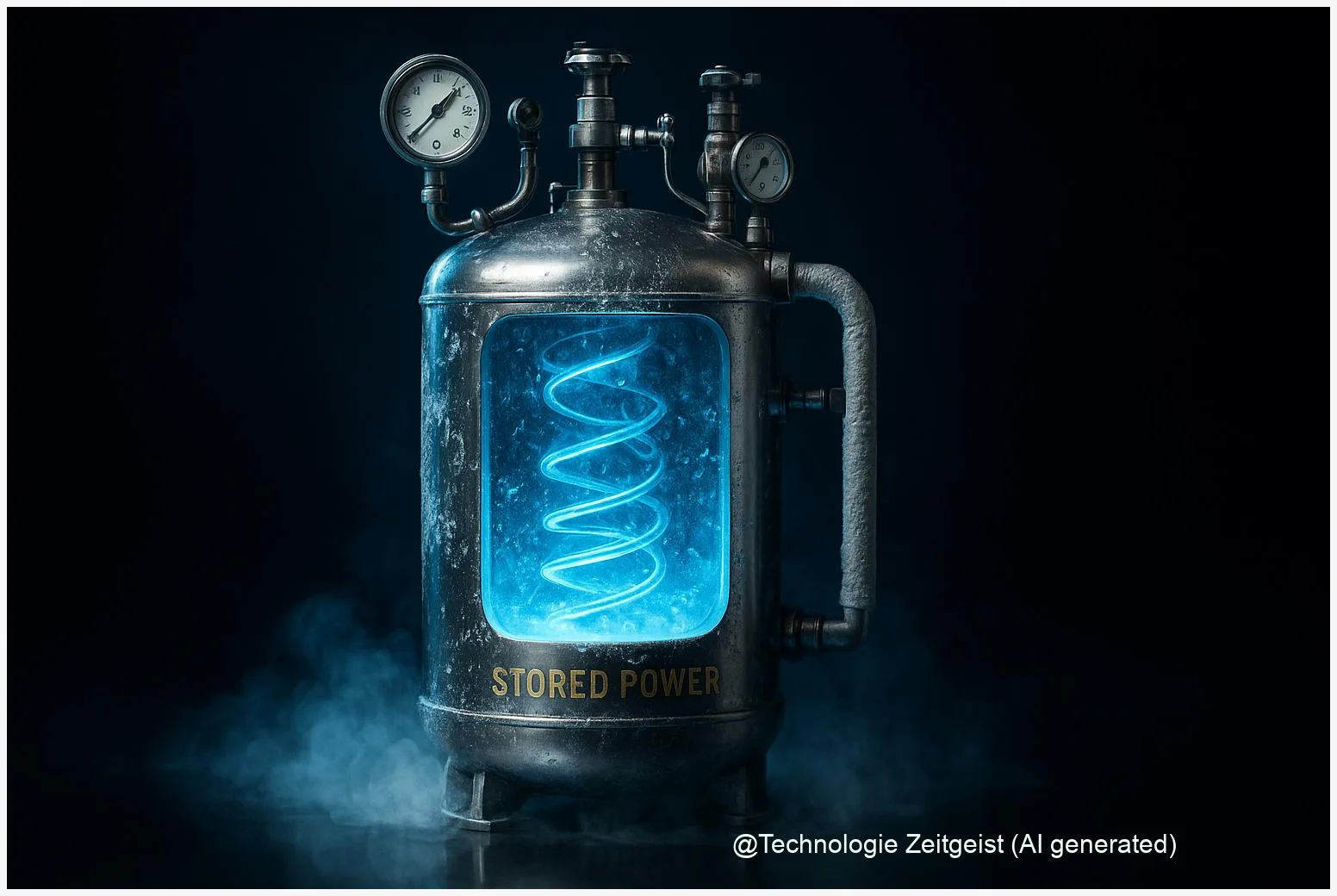
Liquid Air Storage stores electricity as very cold, liquid air and can release it later as power. The core benefit is long-duration, low-loss bulk storage that can supply the grid overnight or during calm periods. The technology name “liquid air storage” appears where large volumes of energy need to be shifted in time, offering a flexible alternative to batteries and pumped hydro for multi-hour to multi-day needs.
Introduction
When the sun sets and the wind drops, grid operators must still meet demand. That challenge is the immediate problem for many electricity systems: storing surplus renewable energy so it can be used hours or days later. Liquid air storage is one approach that addresses this need by turning electricity into liquid air at very low temperature, then keeping that cold air in insulated tanks until power is required.
Liquid air energy storage uses familiar engineering pieces — compressors, cryogenic tanks, heat exchangers and expanders — arranged to shift energy from one time to another. It sounds technical, but the idea is straightforward: use cheap electricity to create a dense, cold liquid that takes up far less space than the same air in gas form. Later, that liquid is warmed, expands, and drives turbines to generate electricity again.
This article looks at what the system does, when it makes sense to build one, the practical limits and costs, and which developments matter most for the next five years.
How Liquid Air Storage works
Liquid air storage is a cryogenic energy store: electrical energy is consumed to compress and cool air until it liquefies at around −190 °C. That liquid is stored in insulated tanks similar to those used for liquefied natural gas. When electricity is needed, the liquid air is pumped, warmed so it evaporates and expands, and the expanding gas drives a turbine to make electricity. The cycle is roughly: electricity → liquefaction → storage → regasification → power generation.
Two technical terms help keep this simple. “Cryogenic” means very low temperature; cryogenic storage keeps the air cold and liquid. “Round-trip efficiency” is the fraction of input electricity that returns as electricity on discharge. For liquid air systems that include thermal management, reported round-trip efficiency typically ranges from around 40 % up to about 70 %, depending on whether waste heat or cold is reused (see sources).
A working definition: liquid air storage stores energy as cold, dense liquid air and later recovers it by using heat to expand the air through a turbine.
Different designs change that efficiency and complexity. Some systems recover cold from liquefaction to precool incoming air; others add a separate thermal store to capture and return heat. The liquefaction step is the most energy-intensive part, so any heat or cold recovery improves performance.
If a short structured comparison helps, the table below highlights the main system features.
| Feature | Description | Value |
|---|---|---|
| Energy form | Liquid air (cryogenic) | Stored at about −190 °C |
| Typical round-trip efficiency | Depends on thermal integration | ~40–70 % (reported ranges) |
| Scale | Modular tanks + plant components | From a few MW to 100s MW conceptually |
Where it fits in daily operation
Liquid air storage is best when energy must be saved for many hours or for several days, rather than for short frequency events where batteries excel. Think of a solar farm with surplus midday production; instead of curtailing output, the plant could liquefy air and store the energy reliably for evening demand peaks.
Operators value three properties: usable duration, cost per stored kilowatt-hour, and the ability to hold energy with minimal loss. Liquid air storage can hold energy for long periods with low standby losses because well-insulated cryogenic tanks limit boil‑off. That makes the technology suitable for seasonal shifting at larger sites, islanded grids, or industrial ports where space and land constraints rule out pumped hydro.
Example: a demonstration plant may be sized at 5 MW power and about 15 MWh energy, which allows multiple hours of discharge at full power. These demonstration scales have been reported in industry and research literature; larger, conceptual plants scale the tanks and liquefaction trains to provide longer duration. The economics change with scale: larger tank volumes lower the storage cost per kilowatt-hour, while liquefaction capacity drives capital cost.
Operationally, liquid air systems can also be paired with industrial heat sources. If a factory can provide waste heat during regasification, round‑trip efficiency improves because the system uses that heat rather than generating it from fuel.
Given this profile, system planners typically compare liquid air storage with lithium batteries for daily shifting and with pumped hydro for utility-scale, long-duration needs. Each option has trade-offs in speed, location flexibility, and lifetime.
Benefits and trade-offs
One important benefit is geographic flexibility. Liquid air plants need flat land and industrial equipment but not the specific geology required for pumped hydro. They can therefore be placed near ports, industrial hubs, or renewable generation sites. Tanks and turbines use mature industrial technology, lowering some development risk compared with brand-new chemistries.
Another advantage is long-duration storage capability. Large cryogenic tanks can store energy for days with small losses; reported tank stand‑losses are low in industrial practice. Also, liquid air systems avoid heavy mineral requirements of battery systems, which can ease supply-chain pressure for some regions.
There are trade-offs. Liquefaction is energy-intensive, so round‑trip efficiency tends to be lower than modern lithium‑ion batteries for short cycles. That makes liquid air less attractive for rapid charge–discharge services. Capital costs are front-loaded: compressors, cryogenic equipment and large tanks require significant initial investment. Operating costs fall when thermal integration is available (waste heat or cold), but such integration may not always be possible.
Safety and permitting are practical concerns. Cryogenic liquids and large pressure equipment trigger industrial safety rules and specialised maintenance regimes; planners must budget for training and inspections. Public acceptance is generally manageable but depends on local industrial history and permitting procedures.
Overall, liquid air storage is not a universal substitute for batteries or pumped hydro. It becomes compelling when long duration, low self‑discharge and site flexibility matter, particularly if low‑cost or free heat sources are available to improve efficiency and economics.
Near-term developments and watch points
Development in three areas will determine whether liquid air storage grows beyond demonstrations: thermal integration, component cost reductions and market design. Thermal integration — capturing and reusing heat and cold — directly improves round‑trip efficiency. If plants can reliably reuse industrial waste heat, reported efficiencies move toward the higher end of published ranges.
Component costs matter because liquefaction trains and large cryogenic tanks are capital-intensive. Manufacturing at scale, modular designs and factory-built units help lower installation time and cost per megawatt. Some manufacturers and project developers have published modular plant concepts that aim to reduce on-site assembly time and costs.
Market structures also influence uptake. Long-duration storage needs predictable revenue streams that reflect avoided curtailment, capacity value and ancillary services. Where markets compensate long-duration flexibility fairly, investors will find a clearer business case. Policy choices such as incentives for long-duration storage and valuing thermal integration can tip project economics in favour of liquid air systems.
Finally, demonstration projects and independently measured plant data will be decisive. Publicly available performance reports from larger pilots help grid planners compare real-world round‑trip efficiency, ramp speeds and maintenance needs against alternatives.
Conclusion
Liquid air storage is a practical, engineering-based way to store bulk energy by using cryogenic liquefaction and later reclaiming that stored cold to drive turbines. It performs best when long-duration storage, geographical flexibility and low standby losses are priorities, and when thermal integration is available to recover heat or cold. The technology complements batteries and pumped hydro rather than replacing them: each option suits different timeframes and sites. Over the next few years, cost reductions in components, more demonstration data and market structures that reward long-duration flexibility will determine how widely liquid air systems are adopted.
Join the conversation: share this article if you found the explanation useful or leave a comment with questions about local storage options.




Leave a Reply