
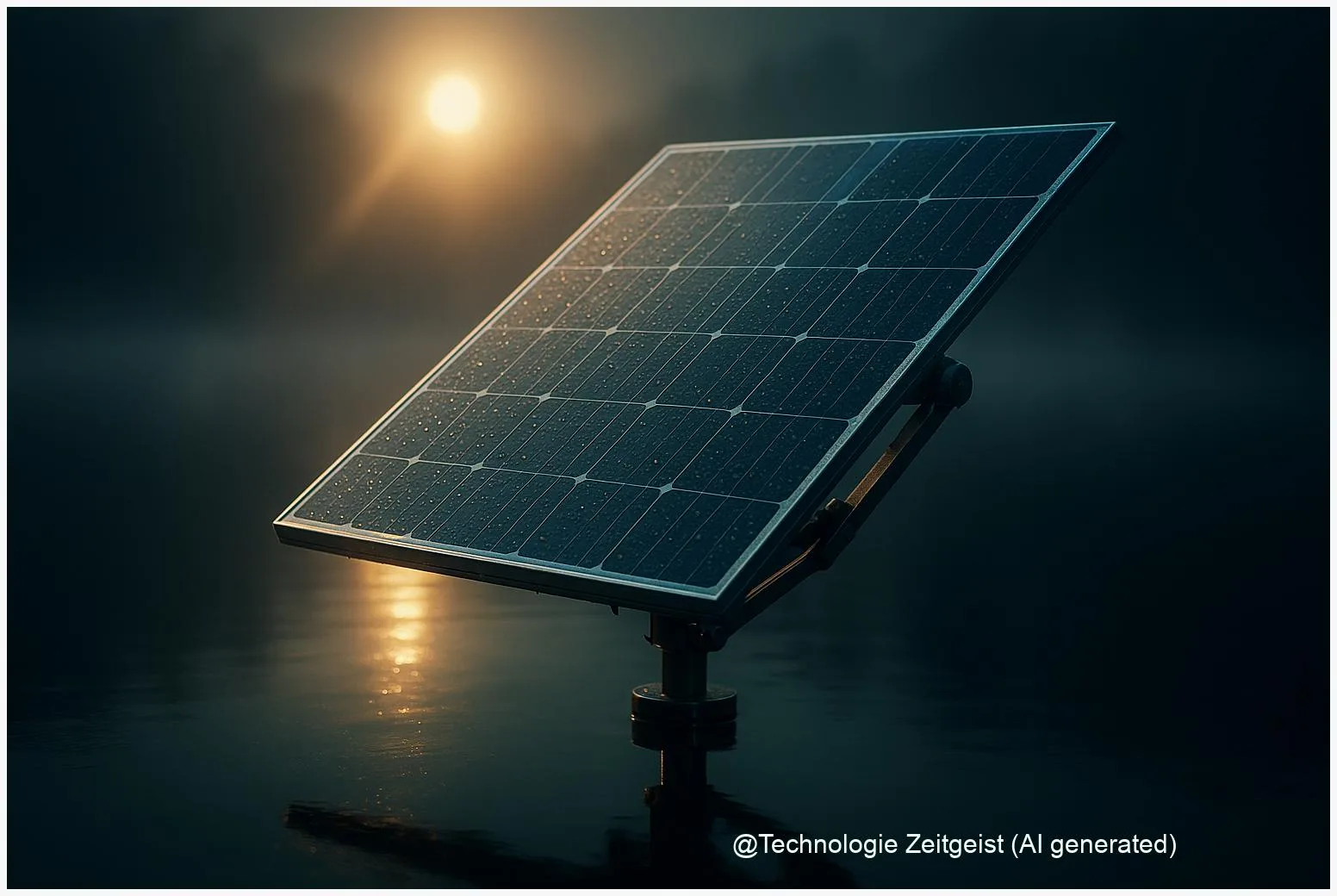
Floating solar is gaining attention for its space-saving advantages and slightly higher yields than land systems; the question many face is whether adding trackers to floating arrays actually increases energy output enough to justify the extra cost. This article shows the typical ranges of additional yield, explains why water changes the physics and engineering, and describes the trade-offs operators must weigh before choosing trackers for floating solar.
Introduction
If you are deciding whether to add moving mounts to a floating solar project, the key concern is simple: will trackers generate enough extra electricity to cover their higher cost and extra maintenance? That is the question developers, grid planners and community stakeholders most often ask.
Floating solar—arrays mounted on reservoirs, calm lakes or tailings ponds—already changes module temperature and local reflectivity in ways that can raise energy per panel compared with identical ground arrays. Trackers tilt panels to follow the sun during the day, and on land they commonly increase annual yield by noticeable amounts. But water brings new effects: cooling can improve efficiency, while waves, moorings and wind loads create extra engineering challenges for moving parts.
This article lays out the fundamentals, compares modelled and measured gains, examines real‑world engineering choices, and offers a practical checklist for pilots that aim to prove whether trackers are a smart add‑on to floating solar installations.
How floating solar and trackers work
Floating solar installs photovoltaic (PV) modules on buoyant platforms. These platforms are anchored or moored to keep the array roughly in place while allowing small movements from waves and wind. The water under the modules tends to lower module temperature compared with hot, dry ground; cooler modules convert sunlight into electricity slightly more efficiently. That effect is one reason floating solar typically shows modest yield advantages versus ground‑mounted systems.
A tracker is a mechanical system that changes the tilt and sometimes the azimuth (compass direction) of PV modules during the day to keep their panels oriented closer to the sun. The two main types are single‑axis (rotating east–west) and dual‑axis (tilt and rotate). On land, single‑axis trackers often raise annual yield by around 10–20 % and dual‑axis by more, depending on latitude and climate.
Adding tracking is not just a software choice: it requires mechanical robustness, controls and additional foundations or moving joints that must withstand weather and fatigue.
On water, trackers must be adapted for buoyancy, corrosion and the forces transmitted into the mooring system. That changes the engineering equation: the tracker’s incremental energy gain has to offset higher capital costs and potentially higher maintenance and insurance premiums for moving parts on a wet, shifting platform.
If numeric comparisons help, a compact table below summarizes typical categories and relative values used in decision making.
| Feature | Description | Value |
|---|---|---|
| Floating cooling effect | Lower module temperatures increase efficiency | Small — a few % relative gain vs land PV |
| Single‑axis tracker gain (land ref.) | Typical annual yield increase on ground‑mount | ~10–20 % |
| Floating tracker uncertainty | Estimated additional gain vs fixed floating arrays | ~5–25 % (site dependent, data limited) |
What field and model studies say about gains
Most strong evidence for tracker gains comes from ground‑mounted systems. Fraunhofer and several industry studies report single‑axis trackers typically boost annual output by around 10–20 %. For floating solar, the literature is thinner: a mix of modelling papers and a few short field tests point to positive effects, but long‑term, independently measured trials are still rare.
A peer‑reviewed analysis in 2022 that specifically examined tracked floating systems reported modelled annual energy increases generally in the single‑digit to low‑double‑digit range compared with fixed floating arrays. Other reviews and lifecycle assessments published through 2023–2024 confirm the potential but caution that model assumptions (albedo, module cooling, tracking angle ranges) create broad spreads in results.
Two simple, evidence‑based takeaways follow. First, transferring the ground‑tracker numbers directly to water without adjustments is risky. Water changes module temperature, wind exposure and structural loading. Second, the broad, literature‑based estimate for additional annual yield from trackers on floating platforms is roughly +5–25 % over fixed floating arrays, depending heavily on site latitude, wave climate and tracker type. Because many studies remain model‑based, that range should be treated as provisional and confirmed by pilots.
Note on dates: several peer‑reviewed papers cited here are from 2022–2023; these are more than two years old and were still considered relevant in 2026 because they address structural and physical mechanisms that do not change quickly.
Engineering, site limits and practical examples
Engineering for floating trackers adds complexity in three places: the floating structure, the mooring system, and the moving parts themselves. Trackers transmit dynamic forces into the float and mooring during operation and under wind gusts. Designers must ensure moorings allow controlled motion without creating large cyclic loads that fatigue joints or trackers.
Corrosion protection is more important on water, especially in brackish or marine environments. Materials, seals and cable routing have to be specified for wet conditions and inspected more often. Access and maintenance logistics also change: on a reservoir, technicians often need boats or walkways, and safety rules for working over water add cost and time.
Examples from industry show two approaches. One uses light‑weight, low‑profile moving frames integrated into a robust float that shares loads across many anchors; the other favours east–west fixed rows on floating frames to gain installation simplicity and lower O&M risk. Vendor announcements from 2024–2025 emphasise higher module packing density and easier maintenance trolleys, rather than mass deployment of active trackers on large floating farms.
For early adopters, a conservative engineering strategy is to instrument a small pilot array with both fixed and tracked sections at the same site. That allows direct comparison of energy yield, module temperature, mechanical wear and maintenance needs under identical meteorological conditions.
Risks, economics and what to test first
Whether trackers make sense economically depends on capital cost, expected extra yield, insurance and maintenance. On land, trackers can reduce levelised cost of electricity (LCOE) when yield gains are high and equipment cost is controlled. On water, the incremental capital expenditure for corrosion‑resistant moving parts, stronger moorings and more frequent inspections raises the break‑even point.
Risk analysis should cover mechanical fatigue from wave‑induced cyclic loads, failure modes in bearings and seals, electrical safety for moving cabling, and effects on anchoring infrastructure. Insurance contracts and warranties for float components sometimes exclude moving parts unless they have been tested in similar conditions.
For project teams planning a pilot, an effective test protocol includes: (1) colocated fixed and tracked arrays with identical modules; (2) continuous monitoring of plane‑of‑array (POA) irradiance, module temperature, AC energy, and availability; (3) mechanical load logging on moorings; and (4) a minimum measurement period of 12–24 months to capture seasonal effects. Paired measurement removes many modelling assumptions and yields directly comparable performance ratios.
Conclusion
Trackers can raise the output of floating solar, but the size of the gain depends on location, tracker type and the extra engineering required to make moving parts reliable on water. Models and limited trials suggest additional annual yields roughly between about 5 % and 25 % compared with fixed floating arrays, but data are still sparse and site dependent. For operators, the prudent path is pilot testing with rigorous, parallel measurements and a clear capture of lifecycle O&M costs before wide deployment. That approach reveals whether trackers improve the project’s economics or simply add technical risk.
If you have experience with floating solar pilots, share your observations and join the discussion—your practical data help move the topic forward.


Leave a Reply