
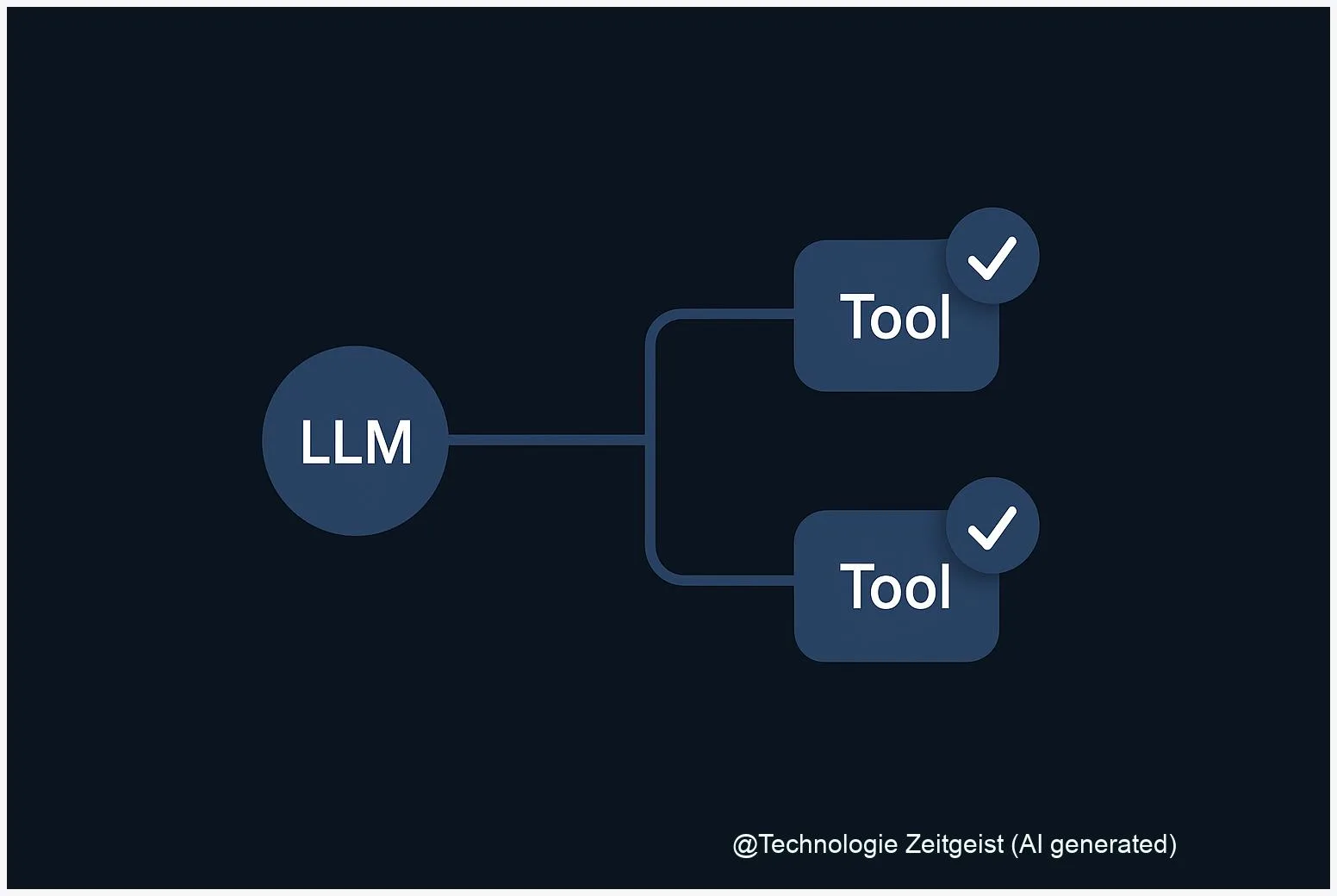
GraphBit agentic workflows let teams run complex, multi‑step automation with clearer guarantees about structure and repeatability. The platform models work as a validated execution graph and separates deterministic tools from probabilistic language model calls, so failures and non‑repeatable nodes are visible before production. This article shows how GraphBit’s validation, executor controls and reliability patterns support dependable agentic pipelines while also explaining practical limits you must test in your own environment.
Introduction
Working agentic systems — chains of steps where agents, tools and models act on data — often fail at integration points: a tool returns an unexpected type, a call times out, or a language model gives a different answer today than it did yesterday. GraphBit addresses these practical problems by turning a workflow into a validated execution graph: a directed structure you can check for cycles, type mismatches and resource needs before you run it.
Two short clarifications help follow the rest: an execution graph is a map of nodes and edges that shows how data and control flow through a workflow; a deterministic tool is a function or transformation that always yields the same result for the same inputs (for example, a calculation, a database query with consistent data, or a normalization routine). Language models (LLMs) remain probabilistic: a large language model is software trained on text that can generate different outputs for the same prompt unless constrained by settings such as temperature or fixed seeds.
From a practical point of view, GraphBit combines a Rust‑based execution core with Python bindings and a validation layer. That mix aims at low overhead and stronger guarantees around non‑LLM parts of a pipeline, a useful compromise when reliability matters. The next sections unpack how that works, what to measure, and how to prepare for the remaining uncertainties.
How GraphBit models and validates execution graphs
GraphBit represents a workflow as a directed graph of nodes. Nodes can be deterministic tools (transformations, parsers, database operations), LLM calls, or orchestration primitives (branches, joins, retries). Before execution, GraphBit runs a validation pass that looks for cycles, checks node input and output types, and ensures declared resources are available. That validation step turns many runtime surprises into early, fixable errors.
Validation makes integration faults visible before they affect users — a small investment that reduces debugging time in production.
Validation is not only syntactic. GraphBit’s tooling can enforce constraints such as required keys in JSON payloads, expected token length for LLM prompts, and maximum allowed parallelism for a subgraph. The execution engine exposes retry policies and circuit breakers so you can set how the system reacts to transient failures.
To compare cost and behavior at a glance, the following short table summarizes typical node types and their operational properties in GraphBit deployments.
| Node type | Description | Behavior |
|---|---|---|
| Deterministic tool | Local function, idempotent transform | Reproducible, low latency |
| LLM call | Provider‑backed text generation | Probabilistic, higher latency |
| External API | Third‑party service call | Variable latency, network dependent |
GraphBit’s documentation and examples show how to declare types and validation checks so that a malformed payload or an unexpected null value fails the build step rather than a live run. That design encourages engineers to move safety checks left in the development pipeline and to treat the graph as a first‑class artifact in CI/CD pipelines.
Making workflows reliable in practice
Putting validated execution graphs into practice requires three linked practices: pick deterministic operators where possible, isolate probabilistic nodes, and instrument everything. Deterministic operators reduce variance because they behave the same given the same inputs; examples include schema‑based parsers, deterministic enrichment logic, and cached database reads. Use these for the parts of the pipeline where you need exact repeatability.
Isolate LLM calls behind thin adapters that normalize inputs and outputs. That makes it easier to mock or replay responses for testing and to measure how much variability the model introduces. GraphBit supports provider abstraction so you can swap LLM backends with minimal changes to the graph.
Observability is the final, non‑negotiable layer. GraphBit exposes tracing and execution stats at node level; set up dashboards for success rates, tail latency and retry counts. When you measure CPU and memory, include end‑to‑end metrics: orchestration overhead, tool runtime, and LLM latency. Manufacturer claims of large efficiency gains exist, but they require independent replication under your workload before you can rely on them for capacity planning.
In an example workflow, a document ingestion pipeline first runs deterministic extraction and normalization, then calls an LLM to generate a concise summary, and finally stores both summary and structured metadata. With validation and retry policies, the pipeline can fail early on malformed documents, retry external API glitches, and keep a reproducible audit trail for outputs that depend only on deterministic steps.
Where determinism helps — and where it doesn’t
Determinism is useful when you need repeatable behavior: billing calculations, canonical data transforms, and deterministic routing decisions are good candidates. GraphBit helps by making such nodes explicit and testable inside the graph. You can run unit tests that replay inputs and confirm identical outputs, which simplifies debugging and audits.
However, some parts of agentic workflows deliberately rely on the creative or probabilistic qualities of LLMs. For example, when an agent must propose novel phrasing or a range of candidate answers, forcing strict determinism may hurt usefulness. GraphBit’s approach is pragmatic: it increases reproducibility where it is feasible, and makes the remaining unpredictability explicit and auditable.
Operational risks include hidden state, unreproducible external APIs, and over‑reliance on manufacturer performance claims. The GraphBit project documents built‑in reliability features — circuit breakers, configurable concurrency limits and retry behavior — but these are controls, not guarantees. In practice, teams should document for each node whether its output is expected to be reproducible and why.
One useful rule of thumb is to treat LLM nodes as “soft” decisions: accept their variability, but wrap them with deterministic verification and fallback logic. For instance, validate that an LLM answer conforms to a JSON schema before further processing, and route to a human review queue if it does not. That keeps pipelines moving while limiting silent corruption of structured data.
Operational checks and prudent rollouts
Before a broad rollout, run a reproducibility suite and a focused proof‑of‑concept. The reproducibility suite should exercise graph validation, replay deterministic nodes, and run LLM‑variation tests by calling models with fixed seeds or temperature settings. A PoC with 2–4 representative workflows yields data on CPU, memory, and failure modes you can compare with vendor claims.
Keep deployment stages small. Start on a staging cluster that mirrors production and introduce traffic gradually. Define service level objectives (SLOs) for throughput, error budgets and tail latencies. Monitor both functional indicators (correctness, schema validity) and infrastructure signals (CPU, RSS memory, I/O).
Security and governance deserve early attention: secret management for API keys, access controls for who can modify graphs, and signed artifacts for graph versions help avoid accidental regressions. GraphBit provides integration points for secrets and tracing; teams must still embed these into their CI/CD and incident runbooks.
Finally, treat vendor performance numbers as hypotheses to test. Request reproducible benchmark scripts and raw logs when possible; if not available, plan capacity with headroom. Community reports suggest GraphBit can be much more efficient than some Python frameworks under certain conditions, but independent replication is the reliable way to convert that suggestion into a planning number.
Conclusion
GraphBit agentic workflows introduce a disciplined separation between deterministic tools and probabilistic LLM calls, and they bring validation and execution controls into the development lifecycle. That reduces surprise failures and makes reproducibility tests straightforward for the parts of a pipeline that can be made deterministic. Still, LLM variability and external dependencies remain sources of non‑determinism that must be covered with verification, fallbacks and monitoring.
For teams, the practical path is clear: build small proofs of concept, demand reproducible benchmark artifacts where possible, and treat validation as part of CI. With those steps, GraphBit’s model of validated execution graphs becomes a useful foundation for dependable agentic automation rather than a black‑box promise.
Join the conversation: share your experiments and lessons so teams can compare reproducible runbooks and benchmarks.



Leave a Reply