
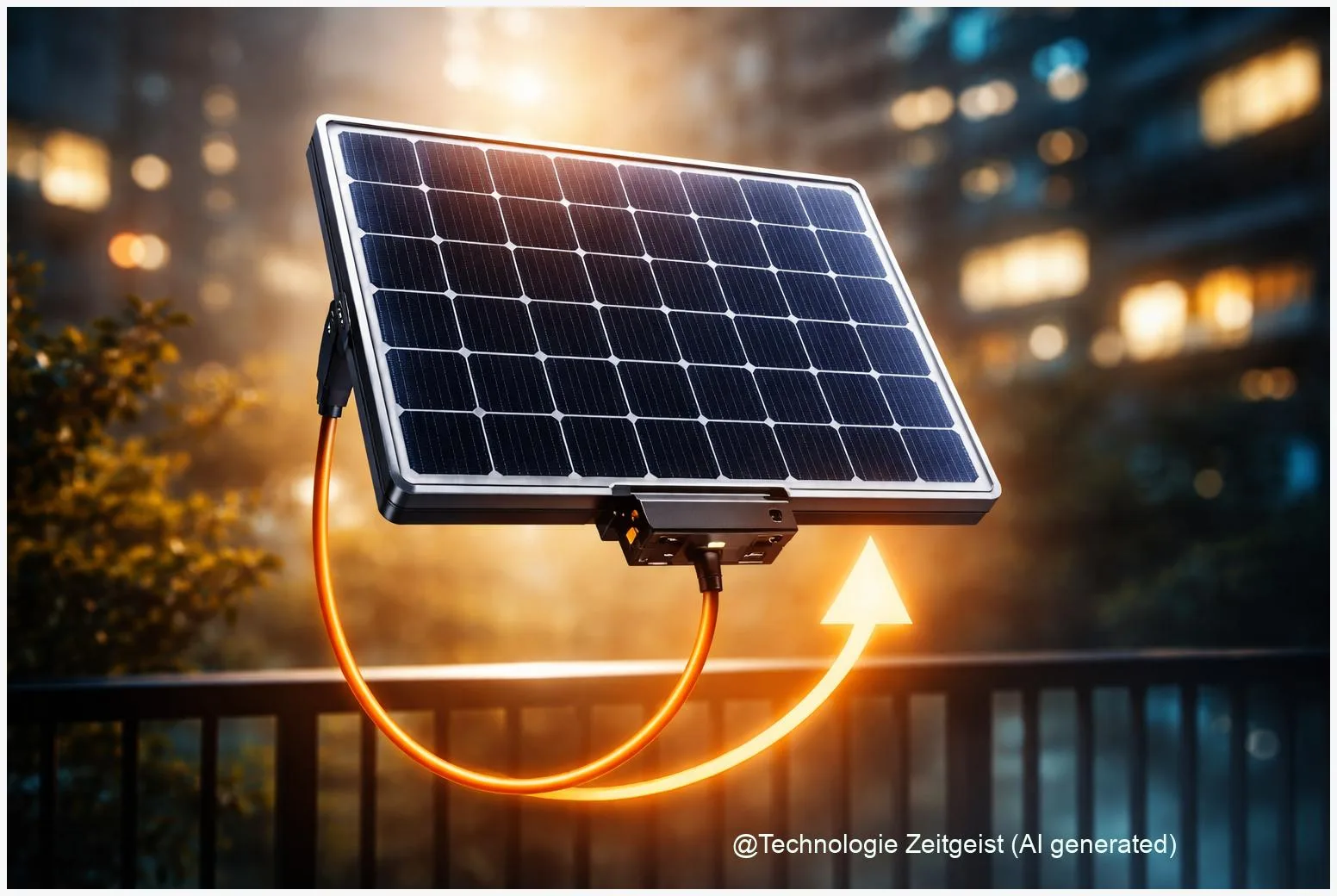
Small, plug-in rooftop panels are finally leaving niche status: balcony solar gives apartment dwellers a low-cost way to cut import from the grid and, where allowed, feed surplus power back. The entry point is a panel or two, a micro-inverter and a simple plug — no roof access or major installation is needed. For many renters and owners the result is lower bills, faster payback on small systems and a practical route into home renewables.
Introduction
Many people who live in apartments have watched rooftop solar expand and wondered whether they could take part. Traditional rooftop systems are costly and often require owner approval. Plug-in or “balcony” solar addresses a practical problem: can you harvest sunlight without major work? The short answer is yes — and that explains the recent surge in interest.
The change is driven by three forces. First, smaller photovoltaic (PV) modules and compact micro-inverters make safe, commercial plug-in kits possible. Second, policy changes in some countries have simplified registration and reduced bureaucracy for small devices. Third, buyers want a quick, visible way to reduce electricity bills and use cleaner power where they live. The following sections explain how these systems function, what they realistically deliver in daily life, the main risks and the regulatory checklist readers should follow before buying a kit.
Balcony solar: how plug-in panels work
A plug-in PV system is a small photovoltaic array — typically one to a few modules — plus a micro-inverter (or small string inverter) that converts direct current (DC) from the panels into alternating current (AC) for household sockets. The inverter ensures the AC waveform matches the grid and provides built-in safety features such as anti-islanding. Anti-islanding prevents the system from energising the grid during an outage, which protects technicians and the wider distribution network.
Terminology matters. An inverter is rated in volt-amperes (VA) and manufacturers often list module output in watts‑peak (Wp). VA and W are related but not identical; for these simple systems the difference is small, yet rules sometimes quote VA (which is why you should check the label carefully). Since 2024, some countries introduced higher legal limits for plug-in devices — for example a regulatory package set a maximum inverter rating and module sum under which a simplified registration path applies. Always confirm which threshold applies where you live before you buy.
A micro-inverter and correct labelling are the key safety elements for a plug-in solar device; certified equipment and correct registration turn a hobby kit into a legitimate small generator.
Installation is usually straightforward: the panels sit on a balcony railing or floor, the inverter is placed safely near the socket or on the balcony wall, and electricity flows into a standard household socket. In many cases a dedicated connection (for example a lockable industrial connector) or a qualified electrician is recommended or required — check national guidance.
If a compact comparison helps, this table shows the common technical distinctions you will meet in product specs and rules.
| Feature | What it means | Typical value |
|---|---|---|
| Module rating (Wp) | Peak DC power output of panels | 100–400 Wp per panel |
| Inverter rating (VA) | AC output capacity; check label | 300–800 VA for plug‑in devices |
Using plug-in panels in everyday life
In daily practice a balcony system does three things: it reduces the energy you import from the grid during sunny hours, it may slightly reduce your total bill, and it raises awareness of household consumption. Two clear use cases return the most value: offsetting daytime consumption (lights, cooking, small appliances) and reducing the hours when you buy grid electricity for charging devices — for example topping up a laptop or an e-bike.
A realistic example: a 300‑Wp panel on a bright day can produce around 0.9–1.5 kWh depending on location and orientation; that is enough for several hours of lighting and appliance use. If your household uses most energy in the evening, adding a small battery or shifting appliance use to midday increases the share you self-consume and so improves the economics. For households interested in more advanced options, our guide on selling surplus rooftop energy and community trading explains how local markets or aggregation can change the value of exported power.
Registration and paperwork are the next practical step. Where statutory simplified regimes exist, registration in a national database (for example a market register) often replaces more complex grid-connection applications. In Germany, regulators and the ministry introduced simplified Marketstammdatenregister (MaStR) registration paths and clearer limits in 2024; similar simplifications appear in other markets. If you plan to export a meaningful quantity, check whether a meter upgrade or a two‑way meter is needed and whether export triggers tax or business‑activity thresholds.
Before buying: read the inverter label carefully, prefer devices with recognised safety marks, ask the seller about required registration, and keep a note of installation pictures and serial numbers for insurance or landlord queries. If you rent, inform your landlord or building manager — many owners accept balcony systems when they are non‑invasive and documented.
Opportunities and tensions
Plug-in panels lower barriers to entry for urban renewables and offer clear social benefits: they increase uptake among renters, add distributed capacity without major construction, and create a visible connection to clean generation. Studies and registration data show a rapid increase in small systems where regulatory paths are clear; however, reported totals vary with how authorities categorise installations.
Risks and tensions appear in three areas. First, safety and standards: product certification, correct anti-islanding behaviour and installation practice matter. Regulators and standards bodies are aligning on minimum technical rules, but product labelling and manufacturer documentation sometimes lag demand. Second, grid management: many small devices feeding into a single building or neighbourhood may create local voltage or phase imbalance if unmanaged; network operators monitor these effects and require measures where necessary.
Third, economic clarity: simplified registration can speed adoption, but unclear export payments and hidden fees (meter replacement, aggregation charges) can reduce returns. Consumer groups and independent analysts recommend transparent fee lists and clear seller information so buyers know expected payback periods. For broader context on tariffs and timing, readers can consult the TechZeitGeist piece on dynamic electricity prices, which explains how time‑varying signals change the value of self-consumption.
A practical tension is between legal ceilings and product practice. Some laws define an upper inverter limit for plug‑in devices; at the same time, product markets sometimes present equipment rated near those ceilings before standards fully adapt. That mismatch puts the onus on buyers: prefer certified products, confirm registration pathways and ask sellers whether their devices meet national technical rules.
What comes next
The most likely developments are incremental: clearer product standards, smoother registration interfaces and richer service offers that bundle hardware, registration and optional battery or smart‑charging services. Standards bodies and regulators are already working to align technical requirements with the higher legal limits some countries set in 2024; one visible outcome will be more certified micro‑inverters rated for the updated ceilings.
Software and services will matter as much as hardware. Expect more consumer packages that include a small installer visit, MaStR‑style registration assistance and a monitoring app that shows daily yield and self‑consumption. Aggregators may create pooled offers that let many small owners sell surplus collectively, though fees and contractual terms will vary. Where local wholesale or market access exists, export values will depend on short‑term prices and network charges — another reason why a clear, total‑cost breakdown matters.
For readers who want to act now, sensible steps are straightforward: (1) check your national registration rules and any size limits, (2) choose a certified inverter and vendor who documents the device, (3) register the device promptly in the national database where required, and (4) keep photos and invoices for insurance and landlord communication. Small pilots — one panel or a two‑panel kit — let you learn how much daylight production you actually use before scaling up.
Conclusion
Balcony solar turns rooftop PV into an accessible, low‑friction option for apartment living. Technical progress in small panels and micro‑inverters, combined with simplified registration rules in several markets, makes plug‑in systems attractive for people who want immediate, local clean electricity without major construction. The trade‑offs are clear: buyers must check product certification, registration obligations and any meter work or fees that affect returns. For many households a modest kit is the best way to gain direct experience with renewables, and as standards and services improve, the option will become safer and easier to use at larger scale.
Share your experiences installing a balcony solar system or ask a practical question — friendly, local details help others.

Leave a Reply