
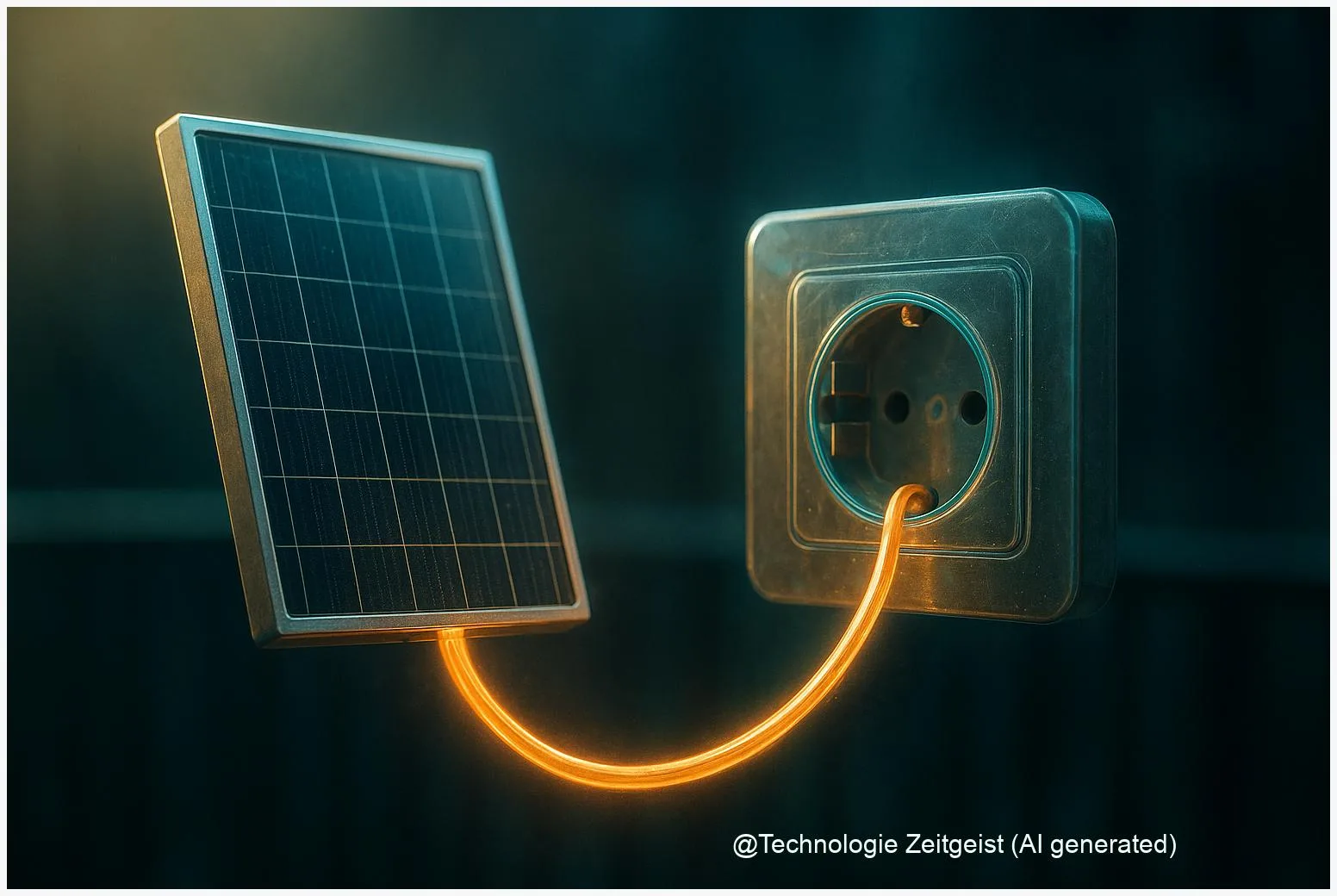
Balcony solar is a low-cost way to cut electricity bills by feeding sunlight into home sockets. This article looks at what plug-in solar panels can legally do, what they realistically produce, and which safety and registration steps matter in 2026. The term balcony solar appears throughout to help you find relevant rules, expected yields, and practical checks before you buy or plug in a unit.
Introduction
Balcony solar appears in many online ads and DIY forums as a simple way to lower your electricity bill: a small string of modules, a compact inverter and a cable to a household socket. The practical question for many readers is whether a device on a railing or leaning against a balcony wall is legal, safe, and worth the money. This article describes the typical technical limits, the steps most grid operators and regulators expect, and the real-life energy you can expect over a year.
Across Europe the same practical tensions recur: devices are attractive because they cost little and arrive ready-made, but they sit in an unclear zone between household appliances and grid-connected installations. In Germany recent regulatory clarifications have lowered paperwork in many cases, yet safety checks, registration in the central database, and attention to local rules remain important.
Balcony solar: how plug-in PV works
Plug-in photovoltaic (PV) systems — often called balcony solar or “plug-in panels” — are small PV installations designed for easy connection to a home via a socket. The core parts are solar panels (which convert sunlight to DC electricity), a small inverter (which converts DC to the household AC), and a cable with a plug.
Two short technical terms are useful: kWp is the peak DC power the panels can produce in full sun; an inverter is the device that changes the panels’ DC output into the AC used in your sockets. An inverter also contains protective electronics such as anti-islanding: this prevents the unit from powering the grid when the utility network has an outage, which is a crucial safety feature.
Properly certified plug-in PV is effectively a tiny grid-connected system with simplified hardware, not a portable generator.
Regulatory thresholds matter. In several European countries, including Germany, many plug-in devices are treated as micro-producers when they stay under power limits such as 2 kWp total panel power and an inverter rating commonly limited around 600–800 VA for the plug-in class. Those thresholds affect whether simplified registration procedures apply or additional approvals and meter exchanges are required. Registration in the national market database is mandatory in Germany for nearly all grid-connected producers; failing to register can have legal consequences.
If the numbers are clearer in a compact comparison, the table below helps.
| Feature | Description | Typical value |
|---|---|---|
| Maximum panel power | Combined DC rated power of modules | Up to 2 kWp for simplified rules |
| Inverter output | AC power delivered into household grid | Commonly ≤ 800 VA for plug-in units |
| Key requirement | Anti-islanding and conformity tests | CE marking, product certification |
In short: a compliant balcony solar kit is technically a small grid-connected PV system. The difference from full roof systems is mainly scale, simplified mounting and plug-based connection. The safety and legal picture depends on product certification and registering the system where required.
What you will actually get — yields and savings
Expectations meet weather and orientation. A useful measure is kilowatt-hours per kilowatt-peak per year (kWh/kWp/year). For well-placed roof systems in central Europe typical figures are around 900–1,100 kWh/kWp/year. Small balcony arrays commonly deliver noticeably less because of non‑optimal tilt, partial shading and vertical mounting.
Practical estimates for balcony solar often fall into a wide range: roughly 400–850 kWh/kWp/year depending on location and mounting. A conservative rule of thumb is to assume 20–50 % lower yield than an optimally mounted roof PV system. For most urban balconies that means a 300–700 kWh/year output for a 300–500 Wp setup — enough to cover some evening lighting, a refrigerator, or part of a washing machine if timing is right, but not to replace major household loads.
How to translate that into money: savings depend on what you offset. If you use the generated electricity immediately you save your retail electricity price. If the unit feeds into the household circuit while you are out — and electricity is exported to the grid — the financial value is usually lower because small exported amounts rarely receive a meaningful feed-in tariff.
Two practical hints: first, maximise self-use by running appliances during sunny hours where possible (for example, drying laundry on a sunny afternoon). Second, track real production for a year: many modern micro-inverters provide a web portal or app with daily yield data, which lets you compare expectations with reality and refine your assumptions.
Opportunities and practical risks
Balkony solar brings low entry cost and quick installation as clear opportunities. For tenants or owners with little roof access it provides a low-friction way to reduce bills and gain hands-on experience with distributed generation. Environmentally, even a small panel reduces the need for grid electricity produced from fossil fuels at peak times.
Risks are mainly practical and regulatory. Improper installation can create fire hazards if plugs or sockets are overloaded, or if cables are damaged by weather. An electrical inspection by a qualified person before first use reduces that risk. Insurance is another question: domestic property policies vary — some insurers require notification of grid-tied generation, even small plug-in systems.
Regulators and grid operators worry about safety and metering. In Germany and many other markets, central registration (for example, the Marktstammdatenregister in Germany) is required so grid operators can plan and maintain the network. Where many small producers exist on a single local transformer, grid managers may request meter upgrades or operational restrictions. Non-reporting can lead to administrative fines or demands to disconnect a unit.
Finally, product quality matters. Buy certified inverters and panels, prefer devices with anti‑islanding, overcurrent protection and clear installation instructions. Beware of very cheap kits without verifiable test certificates; the small savings at purchase can become major costs if equipment fails or causes damage.
Where rules and technology are heading
Lawmakers and standard bodies have been refining how to treat plug-in PV. In several countries the trend is towards clearer product norms and simplified registration pathways for very small systems, paired with stronger product certification requirements. This approach reduces administrative hurdles while keeping safety checks in place.
On the technology side, expect smarter micro-inverters, integrated monitoring and more robust enclosure ratings for outdoor use. Greater interoperability with home energy systems means small units will increasingly feed into smart plugs, timers and simple home energy management apps that boost self-consumption.
For the next few years, the practical implication is straightforward: choose certified hardware, register where required, and monitor production. If you plan to expand later, consider early coordination with your local grid operator so any meter upgrade or technical restriction is anticipated rather than imposed after purchase.
At a policy level, the evolution balances two aims: letting more people participate in local power generation and preserving grid stability. That balance will shape the exact power thresholds and testing requirements for plug-in kits in coming years.
Conclusion
Balcony solar can be a practical, low-cost way to reduce household electricity purchases when devices are installed with basic safety checks and registered where required. Expect lower yields than rooftop systems and plan for a modest impact on bills rather than a full replacement of household consumption. The legal environment in parts of Europe has become friendlier to small plug-in systems, but product certification, a check by a qualified electrician and registration in the national database remain sensible steps. The best returns come from maximising immediate self-consumption, buying certified equipment and monitoring real production for a year.
Share your experience with balcony solar or ask questions in the comments — practical tips help others decide.




Leave a Reply