
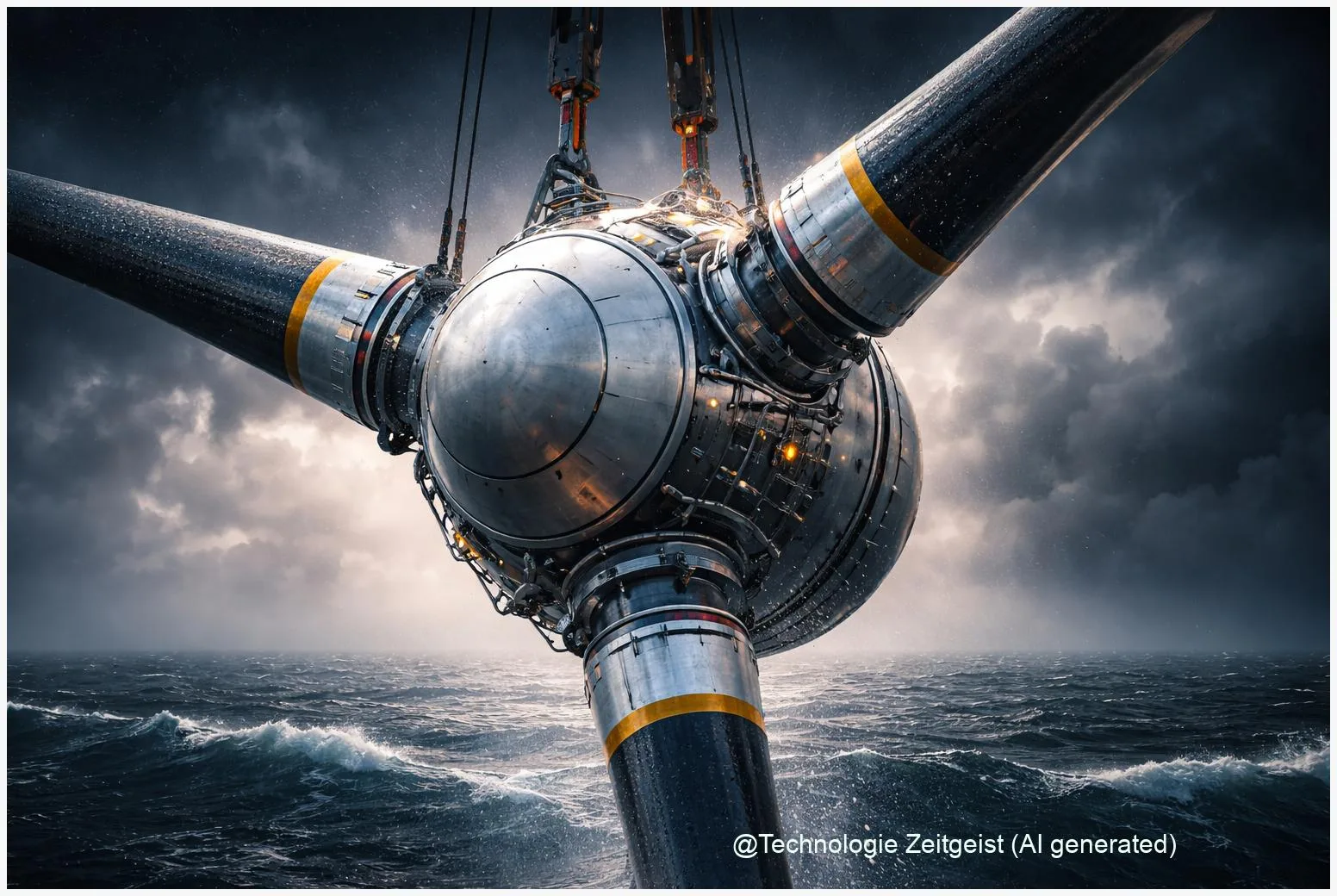
A 20 MW wind turbine promises more electricity from each installation, but what does that mean for costs, reliability and the sea‑side logistics behind offshore wind farms? This article looks at how much extra energy larger rotors and longer blades can capture, why manufacturing and grid‑integration become harder at that scale, and which real‑world numbers matter when developers talk about cheaper power. The main keyword 20 MW wind turbine appears in practical comparisons throughout the text.
Introduction
Many people ask whether simply building bigger turbines makes offshore wind cheaper. A 20 MW wind turbine shifts the scale: each unit can produce several times the energy of older machines, so fewer foundations and fewer electrical connections are needed for the same capacity. That sounds straightforward, but the practical implications extend through manufacturing, installation, and power‑system integration.
On a daily level, the difference matters even when you do not see turbines: bigger machines change how arrays need to be maintained, how quickly faults are found and fixed, and how much spare equipment operators must keep on hand. This article maps those links in clear terms, using common examples such as annual energy output and component lifetimes to show where savings can appear and where hidden costs tend to accumulate.
How a 20 MW wind turbine captures more energy
Power captured from the wind grows with the swept area of the rotor. That area increases with the square of the blade length, so a modest increase in blade length produces a noticeably larger capture area. Practically, machines targeting 20 MW move rotor diameters into ranges above about 220–240 m and blade lengths above 100 m; these figures are reported in industry announcements for 20+ MW concepts and are consistent with technical analyses.
To make the numbers useful, consider a simple annual estimate. A 20 MW turbine operating with an offshore capacity factor of about 50 % would generate roughly 87.6 GWh per year (20 MW × 8,760 h × 0.50). That is a large amount of energy from a single tower and explains why fewer units are required for a given project capacity.
Larger rotors mean more energy per foundation, but also bigger structural and aerodynamic loads.
Not all gains are proportional. Aerodynamic efficiency, tip‑speed limits, and gearbox or generator thermal ratings constrain how much of the available energy can be converted. Designers must choose rotor speed, blade twist and control settings to balance peak output and fatigue life. The result is a carefully balanced machine: bigger is not always simply better, but it can be more economical once the whole system is accounted for.
If a compact comparison helps, a short table shows the main shifting parameters at this scale.
| Feature | Description | Typical value (20 MW concept) |
|---|---|---|
| Rotor diameter | Circle swept by the blades | ~220–240 m |
| Blade length | Length from hub to tip | >100 m (often 110–125 m) |
| Annual energy | Output at ~50 % capacity factor | ~87.6 GWh/year |
What larger blades change for manufacture and operation
Longer blades and larger components change production from a technical and logistical standpoint. Manufacturing tooling must become larger, quality control becomes more important, and transport and lifting operations get harder. These are practical constraints that sometimes set the pace for how quickly 20 MW‑class machines can be scaled up.
Material choices matter. Most modern blades use composite materials—layers of glass or carbon fibre in a resin matrix. At blade lengths above 100 m, engineers increasingly use carbon fibre reinforcements to keep weight down while keeping stiffness and fatigue resistance high. That material reduces mass but raises costs and requires different production skills.
Quality assurance is not theoretical: in recent vendor reporting, manufacturers documented blade manufacturing deviations in large projects that required remediation. Those incidents show how defects at scale can affect several machines and delay projects. On the positive side, scaling up also drives supply‑chain learning: repeated series production, better tooling, and targeted nondestructive testing reduce per‑unit risk over time.
Operationally, longer blades increase fatigue loads and can change maintenance patterns. A single blade failure on a 20 MW machine has larger system impact than on a smaller turbine. That raises the value of condition monitoring technologies and remote inspection tools, such as drones and blade‑mounted sensors, and makes spare‑parts logistics more central to project planning.
Grid and system effects: the hidden technical work
As turbines become individual megaprojects, their interaction with the electricity system gains importance. Two items matter most: converter control and fault behaviour. Modern offshore turbines use power electronics (converters) to connect the generator to the grid. When many large turbines are connected, their controllers must act together so the grid remains stable.
One technical term that appears in the literature is grid‑forming (GFM) control. A GFM converter behaves more like a traditional synchronous generator by actively regulating voltage and frequency, helping to stabilise a grid with many inverter‑based resources. This is different from grid‑following control, which simply injects current according to a reference set by the grid. GFM can provide benefits such as virtual inertia, but it also complicates protection during faults and requires careful testing.
Fault‑ride‑through behaviour is another practical area. Large turbines must handle asymmetrical faults, where currents and voltages deviate significantly, without tripping unnecessarily. Because a 20 MW unit represents a big share of nearby capacity, its temporary loss can be a substantial grid event unless controls and protections are coordinated. This coordination extends to collector networks and the onshore substation, where protection settings and relay logic must account for lower fault current contribution from inverters.
In short, system integration becomes a major engineering activity: it is not enough to rate the turbine; developers must demonstrate how groups of these units behave during typical and extreme grid events. Independent testing, hardware‑in‑the‑loop trials and staged field demonstrations are common ways to build that confidence.
Trade-offs, costs and the picture for electricity prices
Do bigger turbines make electricity cheaper? The short answer is: they can—if several conditions hold. A 20 MW wind turbine reduces the number of foundations, array cables and export connections per megawatt, which lowers balance‑of‑system costs. But the turbine unit price, logistics, certification and risk margins also grow.
Using rough, transparent numbers can help build a realistic picture. If a 20 MW turbine costs on the order of $90 million (using an illustrative CAPEX of about $4.5 million per MW), and produces about 87.6 GWh per year at 50 % capacity factor, simple payback on headline numbers looks long—over 20 years at a $50/MWh reference price. That basic arithmetic shows why system‑level savings, capacity factors above 50 %, or contracted prices (such as long‑term power purchase agreements) are critical to produce attractive economics.
Where the value accumulates is at the project scale. With larger turbines the fixed costs per foundation and per cable are spread across more megawatts, installation vessel time can be reduced, and onshore grid connection points are used more efficiently. Developers and system planners therefore look at levelised cost of energy (LCOE) for the whole farm rather than per‑turbine headlines.
Risks that counterbalance these benefits include longer certification processes, higher insurance premiums during early deployments, and the operational impact of rare but costly blade or drivetrain incidents. Over time, many of these risks shrink as manufacturing and operational experience grows, but initial projects typically carry a premium for that uncertainty.
Conclusion
A 20 MW wind turbine bundles more energy into a single engineering object, which lowers some project costs but raises demands across manufacturing, logistics and grid integration. Whether the net effect is cheaper electricity depends on local wind quality, financing terms, and how quickly manufacturers and supply chains reduce production risks. In practical terms, large turbines reduce unit‑count costs but increase the importance of quality assurance, system testing and protection coordination. As the industry gains field experience, the balance of benefits against risks will clarify further, and the strongest savings will come where high capacity factors and sound contracting align.
If you found this useful, share your thoughts or questions—community discussion helps track how these technologies mature.



Leave a Reply