
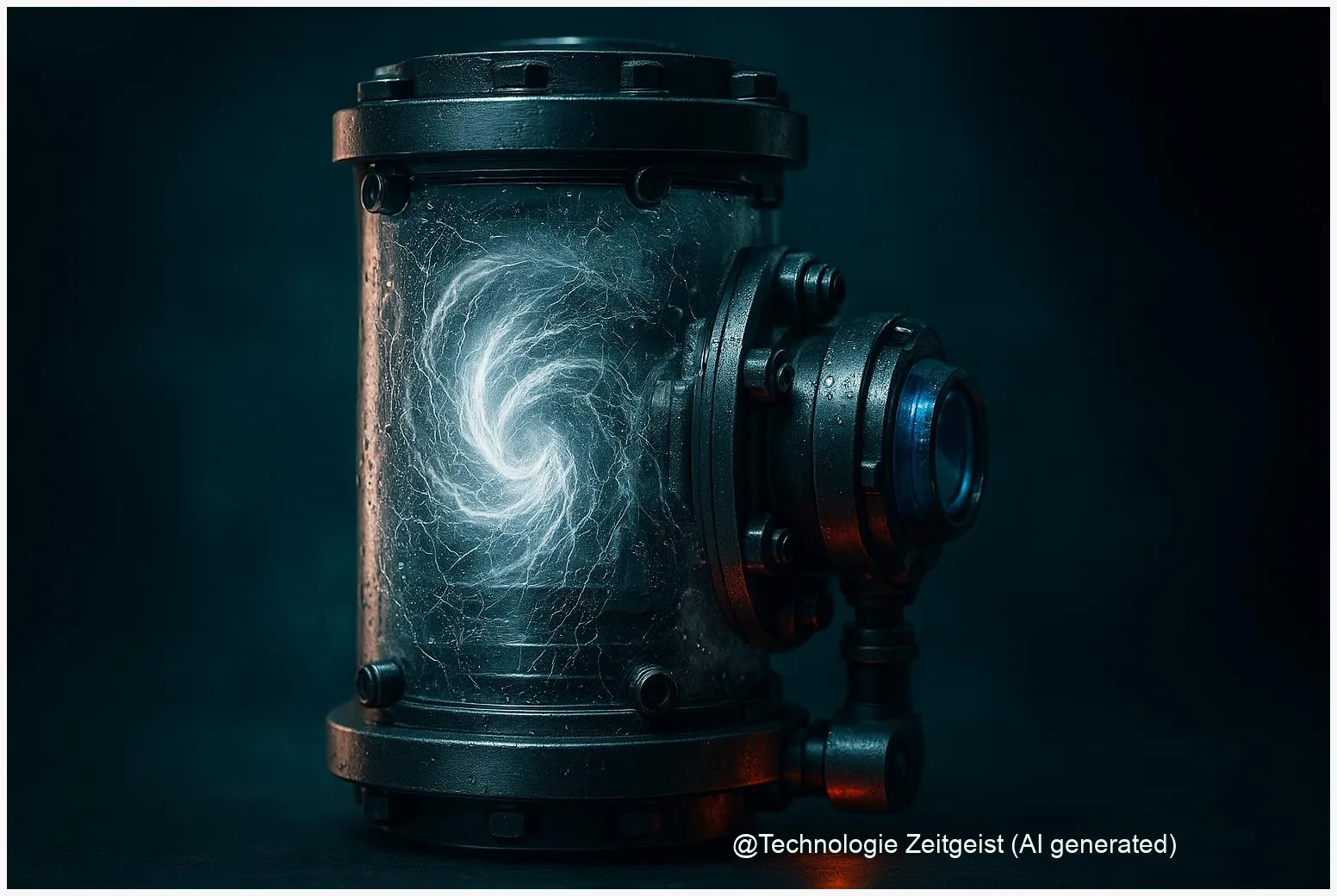
Supercritical CO₂ power promises higher efficiency in compact turbines, but several engineering bottlenecks keep projects from scaling. This article examines Supercritical CO2 power in plain terms: how the cycle works, which components cause most trouble today, and why materials, turbomachinery and recuperators determine whether a demonstration becomes an industrial plant. You will learn where the technical gaps lie and which tests and design choices matter for reliable deployment.
Introduction
When engineers propose replacing steam with a compact gas the size of a shipping container, the promise sounds neat: higher thermal efficiency in a smaller footprint. Supercritical CO₂ power cycles do exactly that by running carbon dioxide above its critical point, where it behaves partly like a gas and partly like a liquid. The result can be a small, tightly packed turbine and heat exchangers that recover heat more efficiently than comparable steam plants.
The catch is practical. Real plants operate with impurities, temperature swings and millions of shaft revolutions. That environment exposes weak points: which metals survive long at high temperature and pressure, which seals and bearings tolerate fast spinning in dense fluid, and whether compact recuperators can be manufactured and welded without hidden defects. The following sections explain the physics in everyday language, show concrete demonstration examples, and then walk through the material and component limitations that slow commercialization.
How Supercritical CO2 power works
A Supercritical CO₂ Brayton cycle uses CO₂ kept above roughly 31 °C and 7.4 MPa to reach a region where its density and heat capacity change rapidly with temperature. In simplest terms, the cycle compresses dense CO₂, heats it in a high‑temperature source, expands it through a turbine to make power, and then recovers heat in compact recuperators before compressing the fluid again. Because CO₂ near the critical point can carry lots of heat in a small volume, components can be much smaller than in a steam plant for the same output.
The compact size and high efficiency are attractive—but compactness concentrates stresses, temperatures and manufacturing tolerances.
Key operating ranges used in many designs are pressures of around 20–30 MPa and turbine‑inlet temperatures typically between 500 and 700 °C for advanced concepts. Those numbers rise with goals for higher efficiency. The combination of high pressure, high temperature and a dense working fluid drives three technical challenges: materials that resist corrosion and creep, turbomachinery able to run at very high shaft speeds with tight seals, and recuperators that deliver high heat recovery with minimal pressure loss.
The table below summarizes common material choices and their trade‑offs in sCO₂ service.
| Material | Typical safe range | Notes |
|---|---|---|
| 316L stainless steel | up to ~400 °C | Good general corrosion resistance; limited at higher T due to creep |
| Alloy 617 / IN‑625 | 400–650 °C | Better high‑T strength; more costly and can be sensitive to welding |
| Nickel‑base alloys (Haynes 230, IN‑617) | >550 °C | Recommended for hot recuperator sections; handle creep/oxidation better |
| PTFE, PEEK (polymers) | seals/insulation only | Thermoplastics outperform elastomers under rapid decompression |
These material choices arise from lab and test‑rig work: U.S. national labs and recent reviews report test rigs operating at pressures up to roughly 30 MPa and temperatures toward 650 °C, with accelerated corrosion tests showing much faster degradation when small amounts of oxygen or water are present. Note: some key review papers are from 2022–2023 and therefore more than two years old, but their materials and turbomachinery findings remain relevant because long‑term testing programs take years to complete.
Everyday examples and demonstration projects
You may not see sCO₂ plants near you yet, but several demonstration projects and labs make the challenges concrete. Small pilots couple sCO₂ turbines to concentrated solar thermal collectors, industrial waste‑heat sources, or fast‑reacting gas heaters. In these setups the turbine can be as small as a few megawatts and the whole package fits in a yard. The attraction for operators is lower water use, a smaller footprint, and potentially higher efficiency at moderate temperatures.
Demonstrators reveal recurring practical issues. One common report: compact printed‑circuit heat exchangers (PCHE) deliver excellent effectiveness but require high‑precision diffusion bonding and careful weld inspection. If manufacturing defects appear, they are hard to repair and can cause leaks at very high pressure. Another recurring point concerns seals and bearings: many labs run pressure‑actuated leaf seals or gas‑lubricated bearings in static tests with encouraging leak rates, but dynamic, long‑run data at full temperature and speed are still limited.
A useful comparison is how the industry advanced steam turbines. For steam, decades of field data, standardized materials lists and wide supplier experience reduced uncertainty. For sCO₂ the data set is growing but thinner: materials must be qualified against CO₂ with ppm‑level contaminants, recuperator fabrication must be certified, and turbomachinery must be proven under realistic cycling. These are the checkpoints that demo projects routinely flag before moving to larger scale.
Where projects get stuck: risks and trade‑offs
Three groups of technical risk keep next‑generation turbines from arriving in number: materials and corrosion, turbomachinery seals and bearings, and recuperator manufacturing and integration. Each has practical trade‑offs. For example, choosing nickel‑base alloys for the hot recuperator reduces creep and oxidation risk but raises cost and complicates welding. Using cheaper stainless steels lowers upfront cost but shortens expected life at higher temperatures.
Turbomachinery poses different but related decisions. sCO₂ turbines run at very high rotational speeds because the dense working fluid requires small rotors to be efficient. High RPM improves efficiency but increases demands on shaft dynamics, bearing life and seal wear. Tight seals reduce leakage and preserve cycle pressure, yet they must tolerate thermal expansion and avoid contact at full speed. Many prototype seals show low leakage in short tests, but their wear behavior over thousands of hours in pressurized CO₂ is less well documented.
Recuperators create a systems‑level tension: to reach cycle gains, engineers aim for >90–95 % heat recovery while keeping pressure losses below a few percent. Printed circuit heat exchangers and additively manufactured designs can approach those numbers, but manufacturing quality and weld integrity become critical failure modes rather than theoretical performance limits. That drives testing programs toward more expensive, time‑consuming qualification procedures.
What to expect next: realistic developments
Progress will not be a single breakthrough but a pipeline of incremental advances. Expect the following over the next five years: standardized material test matrices that include small ppm levels of oxygen and moisture, more dynamic turbomachinery tests at national lab loops, and clearer manufacturing standards for PCHE and additively made recuperators. These efforts reduce uncertainty rather than suddenly making sCO₂ easy.
For investors and engineers this implies pragmatic staging: continue small‑scale demonstration projects that validate component life while avoiding immediate scale‑up. Policy and research bodies focusing on qualification—long term creep and weld testing, bearing life under dense CO₂, and gas‑decomposition effects on elastomers—will speed the transition. In parallel, system designers can choose mixed material architectures: nickel alloys only where needed, robust design of seals and redundancy for critical joints.
Finally, modelers must keep calibrating their cycle simulations against real test data. Near‑critical CO₂ properties change rapidly with small temperature shifts; engineering models that average properties risk missing hotspots that cause fatigue. Validated stepwise models and data from long‑run rigs are the best path to reliable cost estimates and predictable maintenance intervals.
Conclusion
Supercritical CO₂ power offers genuine efficiency and compactness advantages, but the technology is held back by practical material limits, turbomachinery durability and recuperator qualification. Moving from promising demos to routine plants requires standardized long‑term tests, dynamic sealing and bearing trials, and industrially repeatable heat‑exchanger fabrication methods. The immediate path forward is not a single innovation but coordinated qualification programs that remove unknowns: when those data exist, designers can pick the right alloys, seals and manufacturing routes with confidence.
If you found this useful, please share and join the discussion on how component testing shapes energy technologies.



Leave a Reply